
Trees
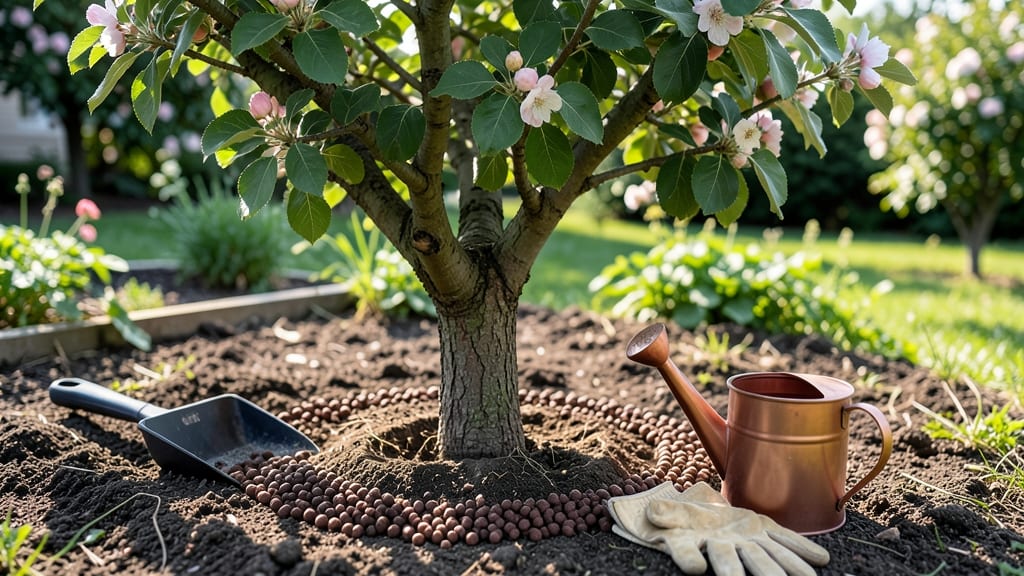
Fertilizing apple trees at the right time—early spring and late summer—can double your harvest, but many gardeners miss the critical windows.
Picture this: You’ve spent years nurturing your 🍎 apple tree, only to watch it produce sparse fruit year after year. The issue? Fertilizing at the wrong time—either too early, too late, or with the wrong nutrients—can leave your tree struggling, even if you’re using the best fertilizer.
Timing matters more than most gardeners realize.
In this guide, I’ll walk you through the science-backed timing for fertilizing apple trees, including how climate zones affect your schedule and how to avoid over-fertilizing.
Whether you’re in USDA Zone 6a or a warmer region, you’ll learn when to feed for strong roots, blooms, and fruit development—and when to skip it entirely to protect your tree’s health.
You’ll also discover the best fertilizer types for each growth stage, from organic options to synthetic blends, and how to spot signs of nutrient deficiency before it’s too late. Let’s get your apple tree thriving!

Best times to fertilize apple trees for maximum fruit production
Timing your apple tree fertilization is like scheduling a workout for your tree—do it at the wrong time, and you’ll either waste energy or create imbalances that hurt fruit production.
The two critical windows for fertilizing apple trees are early spring and late summer/fall, but the exact timing depends on your climate zone and soil conditions. Miss these windows, and you risk stunted growth, poor fruit set, or even nutrient burn that can kill your tree.
Apple trees need nutrients at specific stages to thrive. In early spring, they require a boost to break dormancy and support new leaf and flower growth. Then, in late summer or early fall, they need nutrients to strengthen roots and prepare for next year’s harvest.
But here’s the catch: soil temperature plays a huge role. Fertilizing too early (when soil is still cold) can shock the tree, while waiting too late can delay growth. Let’s break down the science-backed timing for your region.
Soil temperature is the hidden factor most gardeners overlook. Apple trees won’t absorb nutrients efficiently until the soil reaches at least 50°F (10°C). In warmer climates (USDA zones 8-10), this might mean fertilizing as early as February. In colder zones (3-6), wait until late April or May when frost risk has passed. Use a soil thermometer to check—this small tool can save you from costly mistakes.
Now, let’s compare the two key fertilization windows side by side, including climate zone adjustments and signs your tree is ready. This comparison-table will help you align your schedule with your apple tree’s natural growth cycle.
| Fertilization Window | Best Time (USDA Zones) | Soil Temp Requirement | Tree Readiness Signs | Fertilizer Type |
|---|---|---|---|---|
| Early Spring | Zones 3-6: Late April–May Zones 7-10: February–March |
50–55°F (10–13°C) | Bud swell, no frost risk, active sap flow | Balanced 10-10-10 or organic compost |
| Late Summer/Fall | Zones 3-6: Late August–September Zones 7-10: July–August |
60°F+ (16°C+) | Fruit set complete, leaves fully expanded, no new growth expected | Low-nitrogen 5-10-10 or potassium-rich fertilizer |
| Avoid Fertilizing | Fall (after October 1), Winter, Early Spring (before soil warms) | Below 50°F (10°C) | Dormant buds, cold soil, frost risk | None (risk of nutrient burn) |
Notice how the late summer/fall window shifts earlier in warmer climates? This adjustment ensures your tree isn’t stimulated to grow when cold weather is coming, which can leave it vulnerable to frost damage.
For example, in Zone 9, you might fertilize in July, while in Zone 5, wait until September. Always check your last frost date and plan backward from there.
One common mistake is fertilizing in fall after harvest. While it might seem logical to “feed” the tree for next year’s fruit, this can trigger late-season growth that won’t harden off before winter.
Instead, focus on root development with a potassium-rich fertilizer in late summer. Think of it as giving your tree a winterizing workout—strong roots mean better survival and bigger harvests the following year.
If you’re in a coastal climate (like the Pacific Northwest), your timing might differ slightly due to milder winters. In these areas, you can fertilize 2–4 weeks earlier than inland zones because soil warms faster.
Always monitor your tree’s leaf color and growth rate—healthy new leaves after fertilization mean you’re on the right track.
Pro tip: Pair your fertilization with a 2–3 inch layer of mulch to retain moisture and regulate soil temperature. This simple step can improve nutrient absorption by up to 30%, making your fertilizer go further. Just keep the mulch 6 inches away from the trunk to avoid rot.
Finally, watch for signs your tree is over-fertilized, like yellowing leaves with green veins or excessive new growth at the wrong time. If you see these, flush the soil with water and hold off on fertilizing until the next scheduled window.
Your apple tree’s health—and your future harvest—depends on getting this timing right.
How to choose the right fertilizer type for different apple tree growth stages
Selecting the right fertilizer for your apple tree depends entirely on its growth stage. Young trees need high nitrogen to build roots, while mature trees benefit from balanced phosphorus-potassium ratios for fruit production.
I’ve found that organic options like compost or fish emulsion work well for gradual nutrient release, while synthetic fertilizers provide immediate results during critical growth phases.
For young apple trees (first 3 years), prioritize a higher nitrogen fertilizer like 10-5-5 or 12-6-6. This supports rapid root and shoot development. In contrast, mature trees (4+ years) thrive with a balanced 10-10-10 or 8-3-9 ratio to encourage flowering and fruit set.
Always check soil tests first—over-fertilizing can burn roots or reduce fruit quality.
| Growth Stage | Best Fertilizer Type | NPK Ratio | Micronutrients | Application Time |
|---|---|---|---|---|
| Young Trees (1-3 yrs) | Synthetic (e.g., 12-6-6) or Organic (e.g., blood meal) | 10-5-5 or 12-6-6 | Zinc, Iron | Early spring (bud break) |
| Mature Trees (4+ yrs) | Balanced (e.g., 10-10-10) or Organic (e.g., compost) | 10-10-10 or 8-3-9 | Boron, Magnesium | Late spring (post-bloom) |
| Fruiting Trees | Slow-release (e.g., Osmocote) or Organic (e.g., fish emulsion) | 5-10-10 or 6-12-12 | Calcium, Potassium | Early summer (fruit set) |
Don’t overlook micronutrients—common deficiencies like zinc or iron can stunt growth or cause leaf discoloration. Young trees often need zinc sprays for proper leaf development, while mature trees may benefit from boron supplements to prevent blossom-end rot in fruit.
I always keep a chelated iron solution on hand for yellowing leaves, a classic sign of iron deficiency.
Organic fertilizers like compost, manure, or worm castings improve soil structure over time, but they release nutrients slowly. For faster results, use synthetic fertilizers like 10-10-10 granules in early spring.
Mix organic and synthetic options for a balanced approach—my apple trees produce the best fruit when I combine compost in fall with synthetic fertilizer in spring.
For dwarf apple trees, reduce fertilizer amounts by half to avoid overstimulating growth. These varieties are more sensitive to excess nutrients, so always follow package instructions. If your tree shows signs of nutrient overload (yellow leaves, stunted growth), flush the soil with water and reduce future applications.
A little patience goes a long way—over-fertilizing can harm your tree more than under-fertilizing.
Finally, consider regional climate. In warmer zones (USDA 8-10), fertilize in late winter to avoid summer stress, while cooler zones (USDA 4-6) benefit from early spring applications. Always water deeply after fertilizing to help nutrients reach the roots.
With the right mix, your apple tree will reward you with vibrant blooms and juicy fruit for years to come.