
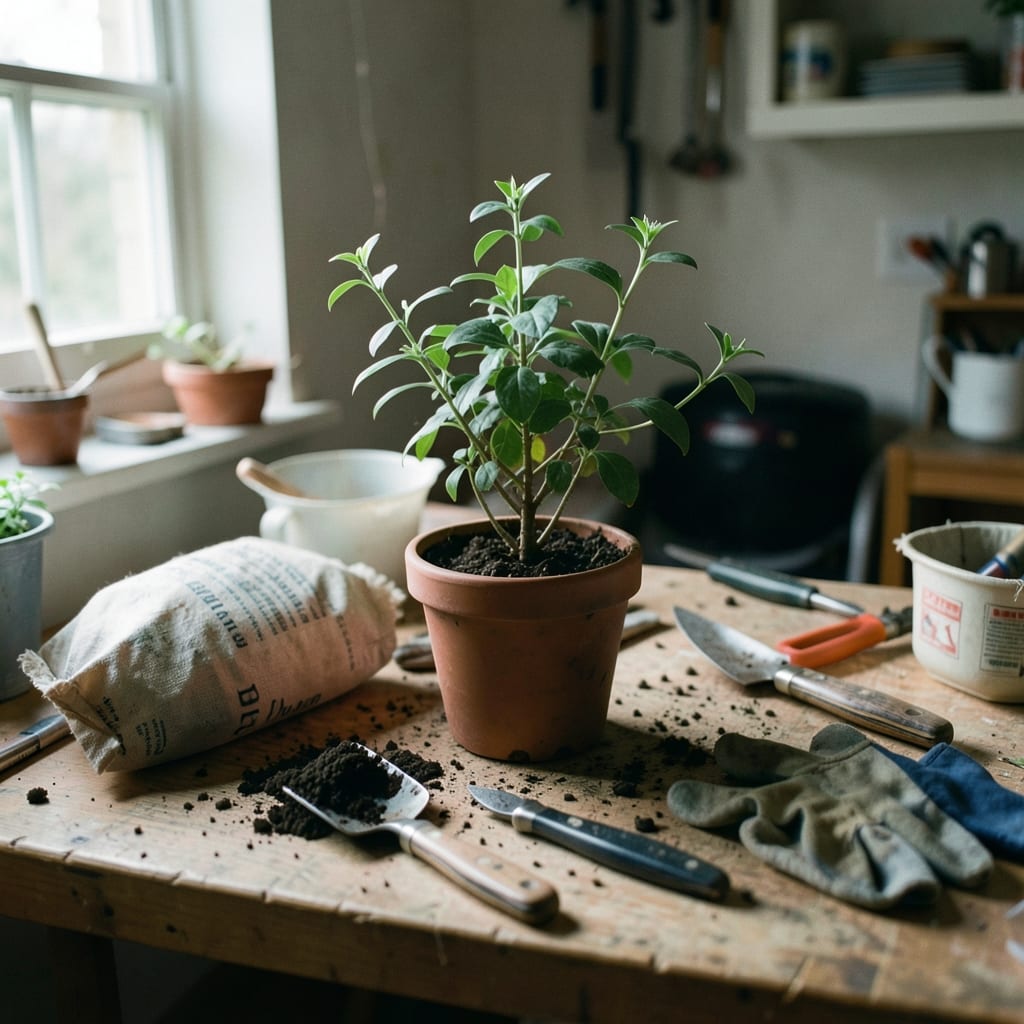
What is on this site
This site grows a library of plants, seeds, and the lessons learned from them—what thrives, what fails, and why. It is for gardeners who want to know not just *what* to plant, but *how* it behaves in real soil, under real weather, in real time.
The site is organised by season, soil type, and plant family. Some pages are guides to starting from seed; others are post-mortems of what died in the heatwave of 2024. Every entry includes hard numbers: days to germination, pH ranges, spacing requirements. No vague advice.
| Where | What is there | Go here if |
|---|---|---|
| The Journal | Monthly updates on what’s blooming, wilting, or overrunning the plot | You want to know what’s happening now |
| The Seed Vault | Detailed profiles of seeds—where they came from, how they perform, and what tricks they need | You’re choosing seeds for next season |
| The Soil Lab | Tests, amendments, and the slow science of making dirt work | Your plants look healthy but aren’t growing |
| The Failures Ledger | Honest records of what didn’t work—and why | You’re curious about the limits of your garden |
How to read a page here
Every page starts with a header box listing the plant’s family, hardiness zone, and key traits. Ignore the ‘Best For’ section on a first read—it’s for advanced gardeners. The main text follows a strict order: first, what the plant needs to survive; second, what it gives back.
Numbers in parentheses—like (36°F) or (60 days)—are critical and not optional.
Sidebars appear for warnings (e.g., ‘Toxic to dogs’) or pro tips (e.g., ‘Pinch back stems at 6 inches to bush out’). These are short and can be skipped if you’re in a hurry. The ‘Further Reading’ section at the end links only to other pages on this site—no external sources.
Timings are always in days to maturity (not weeks) and assume average conditions. Adjust for your microclimate. If a step says ‘After the last frost,’ it means *after* the official frost date—your garden may need two weeks extra.
When it does not work
The site assumes you have access to basic tools, decent soil, and a patch of sunlight. If your garden is urban with concrete borders, your climate is extreme, or you’re growing in containers without drainage, some advice here won’t apply. The Soil Lab has workarounds, but they’re not magic.
Before you give up
- Check the hardiness zone in the header—are you in the right range?
- Look for the ‘Notes for Containers’ sidebar—many plants need adjustments
- Search for ‘plant name + your city’—local variations matter more than general rules
- Try the Failures Ledger—your problem may already be documented
Who we are

| The colophon | |
|---|---|
| Written by | Desmond Calderon, who digs in the dirt of upstate New York and writes about what survives there |
| Tested in | A 1/10-acre plot with clay-heavy soil, partial shade, and a history of volunteer tomatoes |
| Written with | A trowel, a cheap pH meter, and a notebook full of half-erased scribbles |
| Learned from | A grandfather who called weeds ‘opportunists’ and never apologised for killing marigolds |
| Still getting wrong | The exact moment to harvest green beans—always too early or too late |
Some plants grow where you plant them. Others fight you every step of the way. This site is for the ones that fight back—and for the quiet joy of watching them win.
If you need something that is not here
The site covers perennials, annuals, and the basics of soil science. It does not have advice on large-scale farming, hydroponics, or tropical climates. If you’re looking for something specific—like a rare heirloom or a solution for a problem not listed—start by searching the Failures Ledger.
If it’s not there, the contact page is the next step.
The guides are grouped by category: Advice, Aphids, Blooming, Companion Plants, Container Gardens and Diseases.