
Plants
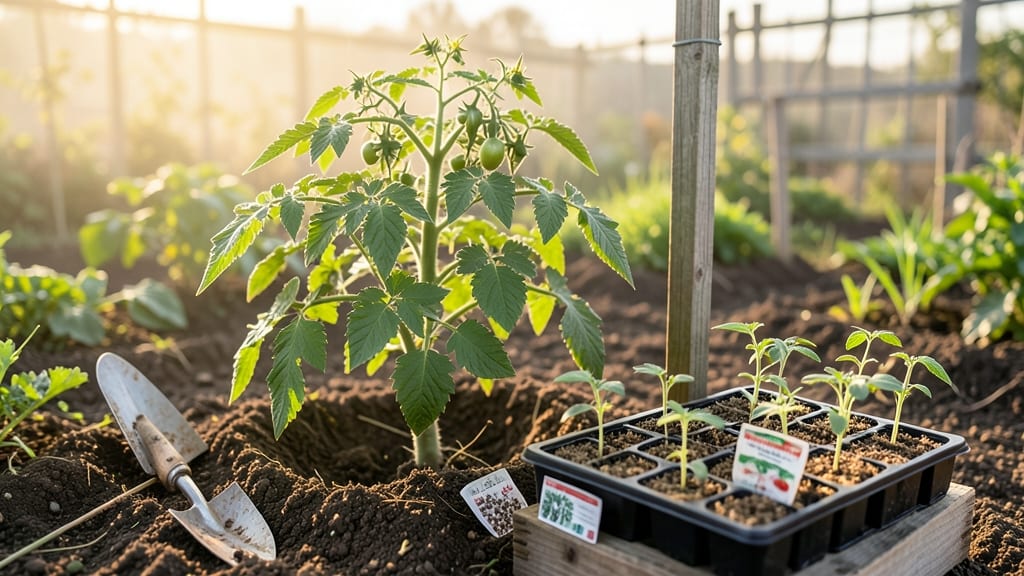
Planting tomatoes in Pennsylvania at the right time means the difference between a bountiful harvest and a sad, frost-nipped failure.
Pennsylvania’s diverse climate—from the cool mountains to the humid valleys—means tomato planting success hinges on knowing your exact microclimate. Get it wrong, and your plants could face frost damage or stunted growth.
Here’s how to pinpoint the perfect timing for your region, whether you’re in Philadelphia’s urban heat island or the cooler USDA Zone 5b of the state’s north.
Most gardeners aim for April 15 to May 15, but that window shifts by weeks depending on elevation and local frost patterns. A late frost in the Poconos can delay planting until early June, while the Pittsburgh area often sees safe soil temperatures by mid-April.
The key? Waiting until the soil hits 60°F and all frost risk has passed.
Inside, you’ll find region-specific frost dates, tips for starting seeds indoors, and how to extend your season with row covers—so you can enjoy homegrown 🍅 from June through October, no matter where you live in the Keystone State.
Pennsylvania’s last frost dates by region: a microclimate breakdown
Pennsylvania’s last frost dates vary dramatically across its five distinct regions, making regional planning essential for tomato success. In the Southeast, where Philadelphia sits, gardeners can plant outdoors as early as April 15, while the Northwest near Erie often waits until May 15 due to cooler lake-influenced air.
These differences mean a 3-week window between early and late starters.
Understanding your USDA hardiness zone (5b-7a) helps, but microclimates—like urban heat islands in Pittsburgh or valleys in the Southwest—can shift frost dates by 7-10 days. Penn State Extension data shows these regional averages are just starting points; your yard’s specific conditions matter more.
Here’s how to use this breakdown: Match your zip code to the closest region, then adjust for local factors like elevation or pavement (which delays frost in cities). For example, a backyard in Allentown (Southeast) might be 5-7°F warmer than a rural farm just 20 miles away.
🌱
| Region | USDA Zone | Last Frost Date | First Frost Date | Tomato Planting Window | Notes | ||||||||||||||||||
|---|---|---|---|---|---|---|---|---|---|---|---|---|---|---|---|---|---|---|---|---|---|---|---|
| Southeast (Philadelphia, Reading) | 6b-7a | April 15–May 1 | October 15–20 | April 20–May 10 | Urban areas 3–5°F warmer; use row covers for early starts. | ||||||||||||||||||
| Southwest (Pittsburgh, Johnstown) | 6a-6b | April 25–May 5 | October 5–10 | May 1–15 | Valleys frost later; high elevation areas (e.g., Laurel Highlands) delay planting by 1 week. | ||||||||||||||||||
| Central (Harrisburg, Lancaster) | 6a-6b | April 20–May 1 | October 10–15 | April 25–May 10 | Moderate climate; ideal for heat-tolerant varieties like 'Celebrity'. | ||||||||||||||||||
| Northeast (Scranton, Wilkes-Barre) | 5b-6a | May 5–15 | September 25–October 5 | May 15–30 | Shorter season; prioritize early-maturing varieties like 'Mountain Merit'. | ||||||||||||||||||
| Northwest (Erie, State College) | 5b-6a | May 10–20 |
How to adjust planting time for early vs. late varietiesNot all tomatoes thrive on the same schedule in Pennsylvania. Heat-loving heirlooms like Brandywine need warmer soil and longer growing seasons, while cold-tolerant hybrids such as Mountain Merit can handle cooler temps. Your planting strategy should match your variety type and microclimate. For example, in Zone 6a (northwest PA), late varieties might still produce well, but in Zone 7a (southeast PA), early planting is critical to avoid summer heat stress. Start by choosing early-season varieties like 'Early Girl' if you’re in a shorter growing season (e.g., Erie or State College). These varieties mature in 55-65 days and can tolerate cooler soils. On the other hand, late-season heirlooms like 'Cherokee Purple' need 70-90 days and thrive in warmer, extended summers, making them ideal for southeastern PA or urban heat islands like Philadelphia.
To extend your growing season, use row covers or cold frames for early varieties. These tools can push your harvest window 2-3 weeks earlier in spring or 2-4 weeks later in fall. For example, if you plant 'Stupice' (a cold-hardy variety) under row covers in late April, you might harvest by early July—weeks ahead of uncovered plants. Similarly, succession planting every 2 weeks ensures a steady supply of tomatoes throughout summer. For late-season varieties, focus on heat tolerance and disease resistance. Varieties like 'Heatmaster' or 'Solar Fire' thrive in 90°F+ temps and are perfect for southern PA or urban gardens with microclimates. Pair these with drip irrigation to prevent blossom-end rot caused by inconsistent moisture. Mulch with straw or black plastic to maintain soil temperature and reduce stress on plants. If you’re in a shorter-season area like Erie or Williamsport, prioritize determinate varieties (e.g., 'Roma', 'Celebrity') that produce fruit in compact bushes. These are easier to protect with row covers and yield quickly. In contrast, indeterminate varieties like 'Brandywine' need stakes or cages and benefit from late planting to avoid early blight in humid conditions. Always monitor your local frost dates and adjust planting times accordingly. Use Penn State Extension’s frost maps as a guide, but trust your soil thermometer—wait until soil reaches 60°F before planting. With the right variety and timing, you can enjoy tomatoes from June to October, even in Pennsylvania’s variable climate! 🌱 |