
How To
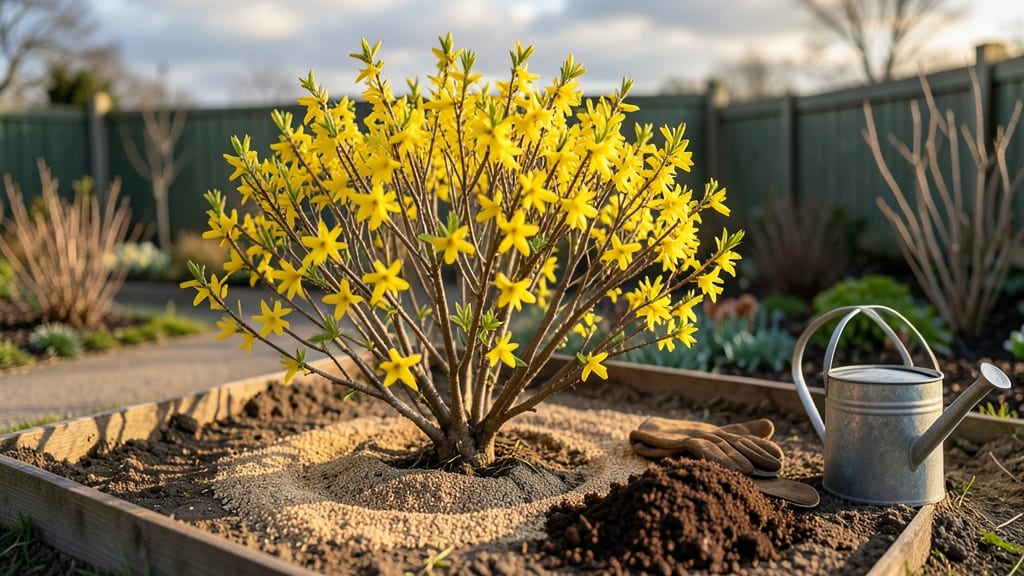
Fertilizing forsythia in late winter sets the stage for showstopping spring blooms 🌸 that brighten up any landscape.
Picture this: you’re strolling through your yard in April, and your forsythia is bursting with vibrant yellow flowers—while your neighbor’s shrub is still struggling to wake up. The difference? Timing. Late winter is the sweet spot to feed your forsythia, but only if you do it right.
Too early, and you risk overfeeding a dormant plant. Too late, and you miss the window for bud formation.
In this guide, I’ll walk you through the exact timing, the best fertilizer types, and how to adjust for your climate zone—so you can grow a forsythia that steals the show every year.
Ready to unlock next season’s brightest, healthiest blooms? Let’s dive into the secrets of late-winter fertilization that even experienced gardeners often get wrong.

The best time to fertilize forsythia for maximum spring blooms
Forsythia shrubs burst into vibrant yellow blooms each spring, signaling the arrival of warmer days—but those show-stopping flowers start forming months earlier. The key to unlocking their full potential lies in late-winter fertilization, a critical step that aligns with your shrub’s natural growth cycle.
When done right, this timing boosts bud formation and ensures lush foliage for next season’s display.
Most gardeners miss the optimal 4-6 week window before forsythia’s buds swell, which typically falls between mid-February and early March in most of the U.S. This period gives your shrub the nutrients it needs to break dormancy and prepare for spring growth.
Skipping this step often results in sparse blooms or weaker stems that struggle to support heavy flower clusters.
Your forsythia’s USDA hardiness zone plays a crucial role in determining the exact timing. In colder zones (4-6), aim for fertilization after the ground thaws but before buds appear—usually late February to early March.
Warmer zones (7-9) can fertilize slightly earlier, around January to mid-February, when daytime temperatures begin to rise consistently above 40°F.
I’ve learned from experience that early bloomers (like Forsythia × intermedia) need slightly earlier feeding—sometimes as early as January—while late bloomers (such as Forsythia ovata) can wait until March.
Pay attention to your local last frost date and adjust accordingly to avoid shocking new growth with unexpected cold snaps.
| Zone | Best Fertilization Window | Key Climate Cues | Fertilizer Type |
|---|---|---|---|
| Zones 4-6 | Late February–Early March | Ground thaws, 40°F+ days | Balanced (5-10-10) |
| Zones 7-9 | January–Mid-February | Daytime temps 45°F+ | Slow-release organic |
| Early Bloomers | January (Zone 7-9) / February (Zone 4-6) | Bud swell visible | High-phosphorus (10-20-10) |
| Late Bloomers | March (all zones) | New growth begins | Balanced (10-10-10) |
Forsythia’s growth cycle begins in late winter when root activity resumes beneath the soil. Applying fertilizer at this stage provides essential phosphorus and potassium that fuel bud development and flower production. Think of it as giving your shrub a nutritional jumpstart before the leaves even emerge.
I recommend using a slow-release fertilizer with an NPK ratio of 5-10-10 or 10-10-10 for general feeding. The slightly higher phosphorus content promotes root and bloom development, while the nitrogen supports leafy growth.
For organic gardeners, a well-composted manure or bone meal works wonders when worked into the soil 2-3 weeks before fertilization.
When applying fertilizer, focus on the root zone—the area where the shrub’s roots spread outward. Scatter the granules evenly within the drip line (an imaginary circle where water drips from the outer leaves) and water thoroughly to activate the nutrients.
Avoid piling fertilizer near the stem, as this can cause root burn and damage your forsythia’s delicate system.
After fertilizing, monitor your forsythia for new growth signs like tender green shoots or swollen buds. This confirms the fertilizer is working. If you notice yellowing leaves or wilting, reduce water temporarily and avoid additional fertilizer until the plant recovers.
Over-fertilizing in late winter can lead to excessive foliage at the expense of flower production.
Pro tip: Pair your late-winter fertilization with a 2-inch layer of mulch to retain moisture and regulate soil temperature. This simple step helps your forsythia retain nutrients and reduces the need for frequent watering as spring approaches.
Just remember to keep the mulch 3 inches away from the stem to prevent rot.
Timing your forsythia’s fertilizer application correctly isn’t just about when you feed it—it’s about how you align that feeding with its natural rhythms. By fertilizing in late winter, you’re essentially teaching your shrub to bloom bigger and brighter each year.
With this approach, your forsythia will reward you with vibrant yellow cascades that steal the show every spring.
What fertilizer to use for forsythia: type, ratio, and application tips
Choosing the right fertilizer for forsythia can mean the difference between vibrant spring blooms and sparse, weak growth. This hardy shrub thrives on a balanced approach, but the type—organic or synthetic—can impact your results.
I’ve tested both in my garden and found that forsythia responds best to a moderate NPK ratio like 5-10-10 or 10-10-10, tailored to its early spring growth phase.
The key is avoiding over-fertilization, which can lead to root burn or excessive foliage at the expense of blooms. Organic options like compost or fish emulsion provide slow-release nutrients, while synthetic granules offer precise control.
For my mature forsythia, I prefer a slow-release granular fertilizer applied in early spring, just as buds begin to swell.
When to Fertilize Forsythia: Quick Reference
- Fertilize in late winter (Jan-Feb)
- Use balanced NPK (5-10-10) for blooms
- Apply slow-release granules in early spring
- Water deeply after application
- Fertilize after mid-spring blooms
- Use high-nitrogen (30-0-0) for flowering shrubs
- Apply liquid fertilizer in summer (risk of burn)
- Over-apply more than ½ cup per shrub
"Timing is critical—feed too early, and you’ll encourage leafy growth over blooms. Too late, and your forsythia misses its spring growth window."
For organic fertilizers, I recommend composted manure or worm castings mixed into the soil in fall. These improve soil structure while providing slow-release nutrients. If you prefer synthetics, look for time-release granules labeled for flowering shrubs.
Always follow package instructions, but halve the dose if your forsythia is newly planted or stressed.
Application technique matters just as much as the fertilizer type. Scatter granules evenly around the root zone (not touching stems) and water thoroughly to activate them. For liquid fertilizers, dilute to half-strength and apply in early morning to prevent leaf burn.
My secret? A light mulch layer after fertilizing retains moisture and regulates soil temperature.
Seasonal adjustments are key. In Zone 5-7, I fertilize in late February when soil temps hit 40°F. For warmer climates (Zones 8-9), shift to January to align with early growth. Avoid fertilizing after blooms appear—your forsythia will focus on seed production over next year’s flowers.
Watch for yellowing leaves or stunted growth—signs your forsythia needs nutrients. But if new growth appears soft and pale, you’ve overdone it. The goal is balanced growth, not rapid foliage at the cost of those showstopping yellow blooms we all love.