
Lawn
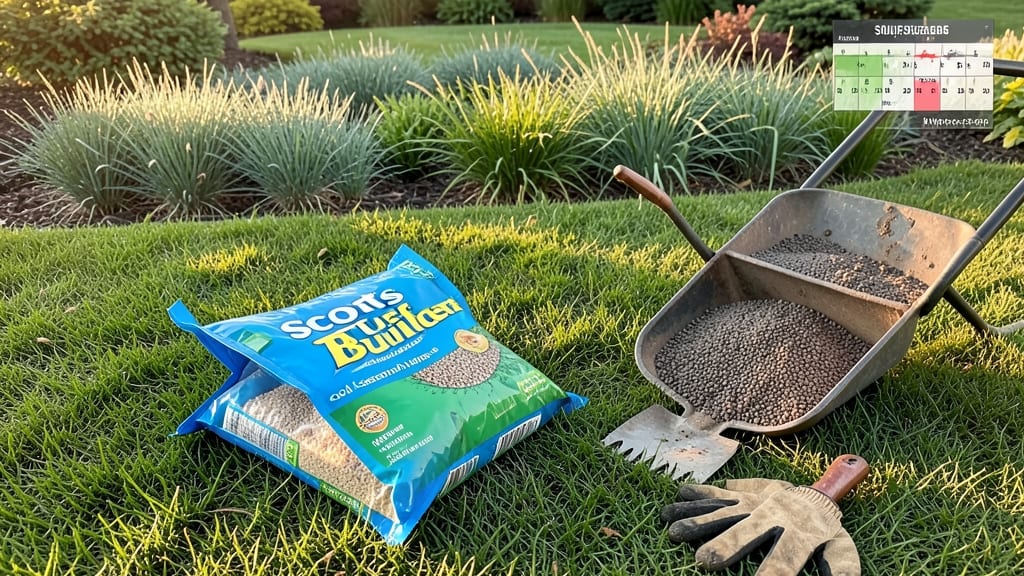
Fertilizing your lawn in Wisconsin at the right times is the secret to a thick, green carpet that survives everything from snowmelt to summer droughts.
Wisconsin’s unpredictable climate—from freezing winters to humid summers—demands a strategic fertilization plan to keep your lawn lush and resilient year-round. Timing matters more than product choice when it comes to maximizing grass health and avoiding common pitfalls like winter burn or nutrient waste.
Most homeowners in zones 4a-5b miss the best windows: early spring to boost roots, late summer for fall prep, and a light touch in summer to prevent stress. I’ll break down the exact months, soil checks, and fertilizer types that work for your region—whether you’re in Milwaukee or the Northwoods.
By the end, you’ll know not just when to fertilize, but how to read your lawn’s signals (like yellow patches or slow growth) and adjust on the fly. No more guessing—just a stronger lawn with less effort.

Wisconsin’s 4 best fertilization seasons: month-by-month guide for optimal grass growth
Wisconsin’s climate presents unique challenges for lawn care, with cool-season grasses dominating most yards. Unlike warmer climates, timing your fertilizer applications around soil temperature shifts and frost dates is critical.
The four key fertilization seasons—early spring, late spring, summer, and fall—align with your grass’s natural growth cycles, ensuring year-round vitality.
Northern Wisconsin (USDA zones 3b-4a) has a shorter growing season, while southern areas (zones 4b-5a) can extend fertilization slightly. I’ll break down each season’s ideal timing, soil temperature triggers, and regional adjustments to help you avoid common mistakes like winter burn or nutrient waste.
| Season | Best Months | Soil Temp Trigger | Fertilizer Type | Northern WI Adjustment |
|---|---|---|---|---|
| Early Spring | Late April | 45-50°F | High-Nitrogen (24-0-5) | Wait until mid-May |
| Late Spring | May-June | 55-65°F | Balanced (16-4-8) | Skip if frost risk |
| Summer | July-August | 60°F+ | Slow-Release (20-0-5) | Light application only |
| Fall | September-October | 50-55°F | Winterizer (12-0-0) | Apply by mid-Sept |
Your early spring fertilization (late April) kickstarts growth after winter dormancy. Apply when soil reaches 45-50°F—this prevents winter burn while giving grass the nitrogen boost it needs. In northern Wisconsin, delay until mid-May to avoid frost damage to tender new shoots.
Late spring (May-June) is prime time for balanced fertilization (16-4-8 ratio). This phase focuses on root development and disease resistance. Southern Wisconsin lawns can handle two applications here, while northern areas should limit to one. Always water deeply after applying to activate nutrients.
Summer fertilization in Wisconsin is controversial—most experts recommend light, slow-release feeds in July-August only if your grass shows signs of stress. Over-fertilizing in hot, dry conditions (common in July) can burn roots. Use half-strength applications and water immediately to protect your lawn.
Fall is the most critical season for Wisconsin lawns. A winterizer fertilizer (high in nitrogen) applied in September-October strengthens roots for winter survival. Northern Wisconsin should fertilize by mid-September, while southern areas can extend to early October. Avoid late fall applications—this encourages late growth vulnerable to frost.
Winter fertilization is not recommended for Wisconsin lawns. Grass enters dormancy below 40°F soil temps, and fertilizing during this time causes winter burn. However, you can apply a pre-emergent herbicide in early spring (March) to prevent crabgrass—just avoid fertilizing until after the last frost.
Regional adjustments matter: Southern Wisconsin (Madison, Milwaukee) can extend summer feeding into early August, while northern areas (Green Bay, Eau Claire) should stop by July. Always test your soil first—Wisconsin’s clay-heavy soils (common in the north) benefit from slow-release fertilizers to prevent runoff.
Pro tip: Pair fertilization with mowing height adjustments. Keep grass 3-4 inches tall in summer to retain moisture, and raise to 3.5-4.5 inches in fall for winter hardiness. This simple tweak complements your fertilization schedule beautifully.
How to adjust fertilization for Wisconsin’s soil types: clay vs. sandy vs. loamy lawns
Wisconsin’s diverse soil types—clay-heavy, sandy loam, or ideal loamy—dictate how your lawn absorbs nutrients. Clay soils compact easily, trapping water but blocking roots, while sandy soils drain too quickly, starving grass of essential nutrients. Loamy soils, the gold standard, balance drainage and retention but still need tailored care.
Adjusting your fertilization schedule based on soil type prevents runoff, waste, and uneven growth.
Before choosing a fertilizer, test your soil’s pH and texture. Wisconsin’s USDA zones 4a-5b mean cool-season grasses like Kentucky bluegrass thrive here, but their nutrient needs shift with soil type. Clay soils often test alkaline (pH 7.5+), while sandy soils lean acidic (pH 6.0-6.5).
Amending soil with organic matter (compost or peat moss) improves structure and nutrient availability for all types.
Clay soils hold onto nutrients but can suffocate roots if overworked. Use slow-release fertilizers (like polymer-coated granules) to prevent leaching and over-application. Apply half the recommended rate in early spring and again in late summer, pairing with core aeration to break up compaction. Sandy soils, on the other hand, release nutrients too quickly, so opt for liquid fertilizers or fast-acting granules every 4-6 weeks during growing season.
Clay Soils
- ✅ Pros: Retains moisture/nutrients for slow feed
- ✅ Best for: Slow-release fertilizers (6-8 month)
- ✅ Apply: Early spring + late summer
Sandy Soils
- ✅ Pros: Drains excess water quickly
- ✅ Best for: Frequent light feedings (liquid/granular)
- ✅ Apply: Every 4-6 weeks (spring-fall)
Clay Soils
- ❌ Cons: Risk of runoff if over-fertilized
- ❌ Avoid: High-phosphorus fertilizers (clogs soil)
- ❌ Never: Fertilize after heavy rain
Sandy Soils
- ❌ Cons: Nutrients wash out fast
- ❌ Avoid: Slow-release only (needs frequent top-ups)
- ❌ Never: Skip aeration (soil compacts easily)
Loamy soils, common in southern Wisconsin, are the easiest to fertilize but still benefit from seasonal adjustments. Split applications into three feedings: early spring (high nitrogen), late spring (balanced NPK), and fall (low nitrogen for root hardening). For all soil types, water deeply after fertilizing to activate nutrients—clay soils need 1-2 inches of water, while sandy soils may require 3 inches to prevent leaching.
Watch for nutrient deficiency signs to fine-tune your approach. Yellowing grass in clay soils signals nitrogen deficiency, while thin, weak growth in sandy soils often means phosphorus or potassium lack. Conduct a soil test every 2-3 years (Wisconsin U Extension offers affordable kits) to adjust your NPK ratios.
For example, clay soils may need more potassium (K) to improve root strength, while sandy soils benefit from phosphorus (P) for faster establishment.
Timing is critical: never fertilize when frost is forecasted or during drought. In Wisconsin, late August to early September is ideal for fall feedings—cooler temps help grass absorb nutrients without promoting late-season growth.
For clay soils, pair fertilization with gypsum to improve structure, while sandy soils thrive with compost top-dressing to boost organic matter. Tailoring your approach saves money, reduces environmental runoff, and ensures your lawn stays vibrant year-round.