
How To
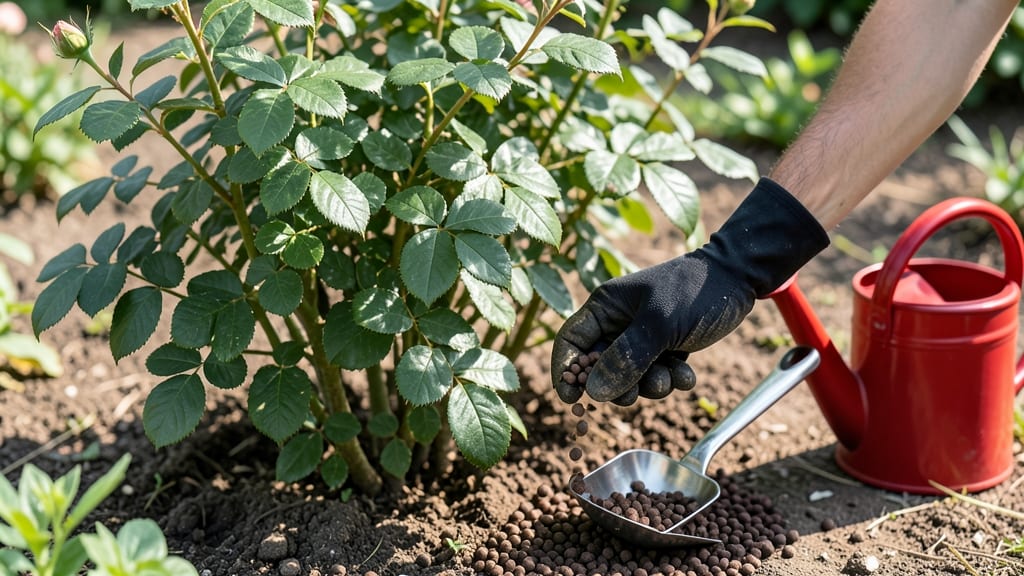
To fertilize rose bushes at the right time means feeding them when they’re hungry—not when you are.
Picture this: You’ve just pruned your 🌹 roses in early spring, and the buds are starting to swell. That’s your cue to reach for the fertilizer. But get it wrong, and you’ll end up with leafy monsters instead of blooms—or worse, stressed plants that never recover.
Timing isn’t just about the calendar; it’s about the plant’s growth stages. Feed too early, and you’ll waste nutrients. Feed too late, and you’ll miss the window for vibrant blooms.
In this guide, I’ll walk you through the exact moments to fertilize—spring, summer, and even fall—plus how to spot when your roses are begging for food (or screaming for mercy).
Whether you’re using organic compost or synthetic granules, you’ll learn how to read your roses’ signals, adjust for your climate, and keep those lush blooms coming all season long.

Optimal fertilization schedule for rose bushes by season
Timing your rose bush fertilization is the secret to lush foliage and abundant blooms. Most gardeners overlook the seasonal triggers that determine when roses need nutrients most. Unlike annuals, roses grow in cycles—spring flush, summer blooming, and fall dormancy—each requiring a different approach.
Skipping this schedule often results in weak canes, sparse flowers, or even plant stress. Let’s break down the exact month-by-month plan to keep your roses thriving.
First, understand that early spring fertilization (around late April to early May) kickstarts growth after winter dormancy. This is when your roses wake up from their dormant state and need phosphorus for root development.
Then, mid-summer feeding supports continuous blooming, while fall applications should be avoided entirely. The key is matching fertilizer type and timing to your rose’s growth stage, not just the calendar.
Visual Tip: Watch for these growth cues—bud swell, leaf unfurling, and post-bloom dieback—they’re your best indicators for fertilization timing. For example, hybrid teas and grandifloras bloom heavily in summer and need light feedings every 4-6 weeks, while climbing roses benefit from a heavier early spring dose to fuel their vigorous growth.
| Season | Growth Stage | Fertilizer Type | Best Time to Apply | NPK Ratio |
|---|---|---|---|---|
| Early Spring | Bud Swell (Late April) | Balanced (10-10-10) | After last frost | 10-10-10 |
| Late Spring | First Blooms (May-June) | High-Phosphorus (5-10-5) | Every 4 weeks | 5-10-5 |
| Summer | Post-Bloom (July-August) | Light Organic (Fish Emulsion) | Every 6 weeks | 3-4-3 |
| Fall | Dormancy Prep (September) | None (Stop Feeding) | Avoid fertilizing | N/A |
| Winter | Dormant (October-March) | None | No fertilization | N/A |
Let’s start with early spring fertilization, which is critical for setting the stage for the entire growing season. In USDA Zone 6a (like much of the Midwest), this typically falls between late April and early May, right after the last frost.
Use a balanced fertilizer (10-10-10) to provide equal parts nitrogen, phosphorus, and potassium. The goal here is to stimulate root growth and leaf expansion—look for new green shoots emerging from the base of the plant as a sign you’re on track.
Many gardeners make the mistake of fertilizing too early, when the soil is still cold. Roses won’t absorb nutrients efficiently until temperatures consistently stay above 50°F (10°C). If you fertilize before this, you risk burning the roots or wasting nutrients.
To test readiness, press your finger into the soil—if it’s crumbly and warm 2-3 inches down, it’s time to feed. Pro tip: Water your roses 24 hours before applying fertilizer to help distribute nutrients evenly.
Moving into late spring and summer, your focus shifts to bloom production. After the first flush of flowers fades (usually around June), switch to a high-phosphorus fertilizer (5-10-5) to encourage more blooms. Apply this every 4-6 weeks until mid-July.
For repeat-blooming varieties, a light organic feeding (like fish emulsion) in August can extend the blooming season into fall. Avoid heavy fertilizers in late summer, as this can stimulate late growth that won’t harden off before winter.
One common misconception is that roses need constant feeding to perform well. In reality, over-fertilizing in late summer can lead to soft, tender growth that’s vulnerable to frost damage. Instead, focus on mulching with compost or aged manure to slowly release nutrients.
This mimics natural conditions and reduces the risk of fertilizer burn. If you notice yellowing leaves or leaf curl, it’s a sign you’ve overdone it—flush the soil with water and hold off on feeding for a month.
When fall arrives, your roses are preparing for dormancy, and fertilization should stop completely. Any nutrients applied now will delay hardening off, leaving your plants weak for winter. Instead, focus on cleaning up debris, <
How to choose the right fertilizer type for rose bushes
Selecting the perfect fertilizer for your rose bushes isn't just about throwing down any old mix—it's about understanding their unique needs. Roses thrive on a balance of nutrients, and the type you choose directly impacts bloom size, growth vigor, and even disease resistance.
Whether you prefer organic or synthetic options, knowing when and how to apply them makes all the difference.
I’ve experimented with both organic fertilizers like compost and fish emulsion, and synthetic blends with precise NPK ratios. Each has its place in a rose bush’s lifecycle, depending on the season and growth stage.
For example, young roses benefit from slow-release organic matter, while established bushes often need a balanced NPK boost after blooming to prep for the next flush of flowers.
Organic fertilizers like composted manure, bone meal, or worm castings feed roses slowly, improving soil health over time. They’re ideal for long-term soil enrichment and work best when applied in early spring or fall. On the other hand, synthetic fertilizers offer quick nutrient delivery, perfect for a mid-season growth spurt or reviving underperforming bushes.
Slow-release fertilizers are my go-to for consistent feeding, while quick-release options give roses an instant energy boost. For instance, a 10-10-10 NPK ratio is a classic choice for roses, but I’ve also seen amazing results with higher phosphorus blends (e.g., 5-10-5) to encourage more blooms. The key is matching the fertilizer type to your roses’ current needs.
Organic Fertilizers
- ✅ Pros: Improves soil structure, slow-release nutrients, eco-friendly
- ✅ Best for: Early spring soil prep, long-term health
- ✅ Examples: Compost, fish emulsion, bone meal
Synthetic Fertilizers
- ✅ Pros: Precise nutrient control, quick results, easy to measure
- ✅ Best for: Mid-season boosts, rapid growth needs
- ✅ Examples: 10-10-10 blends, bloom-specific formulas
Slow-Release
- ✅ Pros: Steady nutrient flow, less risk of overfeeding
- ✅ Best for: Spring planting, gradual growth phases
Quick-Release
- ✅ Pros: Immediate nutrient uptake, great for reviving plants
- ✅ Best for: Post-bloom recovery, heat stress relief
NPK Ratios
- ✅ Balanced (10-10-10): General growth and blooms
- ✅ High Phosphorus (5-10-5): Encourages more flowers
- ✅ Avoid High Nitrogen: Can reduce blooming
For newly planted roses, I recommend starting with a slow-release organic fertilizer mixed into the soil at planting time. This gives roots a steady nutrient supply without overwhelming them.
Once established, switch to a balanced synthetic fertilizer every 4-6 weeks during the growing season, with a phosphorus-rich boost after the first flush of blooms to encourage more flowers.
If your roses look leggy with few blooms, they might need more phosphorus. On the other hand, yellowing leaves could signal nitrogen overload. Always follow package instructions, and remember: less is often more when it comes to fertilizing roses. Overdoing it can burn roots and lead to poor health.
Experiment with a mix of both organic and synthetic options to find what works best for your roses. My hybrid approach—organic in spring for soil health and synthetic in summer for quick blooms—has kept my roses thriving for years.
With the right fertilizer type and timing, you’ll enjoy vibrant blooms from spring to fall! 🌹