
Plants
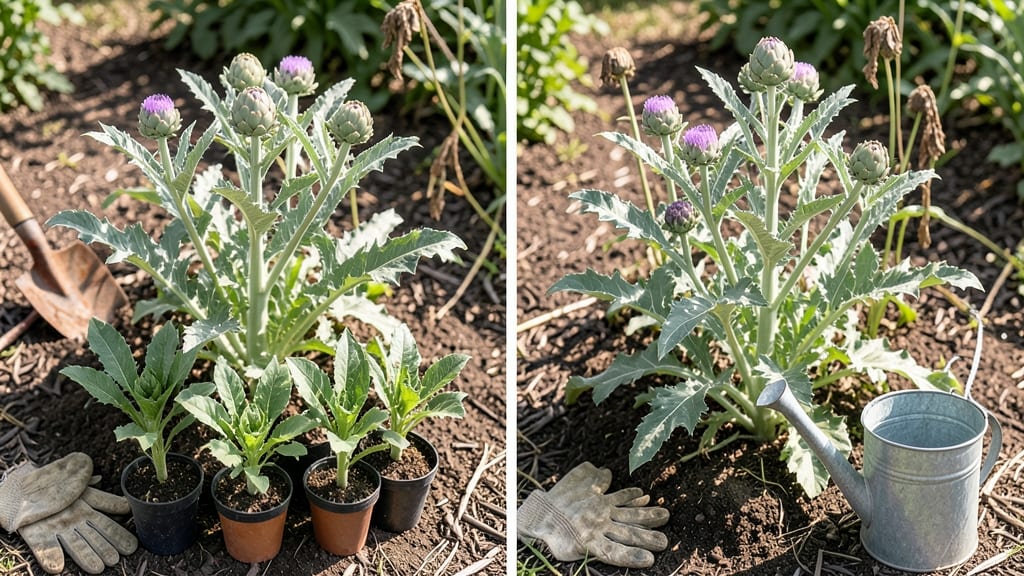
Planting artichokes in Arizona means timing them for the cool winter months—between November and February—when the desert’s brutal heat hasn’t yet arrived to stress your young plants.
If you’ve ever watched a 🌱 artichoke plant wilt under the midday sun or bolt before producing buds, you know the stakes are high. But with the right schedule, you can beat the heat and enjoy a harvest from March to May.
Arizona’s USDA Zone 9b climate demands patience: soil must be cool (below 70°F) and frost-free before planting. In Phoenix or Tucson, that means waiting until after the last frost date—usually mid-December—while still giving the plants time to establish roots before the summer dry spell hits.
Below, I’ll break down the exact planting window for your region, soil prep tricks to survive the alkaline desert, and how to protect your crop from early heat without sacrificing your harvest.
Optimal planting windows for Arizona artichokes: cool season vs. desert heat tolerance
Arizona’s microclimates create a unique challenge for growing artichokes. The state spans USDA zones 7b to 11a, with lowland areas like Phoenix (zone 10a) and highland regions like Flagstaff (zone 7b).
These differences dramatically impact when and how you should plant. In cooler highland areas, you can push planting slightly later, while lowland desert gardens demand precise timing to avoid summer heat stress.
Artichokes thrive in cool-season conditions but struggle when daytime temperatures exceed 85°F (29°C). This means your planting window is narrow—typically November through February—to give plants time to establish roots before Arizona’s brutal summer heat arrives. However, with careful adjustments, a spring planting in highland areas can also work.
Let’s break down the two best planting periods: the primary fall/winter window (ideal for most of Arizona) and the riskier spring option (only viable in cooler microclimates). Understanding these windows will help you avoid common pitfalls like heat stress, poor germination, or stunted growth.
The comparison below highlights the key differences between fall/winter planting and spring planting, including soil temperatures, frost risks, and heat tolerance limits for artichokes in Arizona’s diverse climates.
For most Arizona gardeners, the fall/winter window is the safest bet. Planting in November or December gives your artichokes enough time to establish roots before temperatures rise. In lowland areas like Phoenix or Tucson (USDA 10a–11a), aim to have plants fully established by late February to avoid heat stress.
Soil temperatures should ideally be between 50–70°F (10–21°C) for optimal germination and growth.
If you’re in a highland area like Flagstaff or Sedona (USDA 7b–9a), you can attempt a spring planting in February or early March. However, this requires extra precautions: use row covers or shade cloth to protect young plants from sudden heat spikes, and monitor soil moisture closely.
The risk of late frost in these areas also means you’ll need to be prepared to cover plants if temperatures dip below 28°F (-2°C).
Artichokes are heat-sensitive and will bolt (flower prematurely) if exposed to consistent temperatures above 85°F (29°C). In lowland Arizona, this means planting too late in spring can lead to poor yields or no harvest at all.
Always check your local frost dates and plan accordingly—most of Arizona’s lowland areas have their last frost around mid-December, while highland areas can see frost as late as mid-January.
To maximize success, pair your planting schedule with soil preparation and shade strategies. Amend your soil with compost or aged manure to improve drainage and fertility, and consider using drip irrigation to keep roots consistently moist without overheating the soil surface.
In extreme heat, provide afternoon shade with temporary structures or shade cloth until plants are established.
Remember, artichokes are perennial in Arizona’s mild winters, meaning they can survive multiple growing seasons if given the right conditions. By planting in the optimal fall/winter window and protecting young plants from heat stress, you’ll set yourself up for a reliable harvest year after year. 🌱
Step-by-step pre-planting prep for Arizona’s harsh conditions: soil, water, and shade strategies
Arizona’s alkaline desert soil (pH 7.4–8.4) and extreme heat demand careful prep before planting artichokes. Without proper soil amendments and irrigation planning, even the hardiest varieties struggle.
I’ve learned that organic matter and mulching are non-negotiable for success in this climate. Let’s break down the essential steps to give your artichokes the best possible start.
First, test your soil’s pH using a garden kit or send a sample to your local Cooperative Extension Service. Artichokes prefer a slightly acidic to neutral range (6.0–7.0), so you’ll likely need to lower the pH with sulfur or peat moss.
I’ve found that mixing in 2–3 inches of compost or well-rotted manure also improves soil structure and water retention—critical for Arizona’s sandy, fast-draining soils.
⚠️ NON-NEGOTIABLE STEP-LIST ⚠️
-
1. Amend Soil
Mix in 2–3 inches of compost or aged manure to improve drainage and lower pH (aim for 6.0–7.0). Add 1–2 lbs of sulfur per 100 sq ft if pH exceeds 7.5. -
2. Install Irrigation
Set up a drip irrigation system with emitters at the base of each plant. Avoid overhead watering to prevent fungal diseases and reduce evaporation. -
3. Plan Shade Solutions
Use shade cloth (30–50%) for young plants during 100°F+ days. Secure with stakes or hoops to avoid direct sun until plants reach 12 inches tall. -
4. Mulch Heavily
Apply 3–4 inches of mulch (straw or wood chips) to retain moisture and regulate soil temperature. Keep mulch 6 inches away from stems to prevent rot. -
5. Harden Off Seedlings
If starting indoors, acclimate seedlings for 7–10 days before transplanting. Place outside in partial shade during the day and bring in at night for 3–5 days.
Watering is another critical factor in Arizona’s drought-prone climate. I recommend installing a drip irrigation system with emitters placed at the base of each plant. This method delivers water directly to the roots, minimizing evaporation and fungal risks.
For young plants, water daily in the morning to establish roots, then taper to every other day once established. Avoid overhead sprinklers—they can burn leaves in the intense desert sun.
Temporary shade is a lifesaver for artichoke seedlings during Arizona’s brutal summer months. Use 30–50% shade cloth to protect young plants from 100°F+ temperatures. Secure the cloth with stakes or hoops to create a breathable canopy.
Once plants reach 12 inches tall, you can gradually remove the shade cloth over 1–2 weeks to harden them off. I’ve seen seedlings wilt instantly when exposed to full sun too soon—don’t make that mistake!
Finally, mulching is your best friend in the desert. Apply 3–4 inches of straw or wood chips around the base of your plants to lock in moisture and keep roots cool. Just be sure to keep mulch 6 inches away from the stems to prevent rot.
In my garden, mulched beds stay 10–15°F cooler than unmulched ones during peak summer heat—making all the difference for artichokes.
With these steps, your artichokes will have the perfect foundation to thrive in Arizona’s harsh conditions. Remember, soil prep, irrigation, and shade are the trifecta of success. Now, let’s get those plants in the ground! 🌱