Plants
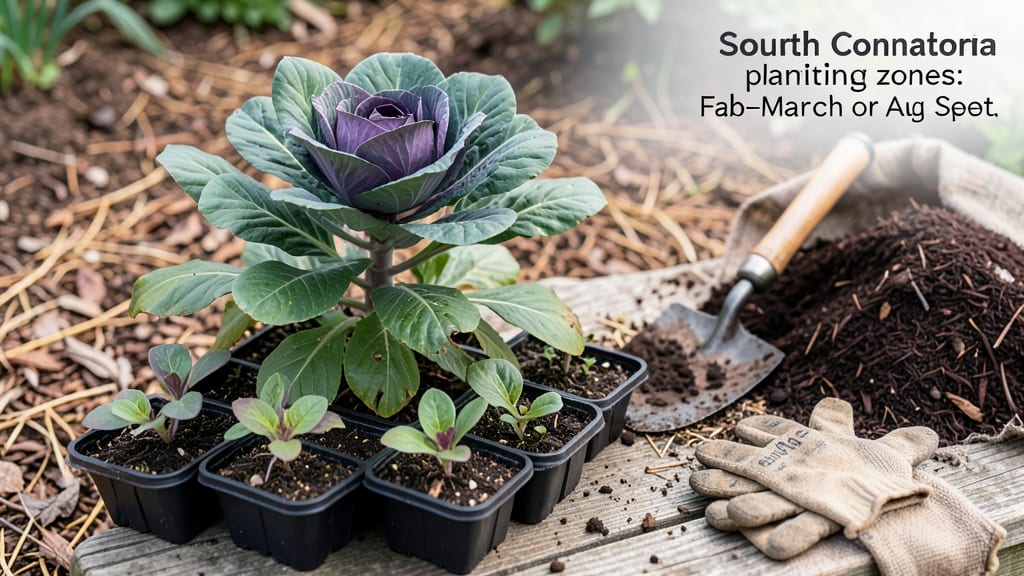
To plant cabbage in South Carolina, time your seeds or transplants 4-6 weeks before your last frost—typically by early March for spring harvests or late summer for fall crops.
South Carolina gardeners know timing is everything—plant cabbage too early, and frost will ruin your crop; too late, and summer heat will turn your heads into bitter bolts. Mastering the perfect planting window by county ensures sweet, crisp harvests all season long.
In USDA zones 7b-8b, your frost-free window is short—just 210-240 days—so planning matters. Coastal areas like Charleston can start slightly earlier, while Upstate regions like Greenville may need to adjust for later frosts.
Below, I’ll break down the exact planting dates by region, how to stretch your season with row covers, and which varieties hold up best in South Carolina’s heat. Ready to grow crisp, homegrown 🥬 all season?
South Carolina cabbage planting deadlines by county: frost dates and last safe planting windows
Cabbage thrives in South Carolina’s cool seasons, but timing varies dramatically across the state’s three distinct regions. The Upstate (USDA Zone 7b) experiences earlier frosts than the Midlands (Zone 7b-8a) or Lowcountry (Zone 8a-8b).
Plant too early, and frost will blacken your seedlings; too late, and summer heat triggers bolting (flowering prematurely).
For spring harvests, aim to plant 4-6 weeks before your county’s last frost date. Fall plantings should go in 10-12 weeks before the first frost. Heat-tolerant varieties like ‘Golden Acre’ or ‘Windsor’ can extend your window by 2-3 weeks in hotter regions.
Below is your county-by-county guide to frost dates, planting windows, and heat-tolerant variety recommendations. Use this to plan early spring and late summer plantings for a year-round supply of crisp, sweet cabbage.
🌱
| Region | Counties | Avg Last Frost | Spring Planting Window | Fall Planting Window | Heat-Tolerant Variety |
|---|---|---|---|---|---|
| Upstate | Greenville, Spartanburg | March 15 | Feb 15 - Mar 1 | Aug 1 - Aug 15 | ‘Golden Acre’ |
| Anderson, Oconee | March 10 | Feb 10 - Feb 25 | Jul 30 - Aug 10 | ‘Windsor’ | |
| Cherokee, Pickens | March 5 | Jan 30 - Feb 15 | Jul 25 - Jul 31 | ‘Crimson Love’ | |
| Midlands | Lexington, Richland | March 20 | Feb 20 - Mar 5 | Aug 5 - Aug 20 | ‘Golden Ball’ |
| York, Chester | March 18 | Feb 15 - Mar 3 | Aug 1 - Aug 15 | ‘Red Express’ | |
| Fairfield, Newberry | March 22 | Feb 25 - Mar 10 | Jul 31 - Aug 15 | ‘Early Jersey Wakefield’ | |
| Lowcountry | Charleston, Berkeley | March 25 | Mar 1 - Mar 15 | Aug 10 - Aug 25 | ‘Savoy King’ |
| Beaufort, Jasper | March 28 | Mar 5 - Mar 20 | Aug 15 - Sep 1 | ‘Blue Vantage’ | |
| Hampton, Horry | March 30 | Mar 10 - Mar 25 | Aug 20 - Sep 5 | ‘Cavalo’ |
In the Upstate, where frosts arrive earliest, start seeds indoors by mid-January for transplanting in late February. The Midlands offers a slightly longer window—plant outdoors by mid-March for spring harvests. Meanwhile, Lowcountry gardeners can push planting into early April thanks to later frosts.
For fall plantings, prioritize late July or early August to ensure heads mature before November frosts. Use shade cloth in summer to protect seedlings from 90°F+ temperatures, which stress young plants. In the Lowcountry, where summers are longest, opt for bolt-resistant varieties like ‘Blue Vantage’.
Pro tip: Succession plant every 2-3 weeks in spring and fall to stagger harvests. For example, in Charleston County, plant March 1, March 15, and April 1 for continuous cab
How to extend your cabbage season in South Carolina: fall vs. spring planting strategies
South Carolina’s humid subtropical climate gives us two prime windows for growing cabbage: early spring and late summer. But timing is everything—miss the window, and you’ll end up with bitter, bolted heads instead of sweet, crisp harvests.
The key is understanding when to direct-sow seeds versus transplanting seedlings, and how to stretch your season with simple tricks like row covers.
For spring cabbage, start seeds indoors 8-10 weeks before your last frost date (typically mid-February in most counties). Transplant seedlings outdoors 4-6 weeks before that date—usually late February to early March.
This gives your plants time to mature before summer heat sets in. For fall cabbage, aim to transplant seedlings 10-12 weeks before your first frost (mid-September to early October).
Spring vs. Fall Cabbage Planting in South Carolina
Spring Planting
- Pros: Cooler temps, fewer pests
- Cons: Risk of late frost damage
Fall Planting
- Pros: Longer harvest window, milder weather
- Cons: Shorter daylight hours, slower growth
To push your spring harvest even earlier, use floating row covers to protect seedlings from late frosts. Remove them during the day to let pollinators visit (if growing for seed) and replace them at night.
For fall cabbage, choose heat-tolerant varieties like ‘Crimson Glory’ and plant in partial shade to avoid bolting. Mulch with straw to keep roots cool and retain moisture.
Direct-sowing seeds is another strategy for extending your season. For spring, sow seeds 4-6 weeks before your last frost date in well-prepared soil. For fall, try a second planting in late July for a late-October harvest.
Just remember: cabbage needs consistent moisture and cool temperatures to form tight heads—don’t let soil dry out or temps climb above 80°F.
My favorite trick? Succession planting every 2-3 weeks in spring and fall. This ensures a steady supply of fresh cabbage instead of one big harvest. For example, plant a batch in late February, another in mid-March, and a final one in early April.
In fall, repeat the process in August and September for a staggered harvest through November.
Don’t forget to rotate your planting locations each season to prevent soil-borne diseases. And if you’re in the Upstate, where nights get cooler faster, you can push your fall planting 2 weeks later than the Lowcountry.
With these strategies, you’ll enjoy homegrown cabbage from spring through fall—no grocery store in sight! 🥬