
Plants
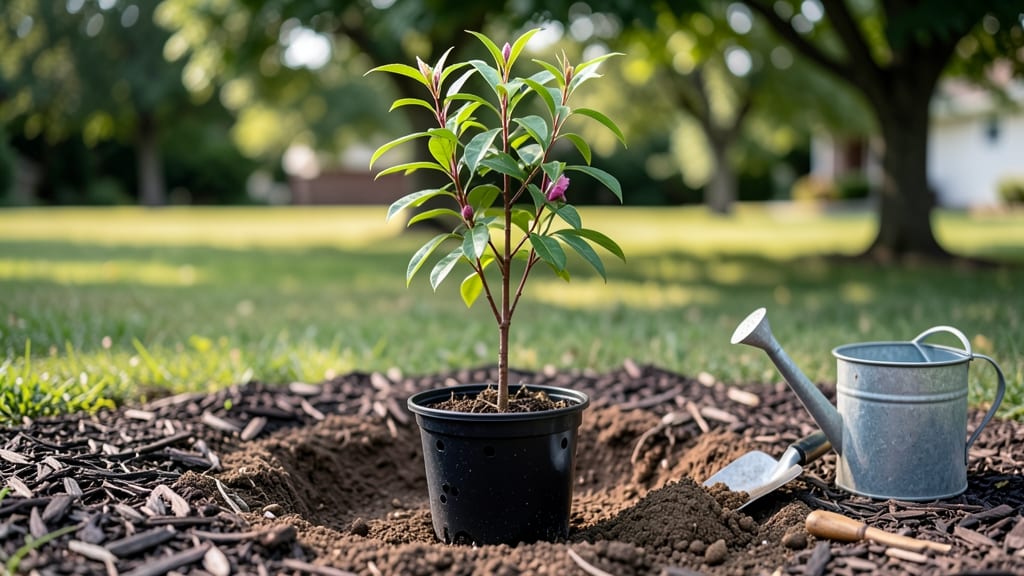
Planting crape myrtle in Zone 9 after the last frost risk passes — typically by mid-February — gives your 🌸 the best shot at strong root growth before summer’s heat sets in.
Miss that window, and you risk transplant shock when temperatures spike, leaving your tree struggling to establish itself. In Zone 9, where summers are long and intense, timing isn’t just about avoiding frost—it’s about setting up your crape myrtle for resilience.
Below, I’ll break down the exact frost-free window for your microclimate (coastal vs. inland), how to prep soil for faster rooting, and what to watch for in the first few weeks after planting.
You’ll learn how to stretch the planting season if you’re a late starter, plus the one care step that makes all the difference in Zone 9’s brutal summers.
Optimal planting timeline for crape myrtle in Zone 9
In Zone 9, where summers are long and intense, timing your crape myrtle planting correctly ensures strong root establishment before the heat peaks. The frost-free window typically spans from mid-January through April, but microclimates—like coastal areas vs. inland deserts—can shift this by weeks.
Planting too early risks cold snaps, while late planting stresses young roots during summer's dry spells.
Coastal Zone 9 regions (e.g., Southern California) often have milder winters, allowing earlier planting as early as late December. In contrast, inland areas (e.g., Arizona’s Sonoran Desert) may wait until March to avoid late-winter freezes.
Understanding these nuances helps you align planting with your local last frost date and soil conditions.
Soil temperature is your best guide: crape myrtles thrive when soil reaches 60°F (15°C) consistently. Use a soil thermometer to confirm readiness—this usually happens in February-March for most of Zone 9. Warmer soil speeds root growth, giving your tree a head start before summer’s heat.
Here’s how to match your Zone 9 microclimate to the ideal planting window:
For container-grown crape myrtles, you can plant slightly later—up to April—since pots insulate roots. However, bare-root trees need the earliest window (December–January) to recover before summer. Always dig a hole twice as wide as the root ball to encourage outward growth, which crape myrtles love.
Zone 9’s summer heat (often exceeding 90°F/32°C) can shock newly planted trees, so aim to finish planting by mid-April at the latest. After planting, mulch heavily with 3–4 inches of organic mulch (like wood chips) to retain moisture and regulate soil temperature.
This is especially critical in inland areas, where evaporation rates are high.
If you’re in a coastal Zone 9 area with cooler summers, you might extend planting into May—but only if you provide daily shade cloth for the first 4–6 weeks. Avoid planting in June or later; the heat stress will overwhelm young roots, leading to poor establishment.
Pro tip: Acclimate container-grown crape myrtles for 3–5 days before planting by placing them in a shaded outdoor spot. This reduces transplant shock when you move them to their permanent home. Pair this with a root stimulator at planting for a 20% faster root growth rate in the first month.
Remember, Zone 9’s microclimates can vary dramatically even within a few miles. Check with your local Cooperative Extension office for hyper-local advice, especially if you’re near mountains or large bodies of water. These resources often track real-time soil temps, which are more accurate than general zone guidelines.
By aligning your planting with these frost-free windows and soil conditions, your crape myrtle will establish strong roots before summer’s peak—setting it up for vibrant blooms and decades of low-maintenance beauty. 🌸
Signs your Zone 9 soil is ready for crape myrtle planting
Crape myrtles thrive in Zone 9 when planted during the coolest months—typically January through March. But before you dig that hole, your soil must meet three key conditions: the right temperature, proper moisture, and good drainage.
Skipping these checks can lead to transplant shock or stunted growth, especially in our hot summers.
First, check your soil's temperature. Crape myrtles need soil that's at least 60°F (15°C)—warmer than that, and roots may struggle to establish. Use a soil thermometer to test 6 inches deep.
If it's cooler, wait a few more weeks. Cooler soil helps prevent moisture loss and reduces stress on the young roots.
Next, assess moisture levels. Stick your finger 2-3 inches deep into the soil. It should feel damp but not soggy.
If it's bone-dry, water deeply a day before planting to give the roots a head start. Overwatered soil can suffocate roots, so avoid planting after heavy rains unless the ground has dried out.
⚠️ callout-warning
Zone 9's microclimates (coastal vs. inland) can shift ideal planting times by 2-4 weeks. Inland areas may see frost risks until late February, while coastal zones can plant as early as December. Never plant when soil temps exceed 75°F (24°C)—this causes root burn and poor establishment.
🌡️ Pro Tip: Mulch heavily after planting to keep soil temps stable.
Test drainage by digging a 12-inch hole where you plan to plant. Fill it with water and time how long it takes to drain. If water lingers for more than 4-6 hours, amend the soil with compost or sand to improve airflow.
Crape myrtles hate "wet feet," so poor drainage is a dealbreaker for long-term health.
Finally, look for earthworms or microbial activity in the soil. Healthy soil teems with life, which means it's rich in nutrients. If you see few signs of activity, mix in aged compost or worm castings to boost fertility.
This step is crucial because crape myrtles need well-aerated, fertile soil to support their rapid growth.
Once you've confirmed all three conditions—temperature, moisture, and drainagecloudy day or in the late afternoon to minimize stress from direct sun. Water deeply right after planting to settle the soil and encourage root spread.
With the right conditions, your crape myrtle will establish strong roots in 4-6 weeks, setting it up for years of vibrant blooms and minimal summer stress. 🌸