
Planting
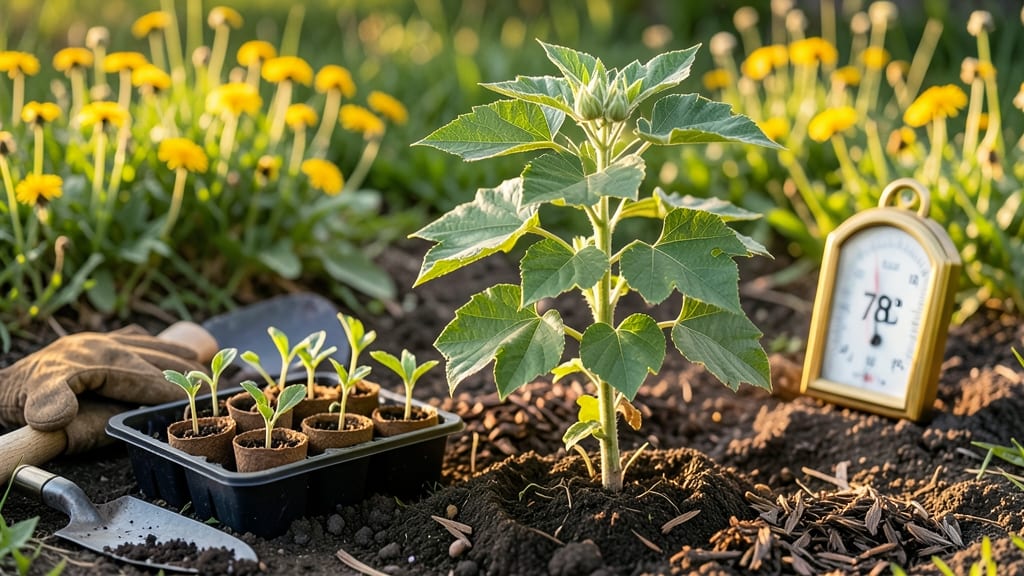
Plant cotton in Texas when soil temperatures hit a steady 60°F and the last frost has passed—typically March to May for North Texas and February to April for Central and South regions.
Texas cotton farmers know timing is everything—plant too early and face frost damage, too late and risk stunted growth. Mastering the perfect window can mean the difference between a thriving crop and a failed harvest.
In North Texas, where frosts linger until mid-February, waiting until late March ensures your 🧵 seedlings aren’t caught off guard. Meanwhile, South Texas growers can start as early as February, thanks to milder winters and earlier frost-free conditions.
Below, I’ll break down the exact soil temp thresholds, regional frost-free deadlines, and how to adjust planting dates for your specific Texas zone—plus the best cotton varieties for your area.
Texas cotton planting calendar: soil temperature & frost-free deadlines by region
Texas cotton thrives when planted at the right time—too early and frost zaps tender seedlings, too late and summer heat stunts growth. The key? soil temperatures above 60°F and knowing your region's last frost date.
North Texas needs patience, while South Texas can start earlier. Let's break down the perfect planting windows by region so your cotton gets off to the strongest start.
Cotton seeds won't germinate below 60°F soil temperatures, making early planting risky. Most Texas regions hit this threshold between late February and early April, but North Texas often waits until April.
Meanwhile, South Texas can plant as early as February. Always check a local frost-free date map—your county's average last frost sets the absolute deadline for planting.
⚠️ CRITICAL NOTE: Even if your area hasn't seen frost recently, late-spring cold snaps can still occur. Use row covers if planting near the edge of your region's frost-free window.
| Region | Last Frost Date | Ideal Planting Window | Soil Temp Threshold | County Examples |
|---|---|---|---|---|
| North Texas | Feb 15 - Mar 1 | April 15 - May 15 | 60°F+ | Lubbock, Amarillo, Wichita Falls |
| Central Texas | Feb 1 - Feb 15 | March 15 - April 30 | 60°F+ | Austin, San Antonio, Waco |
| South Texas | Jan 15 - Feb 1 | February 15 - March 31 | 60°F+ | Houston, Corpus Christi, Brownsville |
For North Texas (USDA Zones 7b-8a), wait until after April 15th to plant cotton. This region's unpredictable spring weather often brings late frosts—Lubbock's average last frost is March 1, but 2022 saw frost as late as April 5.
Use a soil thermometer to confirm temperatures stay above 60°F for 5+ days before planting.
Central Texas (Zones 8a-8b) offers a wider window. Austin's last frost typically falls by February 15, but soil may still be chilly. Plant between March 15 and April 30 for best results. Early varieties like Stoneville 213 can handle slightly cooler soils, while late varieties need warmer conditions.
South Texas (Zones 8b-11) enjoys the earliest planting. Brownsville's frost-free season starts January 15, and soil warms quickly. Plant February 15 to March 31 for optimal growth.
This region's longer growing season allows for two cotton crops per year in some areas, but focus on quality over quantity for home gardens.
Always verify your exact county's frost dates using the Texas A&M AgriLife Extension frost maps. Local microclimates—like urban heat islands or hilltops—can shift frost dates by 1-2 weeks. When in doubt, plant 2 weeks later than the average date to protect against late frosts.
Pro tip: Pre-warm your soil in cooler regions by using black plastic mulch 2-3 weeks before planting. This raises soil temperatures by 5-10°F, helping seeds germinate faster. Just remove the mulch before planting to avoid overheating young seedlings.
Remember, cotton needs 120-180 days to mature. Planting too late risks immature bolls before Texas' first frost in November. Use this calendar as your guide, but always stay flexible—Texas weather keeps us on our toes!
How to adjust cotton planting dates for Texas weather patterns & variety types
Texas' unpredictable spring weather can turn a cotton crop from thriving to struggling in weeks. Late frosts in North Texas or sudden heatwaves in South Texas demand flexibility in your planting strategy. The key is matching your cotton variety to local conditions while staying ahead of Mother Nature's curveballs.
For upland cotton—the most common type in Texas—planting dates should align with soil temperatures above 60°F. However, long-staple cotton varieties, prized for their premium fiber, require even more precision. These delicate plants need consistent warmth, making them riskier in North Texas' cooler zones like Lubbock or Amarillo.
⚠️ PROS-CONS BOX: Adjusting Cotton Planting Dates in Texas
Plant Early (Feb-March)
- PROS: Longer growing season for late-maturing varieties
- Better yield potential in South Texas
- Early start avoids summer heat stress
Plant Late (April-May)
- PROS: Avoids late frosts in North Texas
- Better for early-maturing varieties
- Reduces pest pressure from early plantings
Cons of Early Planting
- Risk of frost damage in North/Central TX
- Slower early growth from cool soil
- Increased disease pressure from prolonged wet conditions
Cons of Late Planting
- Shorter growing season for late varieties
- Higher heat stress during critical growth stages
- Reduced yield potential in South Texas
My strategy? Use a two-phase approach: start with early-maturing varieties like 'Paymaster HS 26' in late March for North Texas, then follow with medium-maturing types like 'Deltapine 1646 B2XF' in early April. This staggered planting creates a buffer against weather extremes while maximizing your harvest window.
For South Texas growers, consider long-staple varieties like 'Pima S-7' planted in February. These need consistent warmth from day one, so use black plastic mulch to raise soil temperatures quickly. In North Texas, stick to upland cotton varieties with 120-130 day maturity to avoid fall frosts.
Pro tip: Monitor the National Weather Service's 10-day forecasts before planting. If a heatwave over 100°F is predicted within 2 weeks of planting, delay by 10-14 days to prevent seedling stress. Your cotton plants will thank you with stronger roots and better yields.
Remember, Texas cotton farming isn't about rigid deadlines—it's about reading the weather and adapting your schedule. Keep a planting journal to track what works each year, and don't hesitate to adjust your calendar when the forecast turns against you.
The right timing can turn a good crop into a great one—or save you from a total loss. 🌱🌡️