
Plants
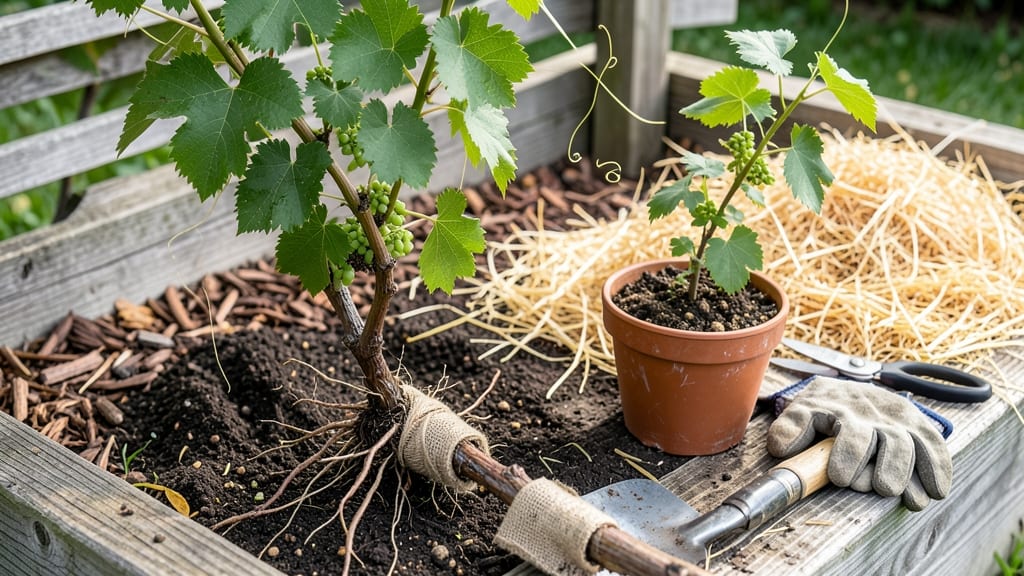
Planting grapes in Georgia means timing matters more than you’d think—get it wrong, and your 🍇 vines could struggle to establish roots before summer heat or frost strikes.
Georgia’s warm climate gives you a longer window than most states, but the Piedmont’s chilly nights and the Coastal Plain’s lingering humidity mean Muscadines and Vinifera grapes need different strategies.
I’ll show you how to align your planting with your region’s last frost date—plus the one trick that saves late-season vines.
You’ll learn the exact month-by-month windows for bare-root and potted vines, how to read soil temperature like a pro, and why March is the gold standard for most of the state. No guesswork, just data from University of Georgia Extension trials.
By the end, you’ll know whether your 7a-8b zone favors spring or fall planting—and how to adjust if a late frost sneaks in. Ready to grow grapes that thrive?
Georgia’s frost-free planting windows by grape Variety (Muscadine vs. Vinifera)
Georgia’s two dominant grape varieties—Muscadine and Vinifera—thrive in different frost-free windows, making timing critical for strong vines. Muscadines, native to the Southeast, handle Georgia’s heat better, while Vinifera varieties need cooler conditions. The Coastal Plain and Piedmont regions also have distinct planting windows due to microclimates.
Understanding your USDA hardiness zone (7a-8b) and chilling requirements is key. Muscadines need minimal chilling (200-300 hours), while Vinifera varieties often require 500-1,000 hours. Planting at the wrong time can stunt growth or delay fruit production.
Bare-root vines should be planted dormant in late winter (February-March), while potted vines can go in early spring (March-April) once soil warms. Frost risk is the biggest enemy—wait until after the last average frost date (mid-February in Coastal Plain, early March in Piedmont).
Here’s your regional planting guide for Georgia’s grape varieties, including frost-free windows and best practices:
For bare-root vines, plant as soon as soil is workable (50°F+) and frost risk drops. Potted vines can wait until April in warmer Coastal Plain areas but should go in March in cooler Piedmont zones. Vinifera varieties are more frost-sensitive, so avoid early planting unless you’re using row covers or microclimate protections.
In the Coastal Plain, where winters are milder, you can push planting to early April for Vinifera varieties, but risk spring frosts if too late. The Piedmont’s cooler nights make March planting ideal for both types, with Muscadines adapting better to heat spikes later in the season.
Use a soil thermometer to confirm readiness—50°F+ for Muscadines and 60°F+ for Vinifera. Amend soil with compost to improve drainage, and avoid planting in waterlogged areas, which can rot roots. Mulch heavily after planting to retain moisture and regulate soil temperature.
If you’re in a transition zone (e.g., near the fall line), opt for Muscadine varieties like Carlos or Fry, which tolerate heat and humidity better. For Vinifera, choose cold-hardy rootstocks like Riparia or Rupestris to improve frost resistance.
Pro tip: Check the University of Georgia Extension’s frost forecast (available here) for real-time updates. Last-minute adjustments can save your vines from frost damage or heat stress. Planting at the right time ensures stronger canes, better fruit set, and higher yields in your first harvest.
🍇
5 Signs your Georgia grape planting timing is perfect (or terrible)
Getting your grape planting timing right in Georgia can mean the difference between a thriving vineyard and struggling vines. The key is reading your local microclimate and soil conditions—not just checking a calendar.
I’ve learned that even a week too early or late can stress young grape plants, making them vulnerable to pests or frost damage. Let’s break down the critical signs that tell you when it’s go-time for planting.
First, pay attention to soil temperature. Grapes need soil that’s warmed to at least 60°F (15°C) at a depth of 4-6 inches. This warmth signals that roots can establish quickly without shock. Use a soil thermometer to check—it’s the most reliable way to avoid planting too soon.
In Georgia, this typically aligns with late February to early April, but coastal areas like Savannah may be ready a week earlier.
- Soil Temp: 60°F+ (15°C+) at 4-6" depth—use a thermometer to confirm.
- Leaf Buds: Swollen but not yet bursting—ideal for transplanting bare-root vines.
- Frost Risk: 0% chance of frost in your zone—check NOAA forecasts 2 weeks ahead.
- Moisture: Well-drained soil with 1-2 inches of rainfall in the past week.
- Local Variety: Muscadines can handle cooler soils than Vinifera—adjust timing accordingly.
Next, observe the bud development on your grapevines. If you’re planting bare-root vines, look for swollen buds that haven’t yet burst into leaves. This stage means the plant is primed for growth but hasn’t used up its energy reserves—critical for a successful transplant.
For potted vines, check that the roots are tightly bound but not circling the pot, indicating they’re ready to stretch into fresh soil.
Don’t ignore frost forecasts, even if your soil is warm. A late frost can wipe out young vines in days. I always cross-reference the National Oceanic and Atmospheric Administration (NOAA) frost predictions with my local University of Georgia Extension alerts.
If frost is predicted within 10-14 days of planting, delay until conditions stabilize. In Georgia’s Piedmont region, this might push planting into mid-April, while coastal areas can start as early as late February.
Finally, assess your soil moisture and drainage. Grapes hate soggy roots, so plant when the soil has had time to dry slightly after recent rains—aim for 1-2 inches of rainfall in the past week.
If your soil is bone-dry, water deeply 24 hours before planting to reduce transplant shock. Pro tip: Dig a small hole and check the moisture—if it’s damp but not wet, you’re golden.
If you miss the ideal window, don’t panic. Late plantings can still work if you use row covers or plant cold-hardy varieties like ‘Scuppernong’ muscadines. Just be prepared for a slower start and monitor for pests like Japanese beetles, which thrive in stressed vines.
With these signs in mind, you’ll nail your Georgia grape planting timing every time!