
Plants
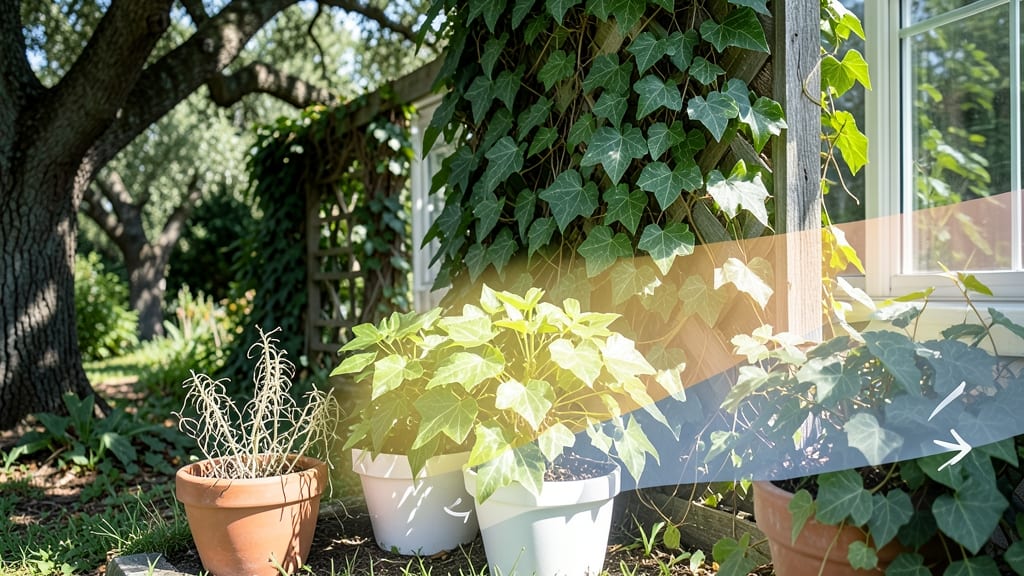
An ivy plant needs between 4 and 6 hours of bright, indirect light daily to stay vibrant and healthy—too little, and it stretches weakly; too much, and it burns.
Struggling to keep your 🌿 thriving? You’re not alone. Many gardeners overlook how delicate ivy is to direct sunlight, assuming it’s a hardy, low-maintenance plant. The truth? It’s a master of balance, thriving in filtered light but wilting under harsh rays.
Whether you’re growing English Ivy indoors near a north-facing window or outdoors in Zone 6a’s partial shade, the key is mimicking its natural woodland habitat. Too dim, and it loses its lush green color; too bright, and crispy edges appear.
I’ll show you how to spot the signs and adjust light exposure for a plant that grows up to 100 feet when happy.
By the end, you’ll know exactly where to place your ivy—whether it’s a trailing houseplant or a climbing wall—so it stays full, green, and ready to thrive year-round.

Optimal light requirements for ivy plants: low to bright indirect sunlight explained
Ivy plants are famously adaptable, but their light needs are often misunderstood. While they thrive in low-light conditions, they also crave bright indirect sunlight for optimal growth.
The key is finding that sweet spot—too little light and your ivy will stretch and weaken; too much direct sun, and it risks leaf burn. Let’s decode the perfect light balance for your ivy, whether it’s climbing outdoors or trailing indoors.
Most ivy varieties—like English ivy and Swedish ivy—do best with 4-6 hours of indirect light daily. This means positioning them near a window but not in harsh afternoon rays. Think of it as giving them a gentle sunbath rather than a full-blown tan.
For indoor plants, an east-facing window is ideal, while outdoor ivy benefits from dappled shade under trees or on north-facing walls.
Here’s how to visualize the perfect light spectrum for ivy:
Outdoor ivy plants often need seasonal light adjustments. In spring and fall, they can handle more direct sunlight as temperatures are milder. But during summer’s peak, protect them from intense afternoon rays by providing afternoon shade with a sheer curtain or lattice.
If you notice yellowing leaves or brown patches, it’s a clear sign your ivy is getting too much direct sun—move it to a shadier spot immediately.
Indoor ivy care requires a slightly different approach. Place your plant within 3 feet of a window to ensure it gets enough light without scorching. If your home has low natural light, consider supplementing with a grow light for 6-8 hours daily.
Rotate the pot occasionally so all sides receive even light, preventing lopsided growth. A simple trick: If your ivy starts growing toward the light source, it’s not getting enough from all directions.
One common mistake is assuming all ivy varieties have the same light tolerance. While English ivy is the most adaptable, Hawaiian ivy prefers slightly brighter conditions and may show signs of stress in deep shade.
Always check your specific variety’s needs—this small detail can mean the difference between a thriving vine and a struggling one. For example, Swedish ivy (a variegated type) needs more light to maintain its striking patterns.
Adjusting light levels isn’t just about placement—it’s also about observing your plant’s behavior. Healthy ivy leaves are dark green and glossy, with a firm texture. If you see new growth reaching toward the light, it’s time to move the plant closer to its source.
Conversely, if leaves start curling or dropping, it’s getting too much heat or direct sun. Think of your ivy as a light meter—it tells you exactly what it needs through its appearance.
For container-grown ivy, light needs can shift based on pot size and material. Smaller pots dry out faster and may require more frequent light adjustments as the plant competes for resources.
If your ivy is in a terracotta pot, it might need slightly more light to compensate for faster moisture loss. Meanwhile, self-watering planters can support ivy in lower-light conditions by maintaining consistent soil moisture. Always pair your light strategy with proper watering habits for best results.
Seasonal transitions are the trickiest time for ivy light management. When moving your plant indoors for winter, place it near a south-facing window if possible—these windows offer the most consistent light during shorter days.
If you’re bringing outdoor ivy inside, do it gradually over 1-2 weeks to avoid shocking the plant with sudden light changes. Conversely, when transitioning back outdoors in spring, acclimate your ivy by placing it in dappled shade for a few hours before full exposure.
Pro tip: Use a light meter app (like Light Meter by A1) to measure foot-candles in your plant’s location. Ivy thrives in 100-500 foot-candles of light—any lower, and growth slows; any higher, and risk of burn increases.
This simple tool takes the guesswork out of creating the perfect environment. Even without a meter, your eyes can guide you: If your ivy looks
How to adjust light for different ivy varieties (English, Swedish, Hawaiian, etc.)
Not all ivy varieties thrive under the same light conditions—what works for English Ivy might scorch Swedish Ivy. Each type has unique light needs, and understanding these differences is key to preventing common mistakes like leaf burn or stunted growth.
Let’s dive into how to tailor light exposure for your specific ivy variety to keep it lush and healthy.
One of the biggest mistakes gardeners make is assuming all ivy prefers bright indirect light. While this is true for most, Hawaiian Ivy, for example, can handle more shade than its counterparts.
Meanwhile, Swedish Ivy often struggles in dim corners. The trick is creating the right microclimate—whether indoors or out—to match each variety’s natural habitat.
For English Ivy, the classic choice for homes, aim for a north-facing window or an east-facing spot to avoid harsh afternoon sun. If your ivy starts developing yellowing leaves or brown patches, it’s likely getting too much direct sunlight.
Move it back 2-3 feet or add a sheer curtain to filter the light.
If you’re growing Swedish Ivy indoors, avoid placing it near south-facing windows where temperatures can spike. Instead, opt for a west-facing window with filtered light or a well-lit room 5-6 feet from a window.
This variety is more forgiving in lower light but will still show its best colors with adequate exposure.
For Hawaiian Ivy, often used as a trailing plant, embrace the shade. It’s perfect for bathrooms or dim hallways where other plants struggle. If you notice slow growth or pale leaves, consider supplementing with a grow light for 4-6 hours daily during winter months when natural light is scarce.
Outdoor gardeners with Boston Ivy should prioritize full sun exposure for vibrant foliage, but be mindful of heat stress in summer. Water deeply in the morning to help it withstand afternoon heat, and provide a trellis or fence for climbing support to maximize its natural light absorption.
Remember, even the hardiest ivy varieties can adapt with patience. Start with the ideal light conditions for your specific type, then adjust based on how your plant responds. With the right balance, your ivy will reward you with year-round greenery and minimal fuss. 🌿