
How To
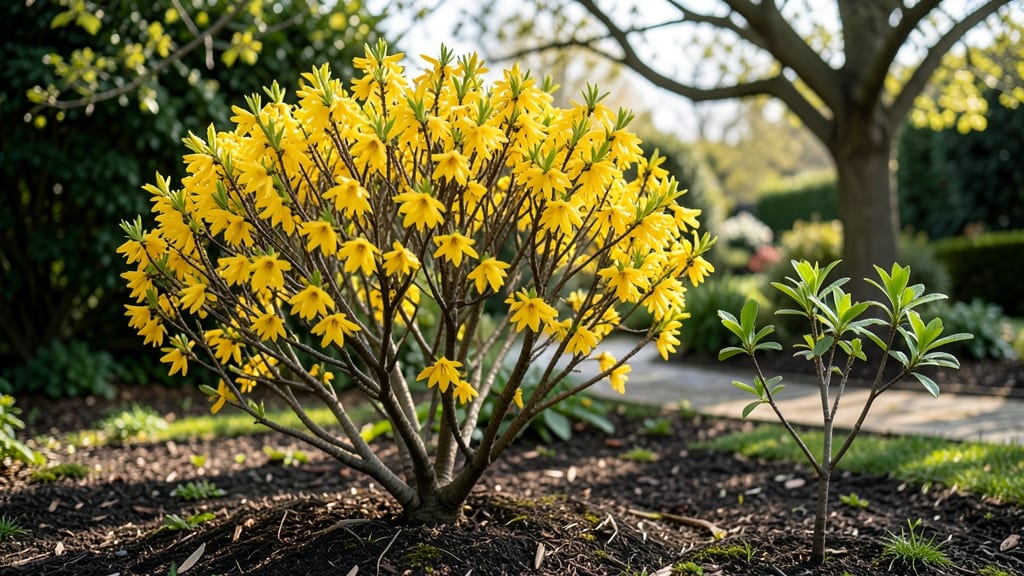
Forsythia grows between 3 and 10 feet tall, transforming your garden into a burst of golden cheer each spring—if you pick the right variety for your space.
Picture this: a 6-foot shrub with cascading yellow blooms stealing the show in your backyard, or a compact 3-foot dwarf that fits perfectly on a patio. The difference comes down to the species, and knowing which one thrives where can make or break your garden design.
Some forsythias, like the towering Forsythia × intermedia, reach heights of 10 feet or more, making them ideal for privacy screens or bold focal points. Others, such as Forsythia ovata, stay closer to the ground, perfect for borders or small gardens where space is limited.
In this guide, I’ll break down the height ranges of popular varieties, share pruning tips to control growth, and help you choose the perfect forsythia for your outdoor space—whether you’re dreaming of a dramatic statement or a cozy corner blooming with color.


Forsythia height by variety: compact dwarfs to towering giants
Choosing the right forsythia variety depends heavily on your garden’s space and design goals. Some varieties stay compact, perfect for small patios or containers, while others grow into towering shrubs or small trees, ideal for privacy screens or focal points.
The key is understanding each variety’s mature height and spread to avoid overcrowding or underutilizing your landscape.
Forsythia plants typically grow between 3 and 12 feet tall, with some varieties even reaching up to 15 feet under ideal conditions. Their growth rate is moderate, with most varieties gaining 1–2 feet per year until they reach maturity.
Whether you’re planning a small urban garden or a large backyard landscape, selecting the right height ensures your forsythia thrives without overwhelming your space.
Below is a detailed breakdown of 10 popular forsythia varieties, including their mature height, growth habits, and spread to help you make an informed decision for your garden layout.
| Variety | Mature Height (ft) | Spread (ft) | Growth Habit | Best For |
|---|---|---|---|---|
| Forsythia giraldiana ‘Sunburst’ | 3–5 ft | 4–6 ft | Compact, upright | Small gardens, containers |
| Forsythia ovata ‘Spring Glory’ | 4–6 ft | 5–7 ft | Bushy, rounded | Borders, hedges |
| Forsythia suspensa ‘Tetragold’ | 6–8 ft | 6–8 ft | Vigorous, arching | Privacy screens, focal points |
| Forsythia × intermedia ‘Spectabilis’ | 8–12 ft | 8–10 ft | Tall, upright | Large landscapes, backyards |
| Forsythia viridissima ‘Courtesy’ | 5–7 ft | 5–7 ft | Bushy, dense | Foundation planting |
| Forsythia × intermedia ‘Lynwood’ | 6–10 ft | 6–8 ft | Vigorous, spreading | Woodland gardens, slopes |
| Forsythia giraldiana ‘Dwarf’ | 2–4 ft | 3–5 ft | Dwarf, mounding | Patios, rock gardens |
| Forsythia suspensa ‘Golden Bell’ | 5–7 ft | 4–6 ft | Upright, weeping | Small trees, focal points |
| Forsythia × intermedia ‘Beatrix Farrand’ | 7–10 ft | 7–9 ft | Tall, arching | Privacy hedges, large borders |
| Forsythia suspensa ‘Wehrhahn’ | 10–15 ft | 8–12 ft | Tree-like, spreading | Large landscapes, specimen planting |
If you’re working with limited space, varieties like ‘Sunburst’ or ‘Dwarf’ are excellent choices, staying under 5 feet tall while still delivering vibrant spring blooms.
For larger gardens or privacy screens, taller varieties like ‘Spectabilis’ or ‘Wehrhahn’ can reach 10–15 feet, making them perfect for creating natural barriers or focal points.
When planning your garden, also consider the spread of each variety. Some forsythias, like ‘Lynwood’ or ‘Tetragold’, have a wide spread that can reach 6–8 feet, while others, like ‘Courtesy’, stay more compact.
This ensures you’re not only accounting for height but also the horizontal space your forsythia will occupy as it matures.
For urban gardens or small yards, I recommend training forsythias on a trellis or espalier to control their height while still enjoying their cheerful blooms. This technique works especially well with varieties like ‘Golden Bell’ or ‘Spring Glory’, which can be pruned to stay within 5–7 feet
Pruning forsythia for optimal height control: when, how, and why
Forsythia’s rapid growth and lush blooms make it a garden favorite, but without proper pruning, it can quickly outgrow its space. I’ve learned that strategic pruning not only controls height but also promotes healthier blooms and stronger stems.
The key is timing—prune at the right moment to avoid cutting off next year’s flowers.
Most forsythia varieties reach 6 to 10 feet tall at maturity, but some dwarf types stay under 5 feet. If you’re wondering how tall your forsythia will grow, consider its variety and pruning habits.
For example, Forsythia × intermedia often tops out around 8 to 12 feet, while Forsythia ovata remains more compact at 3 to 5 feet.
⚠️ Watch Out for Overgrowth!
If left unpruned, forsythia can grow 3 feet per year, quickly becoming unmanageable. Tall varieties (8–12 ft) may need aggressive pruning to maintain height, while dwarf types (3–5 ft) only require light shaping. Always prune after flowering to preserve next year’s blooms.
I recommend pruning forsythia in late winter or early spring, just as new growth begins. This timing ensures you don’t accidentally remove buds for next year’s flowers. Use sharp, clean pruning shears to make 45-degree cuts just above a bud or branch junction.
Avoid cutting into old wood, as forsythia blooms on last year’s growth.
Start by removing dead, diseased, or crossing branches first. Then, thin out one-third of the oldest stems at the base to encourage new growth. For height control, cut back overly tall stems by one-third to maintain a balanced shape.
Remember, forsythia responds well to pruning, so don’t be afraid to shape it aggressively if needed.
Common mistakes include pruning too late in the season or using dull tools, which can damage stems. I’ve also seen gardeners accidentally cut into old wood, which reduces flowering. Always step back and assess the plant’s shape before making cuts—this helps you visualize the final look.
After pruning, apply a balanced fertilizer to encourage recovery and new growth. Mulch around the base to retain moisture and suppress weeds. With proper care, your forsythia will reward you with vibrant blooms year after year while staying within your desired height limits. 🌸