
Plants
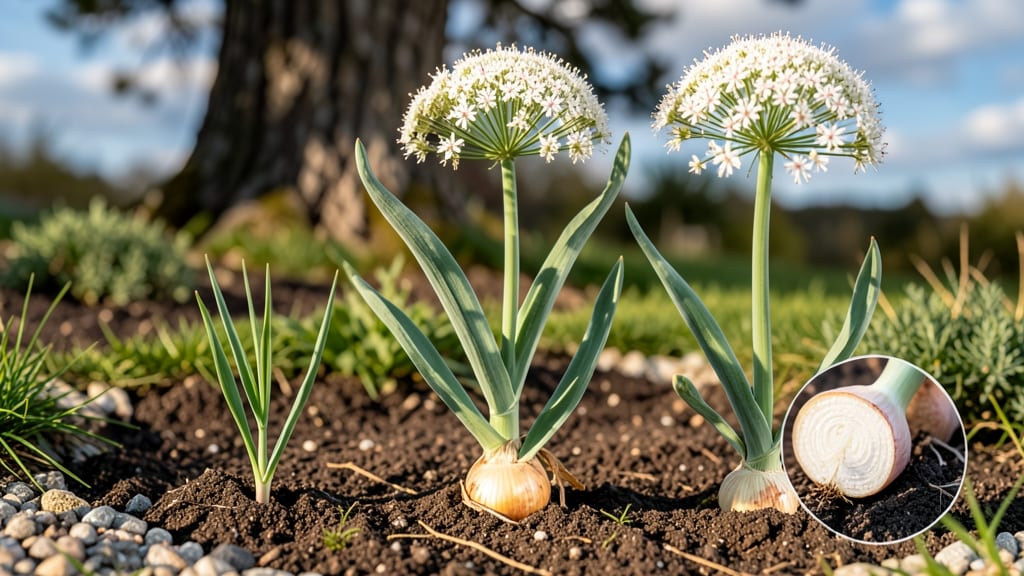
Onion plants grow anywhere from 6 inches to 18 inches tall, depending on whether you’re growing them for scallions or full bulbs.
If you’ve ever watched your 🧅 onion plants stretch toward the sky only to flop over before harvest, you’re not alone. The height of your onions isn’t just about space—it’s about timing, variety, and how you care for them.
Green onions stay short and leafy, while storage onions send up taller stems as they develop bulbs. Understanding these differences helps you plan spacing, support, and when to harvest for the best results.
Below, I’ll break down the height ranges by variety, how to manage floppy stems, and when to pull them for peak flavor—so you can go from confused gardener to onion-growing pro.


Onion plant height by variety: from dwarf greens to giant bulbs
Onion plants vary dramatically in height depending on the variety and whether you're growing them for green tops or storage bulbs. Some types stay compact and leafy, perfect for container gardens, while others grow tall with thick stalks before producing bulbs.
Knowing these differences helps you plan your garden layout and avoid overcrowding. For example, green onions rarely exceed 12 inches, while storage onions can reach nearly 2 feet tall.
Height isn't just about aesthetics—it directly affects harvest timing, spacing needs, and even bulb size. Taller varieties often produce larger bulbs but require more vertical space, while shorter types mature faster and are ideal for small plots.
Understanding these growth patterns lets you choose the right onions for your space and goals, whether you're growing for fresh greens or long-term storage.
The key to managing onion height lies in their growth stages. Early on, all onions focus on leaf production, but as they mature, some varieties shift energy to bulb development, causing them to flop or sprawl.
This is why shallots and giant onions need staking, while bunching onions stay tidy without support. Let's break down the height expectations for the most common types so you can plan your garden like a pro.
Notice how green onions and bunching onions stay under 18 inches, making them perfect for container gardening or interplanting with other crops. These varieties focus on leaf production rather than bulb development, so they mature quickly—often in as few as 60 days.
In contrast, storage onions like Texas Early White or Ailsa Craig prioritize bulb growth, which requires more time and space.
If you're growing onions for long-term storage, taller varieties like giant onions or sweet onions are worth the extra space. These types can reach 3 feet tall and produce bulbs as large as 4 inches in diameter.
However, their height means you'll need to stake or cage them to prevent flopping, especially in windy conditions or heavy rain. Without support, their leaves can sprawl, reducing airflow and increasing the risk of fungal diseases.
One common misconception is that taller onion plants always yield larger bulbs. While height often correlates with bulb size, it's not the only factor. Soil fertility, water consistency, and daylength also play critical roles.
For example, shallots stay relatively short but produce clusters of gourmet-sized bulbs because they thrive in cooler conditions. Meanwhile, sweet onions like Vidalia need long, hot summers to develop their signature mild flavor, even if they grow tall.
For small-space gardens, consider dwarf varieties or intercropping. Plant green onions between rows of taller crops like tomatoes or peppers—they won't compete for space and can be harvested repeatedly without removing the entire plant.
Alternatively, use vertical gardening techniques: install trellis netting or bamboo stakes to support taller onions while keeping them upright and accessible. This method also makes harvesting easier and reduces the risk of soil-borne diseases.
When planning
How onion height affects spacing, support, and harvest success
Onion height isn't just about how tall they stand—it directly impacts your garden's layout and harvest success. Taller varieties like Yellow Sweet Spanish can reach 18 inches, while green onions stay under 12 inches. This difference affects everything from planting distances to whether you need support structures.
Proper spacing prevents competition for nutrients and sunlight, which can stunt bulb development. Overcrowded onions grow leggy and produce smaller bulbs because their leaves can't photosynthesize efficiently. Meanwhile, under-spaced onions may develop uneven sizes or even split open due to lack of airflow.
Onion Height & Garden Planning
- 🌱 Green onions: 6-12 inches tall → Plant 2-3 inches apart for quick harvests
- 🧅 Storage onions: 12-18 inches tall → Space 4-6 inches apart for full bulb growth
- 🪴 Tall varieties (e.g., Texas Early White): Up to 24 inches → Use stakes or cages to prevent flopping
- ✂️ Harvest timing: Taller plants take 100-120 days to mature; shorter varieties may be ready in 60-80 days
- 🌿 Small gardens? Try shallots (8-12 inches) or multiplier onions for efficient spacing
If your onions start leaning or flopping, it's time to add support. Tall varieties often need bamboo stakes or tomato cages to keep their heavy tops upright.
Without support, leaves can break, exposing bulbs to sun scald or pests. I recommend installing stakes early—once plants reach 6 inches—to avoid disturbing roots later.
Leaf height also correlates with bulb size. Taller leaves mean more energy for bulb development, but only if the plant isn't struggling. Short, thick leaves often indicate stress (like overwatering or poor soil), which can lead to small, pithy bulbs.
Aim for 4-6 inches of leaf growth per week in ideal conditions.
For small gardens, maximize space by interplanting onions with shallow-rooted crops like lettuce or radishes. Green onions are perfect for this—their short stature lets you tuck them between rows of taller plants. Just avoid pairing them with alliums (like garlic), which compete for the same nutrients.
Remember: Harvest timing depends on height. Taller onions signal maturity when their tops yellow and flop over, while shorter varieties may need you to gently pull and check bulb size. Never wait too long—overmature bulbs split open, and their flavor suffers.