
How To
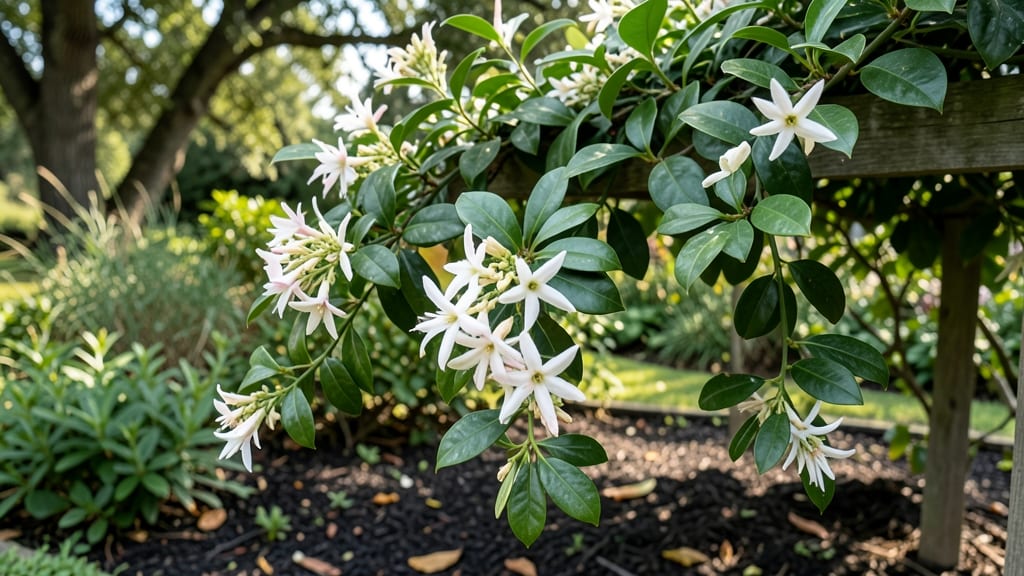
Star jasmine grows to 10–20 feet tall with the right support, but many gardeners underestimate how quickly its vines climb — and how much pruning it’ll need to keep it in check.
Picture this: a fragrant white blossom cascading over your trellis by midsummer, its sweet scent drawing you outside every evening. But without planning, that same vine could smother your fence or climb your roof in just a few years.
The key? Understanding its natural growth habits and how to guide it before it takes over.
This fast-growing vine thrives in USDA Zone 6a and beyond, where it can shoot up 3–5 feet per year if left unchecked.
Whether you’re planting it for a privacy screen, a fragrant arbor, or a container, knowing its mature height helps you choose the right spot — and the right pruning strategy — to keep it where you want it.
In this guide, I’ll break down how tall star jasmine typically grows, what affects its height, and the simple pruning tricks to keep it at your ideal size — whether that’s a 6-foot trellis or a sprawling hedge. Let’s get started.


Star jasmine growth height: natural climbing habits and environmental factors
Star jasmine (Trachelospermum jasminoides) is a deciduous vine known for its rapid vertical growth and intoxicating fragrance. In ideal conditions, it can reach heights of 10 to 30 feet, making it perfect for pergolas, trellises, or even as a ground cover if unchecked.
However, its growth habits vary widely based on climate, sunlight exposure, and soil quality, which I’ll break down for you.
The average mature height for star jasmine ranges between 10 and 20 feet in most U.S. growing zones (6-9). But in warmer climates like Zones 8-10, it can easily exceed 25 feet if left unpruned.
Its annual growth rate is impressive—expect 3 to 5 feet per year in the first few years, then 1 to 3 feet annually once mature.
Here’s how different factors influence its height and form:
| Factor | Effect on Height | Growth Form |
|---|---|---|
| Sunlight | Full sun (6+ hrs) → 20-30 ft | Tall, climbing vine |
| Partial shade | 6-15 ft | Bushier, less aggressive |
| Soil drainage | Poor drainage → stunted growth | Shrub-like habit |
| Climate (Zone 6) | 10-15 ft (slower growth) | Woody stems, slower vine |
| Climate (Zone 9+) | 20-30 ft (fast growth) | Aggressive climber |
In full sun conditions, star jasmine grows as a vigorous climbing vine, twining around trellises or fences with leathery, oval leaves. But when planted in partial shade, it often adopts a shrub-like form, staying between 6 and 12 feet tall.
This adaptability makes it versatile for small gardens or containers, where you can prune it to maintain a compact shape.
The soil type plays a crucial role too. Star jasmine thrives in well-draining, slightly acidic soil (pH 6.0-7.0). If your soil is clay-heavy or waterlogged, growth slows dramatically, and the plant may develop root rot. Amending the soil with compost or sand can encourage healthier, taller vines.
If you’re growing star jasmine in colder climates (Zones 6-7), expect slower growth and woody stems over time. In these areas, it often grows as a semi-evergreen shrub rather than a fast-climbing vine. Mulching in winter helps protect roots and encourages stronger regrowth in spring.
For gardeners in warmer zones (8-10), star jasmine can become highly invasive if unchecked. Without pruning, it will sprawl across fences or roofs, reaching heights of 25 to 30 feet.
In these climates, I recommend regular pruning to control its spread and direct its growth along desired structures.
One common misconception is that star jasmine will always grow as a vine. In reality, its form depends entirely on training and support. If you don’t provide a trellis or fence, it will sprawl along the ground, forming a dense mat of foliage.
This makes it a great ground cover alternative in areas where you want to suppress weeds.
To maximize height and flowering potential, give your star jasmine 6+ hours of sunlight daily and regular watering during dry spells. Fertilizing with a balanced 10-10-10 NPK in spring and summer will boost its growth rate.
Just avoid over-fertilizing, which can lead to leafy growth at the expense of flowers.
If you’re planning to use star jasmine for a privacy screen or fast-growing hedge, aim for a 10-15 foot height by pruning annually. For small spaces or containers, keep it trimmed to 6-8 feet to prevent it from overwhelming nearby plants. With the right care,
Pruning star jasmine for controlled height: step-by-step guide to training vines
Star jasmine (Trachelospermum jasminoides) can reach 10–20 feet in ideal conditions, but with strategic pruning, you can easily train it to stay between 6–10 feet—perfect for small patios or trellises. The key lies in understanding its growth cycles and when to intervene.
Pruning not only controls height but also encourages denser foliage and more abundant blooms, making your vine look fuller without sacrificing fragrance.
Timing is everything when pruning star jasmine. The best time to prune is late winter or early spring, just before new growth begins. This spring pruning removes dead or weak stems while shaping the plant for the season.
You can also do a light pruning in summer after flowering to maintain shape, but avoid heavy cuts during this time, as it may reduce next year’s blooms.
Step-by-Step Pruning Guide for Star Jasmine
- 1 Choose the right tools: Use clean, sharp pruners or loppers for thicker stems. Disinfect tools with rubbing alcohol to prevent disease spread.
- 2 Identify target stems: Look for overly long vines (longer than your desired height) or crossing branches. These are prime candidates for pruning.
- 3 Make clean cuts: Cut just above a leaf node or bud at a 45-degree angle. Avoid leaving stubs, which can rot.
- 4 Encourage bushiness: Trim back 1/3 of the longest stems to stimulate lateral branching. This creates a fuller, more compact vine.
- 5 Support new growth: Use soft ties to guide new shoots along trellises or arbors. Avoid wire or tight bindings, which can damage stems.
- 6 Fertilize lightly: After pruning, apply a balanced fertilizer (10-10-10) to support new growth. Water thoroughly to help roots recover.
One of the most common mistakes gardeners make is pruning at the wrong time. Avoid cutting back star jasmine in late summer or fall, as this can stimulate tender new growth that won’t survive winter.
Another pitfall is over-pruning, which can stress the plant and reduce flowering. Aim to remove only what’s necessary to maintain your desired height and shape.
For container-grown star jasmine, pruning is even more critical to prevent vines from becoming unmanageable. In small pots, you can prune more aggressively to encourage a compact, bushy habit. Just be sure to provide adequate support, like a small trellis or cage, to guide the vine’s growth.
Regular pruning will also help you harvest cuttings for propagation, allowing you to share your fragrant vine with friends!
With consistent pruning, your star jasmine will thrive at your desired height while still delivering abundant blooms and that signature jasmine scent. The key is patience—this vine grows quickly, so monthly checks during the growing season will keep it in check without sacrificing its beauty. Happy pruning! 🌿✂️