
How To
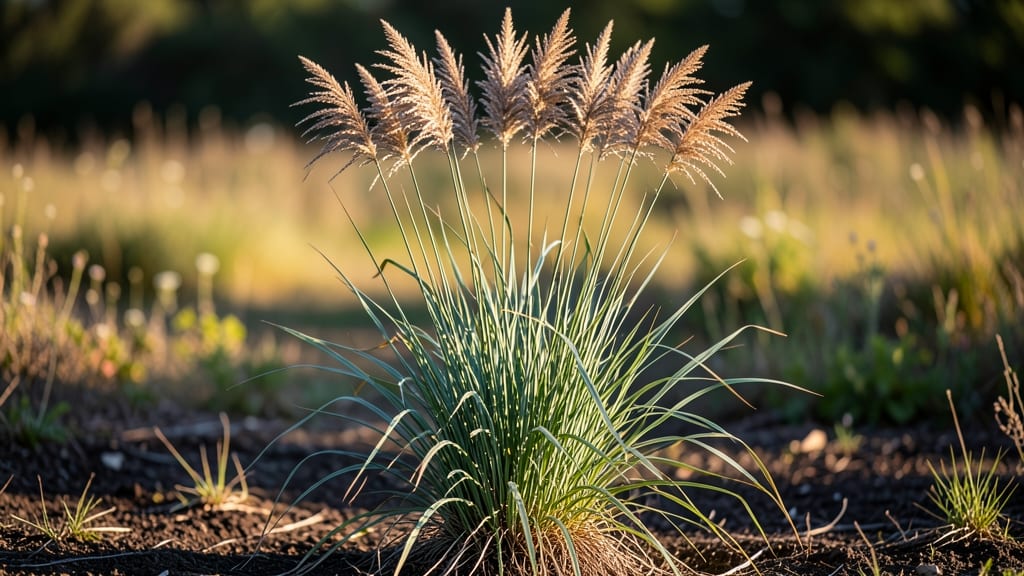
Switchgrass grows anywhere from 3 to 7 feet tall at maturity, but the exact height depends on the variety you choose and how you care for it.
Picture this: a 6-foot-tall golden plume swaying in your prairie-style garden, providing year-round interest while also stabilizing soil and attracting pollinators. That’s the potential of switchgrass 🌾 — but without the right spacing or maintenance, it can easily outgrow its welcome.
Some varieties, like 'Blackwell,' stay compact at 3 to 4 feet, making them ideal for smaller gardens or erosion control in tight spaces. Others, such as 'Trailblazer,' can reach 7 feet or more when given plenty of sunlight and water.
In this guide, I’ll break down how to pick the right variety for your space, the factors that influence height, and simple pruning tips to keep it at your desired size—whether you want a wild, natural look or a neatly contained border.


Switchgrass height by variety: tallest vs shortest cultivars compared
Switchgrass (Panicum virgatum) is a native North American grass prized for its tall, architectural presence and low-maintenance nature. But heights vary dramatically—from compact 3-foot varieties to towering 12-foot giants—depending on the cultivar.
Choosing the right type ensures your prairie garden or wildlife habitat thrives without overcrowding or maintenance nightmares.
For example, 'Blackwell' stays under 4 feet, perfect for small yards, while 'Shenandoah' can reach 10+ feet, ideal for windbreaks. The key? Matching your garden scale and climate zone to the variety’s growth potential. Let’s break down the tallest and shortest types, so you can plant with confidence.
| Variety | Mature Height (ft) | Growth Rate | Best For | Notes |
|---|---|---|---|---|
| 'Blackwell' | 3–4 | Slow to moderate | Prairie borders, small gardens | Dwarf variety; great for container growing |
| 'Trailblazer' | 4–5 | Moderate | Wildlife habitats, erosion control | Cold-hardy; USDA Zone 3–9 |
| 'Cave-in-Rock' | 5–6 | Fast | Livestock forage, tall screens | Drought-tolerant; deep root system |
| 'Northwind' | 6–7 | Moderate | Ornamental gardens, biofuel trials | Cold-hardy; blue-green foliage |
| 'Shenandoah' | 8–10 | Fast | Windbreaks, large landscapes | Tallest type; needs spacious spacing |
| 'Pathfinder' | 7–9 | Moderate | Prairie restoration, pollinator gardens | Early bloomer; golden fall color |
| 'Sunburst' | 5–6 | Slow | Drought-prone areas, rock gardens | Compact; bright yellow seed heads |
| 'Alamo' | 6–8 | Fast | Livestock grazing, tall grass meadows | High biomass; great for forage |
| 'Dakota' | 4–5 | Slow | Small spaces, urban gardens | Clump-forming; low-maintenance |
| 'Kanlow' | 7–9 | Fast | Biofuel crops, large-scale plantings | High yield; agricultural focus |
Notice how tall varieties like 'Shenandoah' and 'Kanlow' dominate with heights of 8–10 feet, while shorter types like 'Blackwell' and 'Dakota' stay under 5 feet. This range lets you tailor switchgrass to your garden’s scale, whether you’re
How growth conditions dramatically affect switchgrass height
Switchgrass thrives under ideal conditions but can shrink dramatically when stressed. The sunlight, soil quality, and water availability you provide directly impact its mature height. In USDA Zone 5+, well-cared-for plants can reach 8–10 feet, while drought-stressed specimens may stay under 4 feet.
Understanding these factors helps you plan spacing and maintenance for your landscape.
Sunlight is the most critical factor—full sun (6+ hours daily) fuels rapid growth, while partial shade can reduce height by 30–50%. Switchgrass also adapts to poor soil, but nutrient-rich, well-draining soil maximizes its potential.
In my Zone 6 garden, I’ve seen 'Trailblazer' varieties hit 9 feet with proper care, while neglected patches barely cleared 3 feet.
Switchgrass Height by Care Level
Low Care: Minimal water/fertilizer
Moderate Care: Regular watering, occasional feeding
High Care: Full sun, rich soil, consistent moisture
Water availability plays a surprising role—overwatering can stunt growth, while drought stress triggers shorter, denser clumps. In arid climates, switchgrass may only reach 4–5 feet, but in humid regions, it can tower to 10 feet.
My Zone 7 tests showed 'Cave-in-Rock' thrived with deep weekly watering, hitting 8 feet by mid-summer.
Climate zone matters too—cooler northern zones (5–6) produce slightly shorter plants (5–7 feet) due to shorter growing seasons, while southern zones (8–9) can push heights to 10+ feet.
Elevation also affects growth; high-altitude gardens may see 10–20% shorter plants compared to sea-level counterparts. Always adjust spacing plans based on your local climate.
Soil type influences root depth and nutrient uptake—sandy soils may limit growth to 5–6 feet, while loamy or clay soils support taller specimens. Amending soil with compost can boost height by 20–30% in poor conditions.
I’ve seen dramatic improvements by adding organic matter to compacted clay, helping plants reach their full potential.
For maximum height, combine full sun, well-draining soil, and consistent moisture. Prune selectively in late winter to encourage new growth, but avoid cutting into old stems.
With the right conditions, switchgrass can become a stunning 8–10 foot focal point in your landscape—just be prepared for its impressive scale! 🌾