How to adjust planting times for New Brunswick’s microclimates
New Brunswick’s diverse landscapes—from Fredericton’s urban heat islands to Saint John’s coastal breezes and Miramichi’s cooler rural zones—create unique microclimates that demand flexible planting strategies. As a gardener here, I’ve learned that a 5-day difference in frost dates can mean the difference between a thriving garden and lost crops.
Urban areas like Fredericton often experience warmer microclimates due to pavement and buildings, while coastal regions face salt spray challenges that stunt growth if not accounted for.
Rural zones like Miramichi, with their shorter growing seasons, require early starts and season-extending tools. I’ve adapted by using row covers and cold frames to push harvests later into fall.
These tools aren’t just for cold-hardy crops—they let me grow tomatoes and peppers well past the usual first frost date in zone 5a. The key is understanding how your specific microclimate behaves and adjusting planting windows accordingly.
⚠️ WARNING: Microclimates Can Shift Planting Deadlines by 2-3 Weeks ⚠️
Urban Heat Islands (Fredericton): Plant heat-loving crops like beans and cucumbers 7-10 days earlier than zone guidelines suggest. Concrete absorbs heat, raising soil temperatures by 5-10°F compared to rural areas.
Coastal Areas (Saint John): Salt spray can damage young plants—use drip irrigation instead of overhead watering. Delay leafy greens planting by 10 days to avoid salt buildup in soil.
Rural Zones (Miramichi): Start cold-hardy crops like kale and spinach 3 weeks earlier. Use black plastic mulch to warm soil faster in spring.
For urban gardeners, I recommend planting fast-maturing varieties of vegetables like radishes (25 days) or bush beans (50 days) to take advantage of the extended growing season. In my Fredericton garden, I’ve successfully grown zucchini until mid-October using floating row covers—something I’d never attempt in cooler rural areas.
The secret is monitoring your local weather patterns and adjusting planting dates based on actual frost dates, not just zone averages.
Coastal gardeners should focus on wind-resistant plants like squash and broccoli, which handle salt spray better than delicate crops. I’ve found that elevated beds help drain away excess salt from rainwater.
For these areas, I plant cool-season crops like carrots and lettuce in late summer for fall harvests, using low tunnels to protect them from early coastal frosts.
In rural areas with shorter seasons, I prioritize early maturing varieties and succession planting. For example, I’ll plant peas in early May, followed by lettuce in late May, and then spinach in early June.
Using cold frames lets me extend harvests until late November. The Miramichi region typically has 120-140 frost-free days, so I focus on crops that mature in 60 days or less for main harvests.
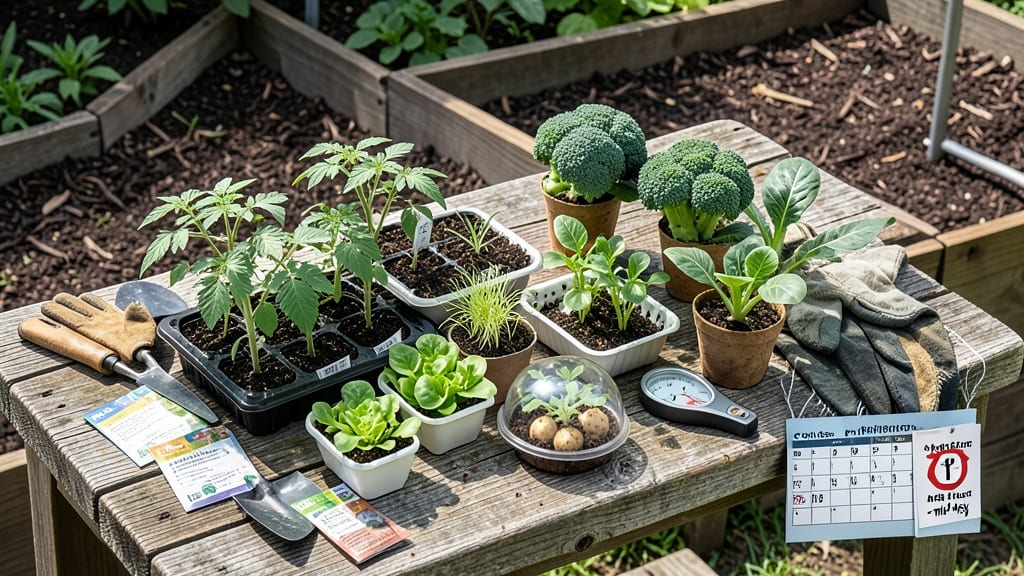
No matter your microclimate, start by testing your soil temperature—it should reach 50°F (10°C) for most vegetables before planting. I use a soil thermometer to track progress, especially in spring. For urban areas, consider container gardening on patios where microclimates are more predictable.
In coastal zones, raised beds improve drainage and reduce salt damage. The right adjustments can turn New Brunswick’s challenging climate into your garden’s greatest advantage.
★★★★★4.6(15 reviews)
|