
Plants
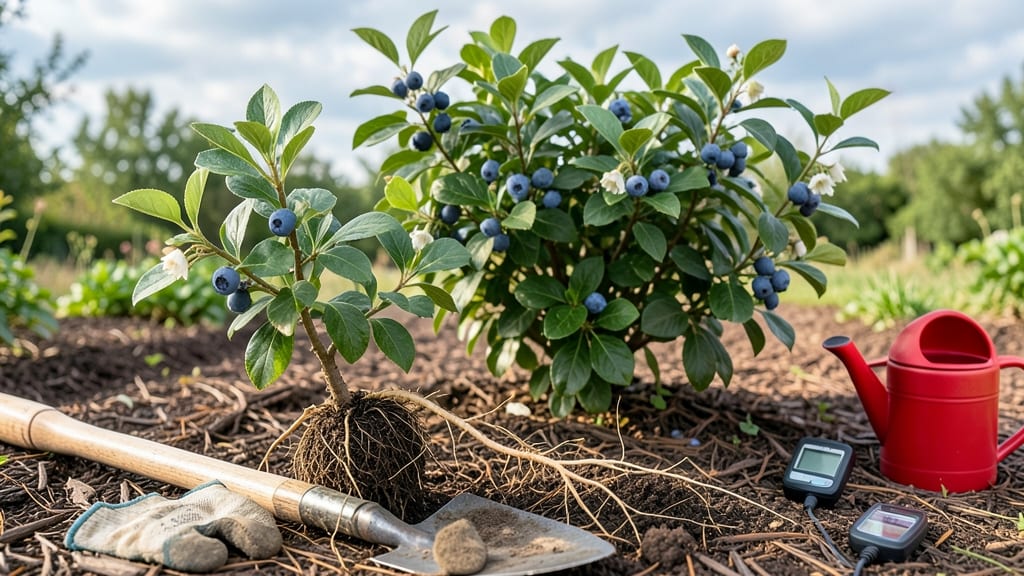
Planting blueberry bushes in North Carolina at the right time means the difference between a thriving 🫐 harvest and years of frustration—so let’s get the timing down to the week.
Picture this: You’ve picked out the perfect spot, your soil is prepped, and you’re ready to plant. But if you miss the frost-free window, your bushes could struggle—or worse, die back before they even take root.
In NC’s 6a-8b zones, that window is narrower than you’d think, and coastal areas play by different rules than the Piedmont.
Whether you’re planting bare-root bushes in late winter or container-grown varieties in fall, the key is knowing your last frost date and adjusting for soil warmth. Too early, and frost will damage tender roots; too late, and summer heat can stress young plants before they establish.
I’ll break down the exact months by region, plus soil prep secrets to give your blueberries the acidic home they crave.
By the end, you’ll know not just when to plant, but how to set your bushes up for a bountiful first harvest—no guesswork, just blueberries.
Best planting months for blueberry bushes in NC: frost-free timeline by region
North Carolina's diverse climate—from the cool mountains of Zone 7a to the warmer coastal plains of Zone 8b—means your blueberry planting window depends entirely on where you live. Planting too early risks frost damage, while waiting too long can stress young roots before winter.
Let's break down the optimal frost-free windows for each NC region to ensure your bushes thrive from day one.
Blueberries are dormant plants, meaning they establish roots best when soil temperatures hover between 40°F and 60°F. In NC, this typically aligns with fall planting (September-October) or early spring (February-April), but your exact timing should account for last frost dates and heatwave risks in southern zones.
For bare-root blueberries, the dormant season (fall or late winter) is ideal because roots are already hardened. Container-grown bushes, however, can handle warmer soil and may be planted slightly later in spring or early summer, though this reduces root establishment time before summer heat arrives.
Here’s the frost-free planting timeline by NC region, including soil temperature thresholds and microclimate adjustments:
| NC Region | USDA Zone | Last Frost Date | Ideal Planting Window | Soil Temp Threshold | Microclimate Adjustments |
|---|---|---|---|---|---|
| Mountains (Asheville, Boone) | Zone 7a | March 1 | Sep 15 - Oct 15 (fall) or Feb 15 - Mar 15 (spring) | 40°F - 50°F | Plant 2 weeks later in high-elevation microclimates (e.g., Blue Ridge) |
| Piedmont (Raleigh, Greensboro) | Zone 7b | March 10 | Sep 1 - Oct 10 (fall) or Feb 20 - Mar 20 (spring) | 45°F - 55°F | Avoid planting in low-lying valleys (frost pockets) |
| Coastal Plains (Wilmington, Fayetteville) | Zone 8a-8b | April 1 - April 15 | Sep 1 - Oct 1 (fall) or Mar 1 - Mar 31 (spring) | 50°F - 60°F | Plant earlier in fall (Aug 15) to avoid summer heat stress |
If you're in Zone 8b, like the coastal plains, heatwave risks in late spring can stress newly planted blueberries. For these areas, fall planting (September) is often safer, as soil stays warm enough for root growth but cools before winter.
In contrast, Zone 7a gardeners should prioritize early spring planting (February-March) to avoid late frosts that can damage tender new shoots.
Pro tip: Use a soil thermometer to confirm temperatures before planting. Roots won’t establish well in soil below 40°F or above 70°F. If your soil runs hotter, opt for container growing or plant in partial shade to protect roots during heatwaves.
For urban NC gardeners in microclimates (e.g., Raleigh’s downtown or Charlotte’s suburbsunpredictable frost dates, err on the side of earlier fall planting (August-September) to give roots time to settle before winter.
After planting, mulch heavily (3-4 inches of pine straw or wood chips) to insulate roots and maintain moisture levels. This is especially critical in Zone 8b, where summer droughts can dry out soil quickly. Water deeply once a week for the first month to encourage root spread.
Remember: Blueberries need 1-2 years to establish before producing significant fruit. Planting at the right time—when soil is cool but frost-free—sets the stage for a bountiful harvest in years to come. 🫐
Soil preparation checklist for NC blueberries: pH, amendments & drainage fixes
North Carolina’s native soils—whether clay-heavy in the Piedmont or sandy loam along the coast—rarely provide the acidic conditions blueberries crave. Without proper prep, your bushes will struggle to absorb nutrients, leading to stunted growth or no fruit.
The key? A pH between 4.5 and 5.5 and soil that drains fast enough to prevent root rot but holds moisture for those deep roots.
Start by testing your soil’s current pH using a home test kit or send a sample to your local NC Cooperative Extension office. Most NC soils run neutral to alkaline (6.0–7.5), which is a disaster for blueberries.
If your soil tests above 6.0, you’ll need to lower the pH aggressively—and organic methods work best for long-term health.
⚠️ Critical Step: Avoid quick fixes like aluminum sulfate, which can burn roots if overapplied. Instead, use a gradual acidification plan with organic amendments. Here’s your actionable checklist:
Use a soil pH meter or kit. If pH >6.0, amend with peat moss (1 part to 2 parts soil) or pine bark fines. Re-test in 3 months.
For heavy clay (common in Raleigh/Charlotte), mix in coarse sand or perlite (20% by volume) to improve drainage. Add composted pine needles for acidity.
For sandy soil (coastal NC), blend in peat moss or coconut coir (30% by volume) to retain moisture. Add well-rotted compost for nutrients.
Dig a 12-inch hole, fill with water, and time how long it drains. Ideal: 4–6 hours. If slower, add gypsum (for clay) or sand (for compacted soil).
Use pine straw or wood chips (3–4 inches deep) to maintain acidity. Keep mulch 6 inches from the stem to prevent rot.
For container-grown blueberries (great for urban NC gardeners), use a mix of 50% peat moss, 30% pine bark, and 20% perlite. Containers dry out faster, so add water-crystal beads to retain moisture without over-saturating roots.
Pro tip: If your soil is extremely alkaline (pH >7.0), consider planting in raised beds filled with acidic soil mix. This gives you full control over pH and drainage—perfect for high-pH areas like the Sandhills region.
Once your soil is prepped, plant bare-root bushes in late winter (February–March) or container-grown bushes in fall (September–October). The roots will establish faster in acidic, well-draining soil, setting you up for a bountiful harvest in 2–3 years. 🌱