
Plants
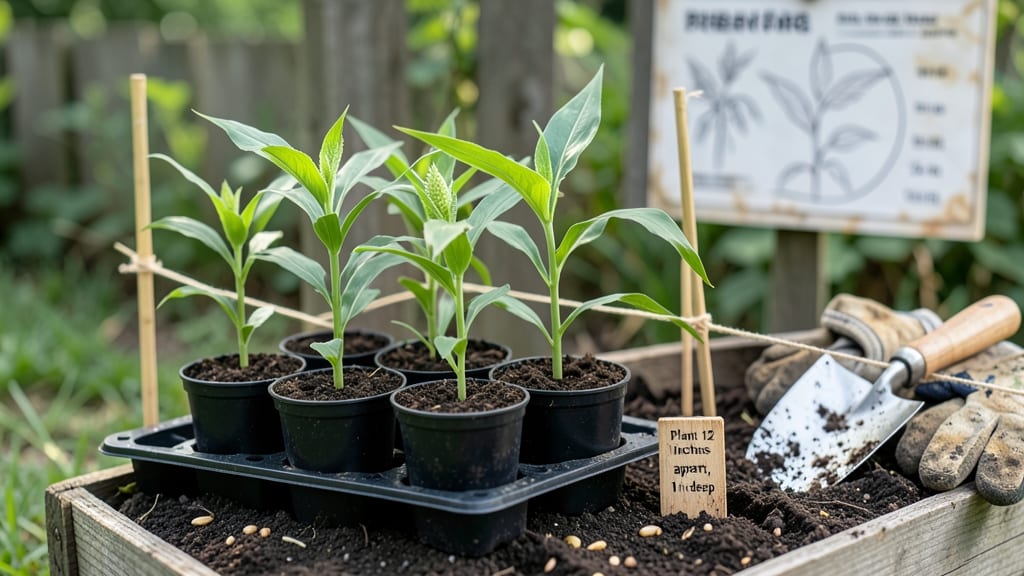
Planting corn in Zone 6A after the last frost — typically by mid-April — sets the stage for a thriving harvest, but timing is everything.
Picture this: you’ve spent weeks prepping your soil, only to watch delicate corn seedlings wilt overnight because a late frost snuck in. Or worse, your corn matures just as fall temperatures drop, leaving you with half-formed ears.
The difference between a bumper crop and a disappointing harvest often comes down to understanding frost-free deadlines and soil temperature thresholds.
Corn 🌽 thrives when soil reaches at least 60°F, and in Zone 6A, that usually means waiting until late April or early May.
But not all corn varieties are created equal—early maturing types like ‘Silver Queen’ can handle a shorter season, while longer varieties like ‘Country Gentleman’ risk running out of time. This guide breaks down the exact windows, regional tweaks, and critical mistakes to avoid so your corn reaches peak harvestability.
You’ll learn how to time your plantings by variety, when to succession-sow for continuous harvests, and the one shortcut that buys you an extra two weeks in unpredictable springs. Let’s get those seeds in the ground at the perfect moment.
Zone 6A corn planting deadlines by frost-free date and variety type
Corn in Zone 6A demands precision timing—plant too early, and frost will kill tender seedlings; too late, and your harvest may never mature. The last frost date (typically April 15) sets your planting window, but soil temperature and variety type matter just as much.
Sweet corn, field corn, and popcorn all have different days to maturity, meaning their planting deadlines shift accordingly.
For example, a 60-day variety like 'Silver Queen' can start as early as April 20, while a 100-day variety like 'Country Gentleman' must go in by May 15 to avoid frost.
Soil temperature is the non-negotiable factor—corn seeds won’t germinate until the soil reaches 50°F (10°C). Use a soil thermometer to confirm readiness, especially in Zone 6A’s unpredictable springs. If your soil is cold, wait even if the calendar says it’s time.
For instance, if your last frost is May 10, you’ll need to plant 75-day varieties by April 25 to ensure harvest before the first fall frost (October 15). Always have a backup planting date in mind (e.g., June 1–15 for shorter-season varieties) in case of late frosts.
Sweet corn varieties like 'Peaches and Cream' (75 days) or 'Silver Queen' (60 days) are the safest bets for Zone 6A, as they mature quickly enough to avoid frost.
For field corn (used for animal feed or grain), opt for 90–120-day varieties like 'Pioneer 33B11' and plant by May 1 at the latest. Popcorn, such as 'Strawberry Popcorn' (90 days), falls in the mid-range and requires similar timing to sweet corn but can handle slightly cooler soils (50°F vs. 55°F for field corn).
Succession planting is your secret weapon in Zone 6A. Since corn has a short harvest window, space out plantings every 2 weeks for a continuous supply.
For example, if you plant 'Ambrosia' (85 days) on April 25, follow up with another batch on May 10 and May 25. This ensures you’re harvesting ears from July through September without gaps. Just be sure to stagger varieties with different maturity dates to extend your harvest season.
If your spring is particularly late, don’t despair—backup planting dates can save your crop. For varieties like 'Early Sunglow' (6
5 Critical mistakes that ruin corn planting in zone 6A (and how to avoid them)
Corn is one of the most rewarding vegetables to grow, but in Zone 6A, even small timing errors can turn your bountiful harvest dreams into wilted disappointment. I’ve learned the hard way that frost timing, soil warmth, and variety selection make or break corn success.
Whether you’re a first-time gardener or a seasoned pro, these five common mistakes are silently sabotaging your corn patch—and here’s how to fix them before it’s too late.
First, let’s tackle the biggest silent killer: planting corn when the soil temperature is still too cold. Corn seeds need consistent warmth to germinate, and in Zone 6A, soil below 50°F (10°C) will leave you staring at empty rows.
I once planted ‘Silver Queen’ sweet corn in early April, only to watch my seeds rot in the cold ground. That’s why soil thermometers are non-negotiable—wait until the morning soil temp hits at least 55°F (13°C) before planting.
Another costly mistake is skipping succession planting. Zone 6A’s short growing season (about 165 frost-free days) means one planting won’t cut it.
I used to think one batch of corn in May would suffice, but by July, I’d already harvested—and missed the peak flavor window. Solution: Plant three batches, spaced 2 weeks apart, starting in mid-April (for early varieties) and ending by early June.
This ensures you’ll have fresh corn every 2–3 weeks through August.
Next, variety selection is where many gardeners trip up.
I once planted ‘Country Gentleman’, a 110-day variety, thinking it would work in Zone 6A. By September, the stalks were still tall—but the ears were tiny and underdeveloped. Short-season varieties like ‘Ambrosia’ (85 days) or ‘Peaches and Cream’ (75 days) are your best bets.
Always check the days-to-maturity label and subtract 10–15 days as a safety buffer for Zone 6A’s unpredictable fall frosts.
Don’t forget spacing—this is where overcrowding kills yields.
Corn needs room to breathe, and I’ve seen gardens where seeds were planted too close together, leading to stunted ears and disease spread. Rule of thumb: Thin seedlings to 8–12 inches apart in rows 30–36 inches apart.
This might seem like a lot of space, but it’s essential for ear development and air circulation to prevent fungal issues like corn smut. Pro tip: Use a stake or marker at planting to track spacing—it’s easier to thin later than to fix a crowded mess.
Finally, fall frost dates catch even experienced gardeners off guard. I’ve left corn on stalks past the first frost, only to wake up to frozen, unusable ears.
Here’s the trick: If your corn ears are at least ½-inch in diameter, they’ll tolerate 2–3 weeks of frost on the stalk.
But if they’re smaller, harvest immediately before the first frost hits. Monitor your local frost forecast and have a backup plan—like a cool storage bin—ready to preserve your harvest if frost sneaks in early.