
Plants
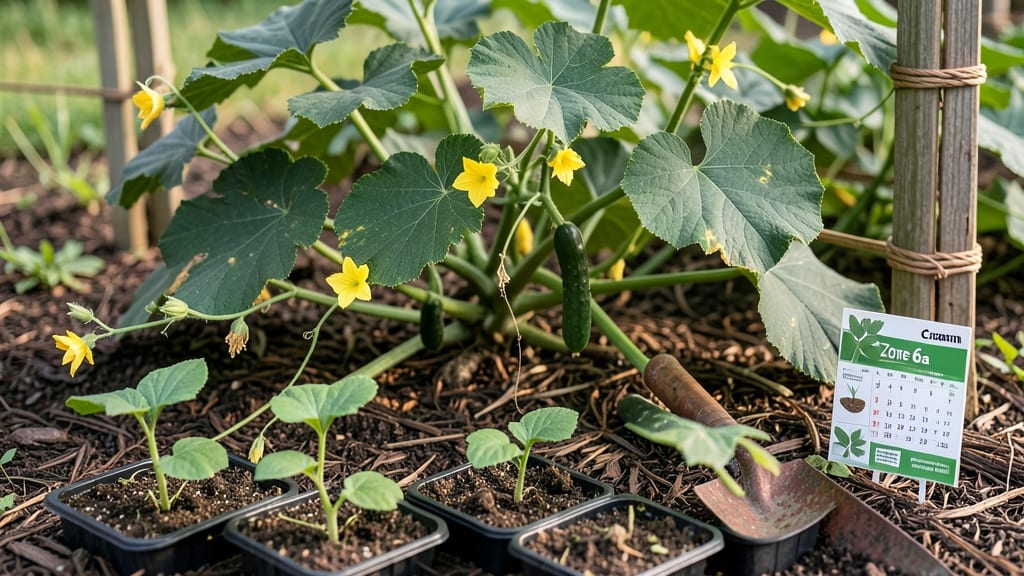
Plant cucumbers in Zone 6a after your last frost, once soil temperatures hit 60°F and nighttime lows stay above 55°F — timing this right means the difference between a bountiful summer harvest and wasted effort.
Struggling to time your cucumber planting in Zone 6a? Plant too early, and frost will wipe out your seedlings—too late, and you’ll miss the sweet, summer-long harvests cucumbers are famous for.
Most gardeners in Zone 6a wait until mid-May to early June, but the exact window depends on your microclimate and whether you’re growing heat-loving varieties like ‘Straight Eight’ or cooler-tolerant types like ‘Marketmore’.
Below, I’ll break down how to read your frost dates, when to start seeds indoors (or not), and how to stretch your harvest with succession planting—so you end up with crisp, vine-ripened 🥒 from July through September.
Zone 6a cucumber planting deadlines: frost dates and soil temperature rules
Timing your cucumber planting in Zone 6a is all about balancing frost dates and soil warmth. Cucumbers are warm-season crops that need consistent temperatures above 55°F to thrive.
Plant too early, and a late frost will kill your seedlings—too late, and you’ll miss the peak harvest window of July and August.
In Zone 6a, the average last frost date falls between mid-April and early May, but this can vary by 5-10 days depending on your exact location. For example, areas like Chicago tend to warm up faster than Pittsburgh.
Always check your local USDA Plant Hardiness Zone Map or consult a frost calendar for precision.
Here’s the non-negotiable rule: Wait until the soil temperature reaches at least 60°F (ideally 65-70°F) before planting. Cold soil slows germination and invites fungal diseases. Use a soil thermometer to monitor—it’s the only way to get this right.
If you’re direct sowing seeds, aim for 2-3 weeks after your last frost date. For transplanted seedlings, wait until nighttime temperatures stay above 55°F consistently. In cooler Zone 6a springs, this might mean pushing planting back to late May instead of early May.
Pro Tip: If your spring is unusually cold, use black plastic mulch or row covers to warm the soil faster. These tricks can shave 1-2 weeks off your planting timeline without risking frost damage.
| Key Factor | Zone 6a Rule | Action Step |
|---|---|---|
| Last Frost Date | Mid-April to early May | Wait 2-3 weeks after last frost |
| Soil Temperature | 60°F+ (ideal: 65-70°F) | Use a soil thermometer to confirm |
| Nighttime Temps | Above 55°F consistently | Check 7-day forecast before planting |
| Planting Window | Mid-May to early June | Adjust for early/late varieties |
| Harvest Window | July to September | Pick regularly to extend season |
For early varieties like ‘Straight Eight’ or ‘Marketmore,’ you can sometimes plant as early as late April if you use row covers or greenhouse protection. However, most gardeners in Zone 6a find mid-May to be the safest bet for direct sowing.
If you’re transplanting seedlings, start them indoors 4-6 weeks before your target outdoor date. Harden them off for 7-10 days before moving them outside. This gives you a 2-week head start on the season, which is critical in Zone 6a’s shorter growing season.
Don’t forget to monitor your local weather closely. A late spring frost can happen even in Zone 6a, so have row covers or a garden cloche ready to protect young plants.
I once lost an entire batch of cucumber seedlings to a May frost—since then, I’ve made it a rule to have backup covers on hand.
Finally, soil preparation matters just as much as timing. Amend your soil with compost or well-rotted manure to improve drainage and warmth retention. Cucumbers hate soggy roots, so raised beds or mounded soil can help in cooler, wetter springs.
By following these Zone 6a-specific rules, you’ll maximize your cucumber harvest and avoid the heartbreak of frost-killed plants or missed deadlines. Happy planting! 🌱
Direct sowing vs. starter plants: which method maximizes your Zone 6a harvest?
Choosing between direct sowing and starter plants for cucumbers in Zone 6a depends on your timeline and climate risks. Direct sowing skips the transplanting step, but requires warmer soil (60-70°F) to avoid rot.
Starter plants give you a head start, but need careful hardening off to survive Zone 6a’s unpredictable spring swings. I’ve tried both methods—here’s what works best for maximizing your harvest.
Zone 6a’s variable spring weather makes direct sowing tempting—it avoids transplant shock entirely. However, if you plant too early, cold soil can stunt germination, while late planting risks missing the 70-day harvest window before fall frosts.
Starter plants let you bypass these risks, but poor hardening off can lead to wilting or disease once planted outdoors.
Direct Sowing
- Warmer soil speeds germination
- No transplant shock risk
- Earlier harvests (by 1-2 weeks)
- Cold soil can kill seeds
- Slower establishment in cool springs
- No head start if frost lingers
Starter Plants
- Longer growing season advantage
- Faster fruit production
- Better for late starts
- Transplant shock risk
- Hardening off required (7-10 days)
- Cost of seedlings
For direct sowing, wait until your soil hits 60°F+ (use a soil thermometer!) and all frost risk has passed—typically mid-May in Zone 6a. Plant seeds 1 inch deep, 3-4 feet apart (or closer if trellising).
If you’re impatient, try black plastic mulch to warm the soil faster—it can shave off 1-2 weeks of waiting.
If you opt for starter plants, harden them off gradually over 7-10 days by placing them outside in partial shade for increasing durations each day. Avoid direct afternoon sun during hardening—it stresses plants and increases transplant shock.
Once planted, water deeply to settle roots and use mulch to retain moisture and regulate soil temperature.
My Zone 6a hack: I direct-sow early varieties (like ‘Straight Eight’) in early May with row covers for protection, then transplant late-season starters (like ‘Marketmore’) in late June for a second harvest.
This gives me two harvest windows instead of one. Just be prepared to monitor soil temps closely—cucumbers hate cold feet!
Pro tip: If you’re using starters, choose bush varieties (like ‘Bush Champion’) over vining types—they handle transplanting better and mature faster. And always water at the base, not overhead, to prevent disease from splashing soil onto leaves. 🥒