
Plants
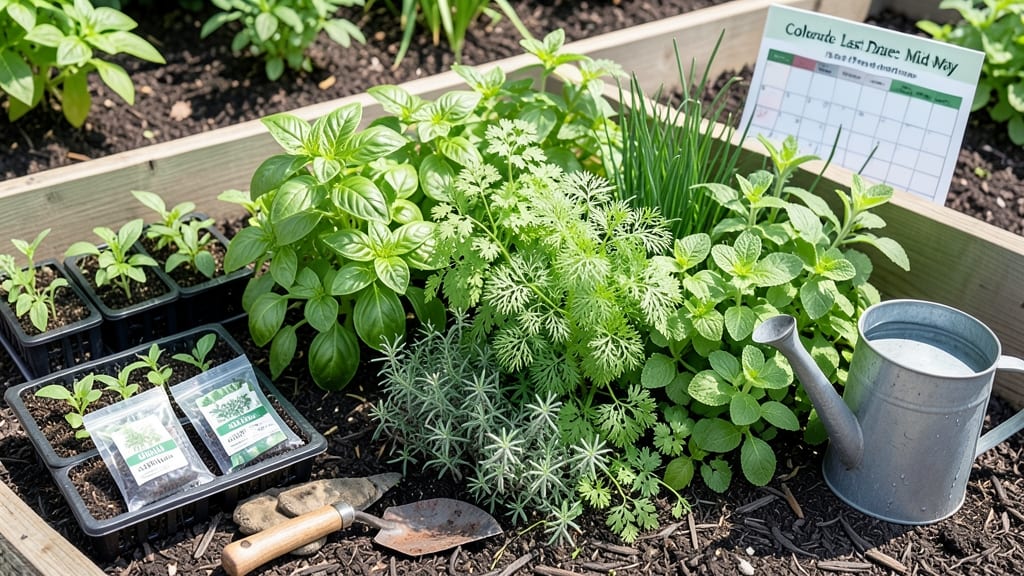
Planting herbs in Colorado means timing your seeds or seedlings for the 165 frost-free days between April and October — a window that shrinks the higher you go in elevation.
Ever rushed to get your 🌿 basil in the ground only to watch it bolt from a late frost? Or missed the fall planting rush because you didn’t know Pueblo’s high plains freeze weeks earlier than Denver?
Colorado’s elevation zones turn planting into a puzzle, and getting it wrong can mean wasted seeds or stunted growth.
This isn’t just about the calendar—it’s about altitude, microclimates, and frost patterns that vary wildly from the Front Range to the high plains. Whether you’re growing cilantro in containers or rosemary in the ground, knowing the right moment to plant saves you time, money, and frustration.
Below, I break down the exact frost-free deadlines by elevation zone, herb-specific tips, and how to adjust for Colorado’s tricky microclimates—so you can finally grow herbs that thrive all season long.
Colorado herb planting deadlines by elevation Zone (2024 guide)
Colorado’s dramatic elevation shifts mean your herb garden timing must adapt from the Front Range valleys to the Rocky Mountain foothills. At 3,000 feet, your last frost might be May 1, while at 8,000 feet, you’re still shoveling snow in June.
Understanding these elevation-based deadlines ensures your basil, rosemary, and cilantro thrive—not just survive.
Most Colorado gardeners follow USDA zones 5-7, but elevation creates microclimates where frost-free dates can shift by weeks. For example, Denver (5,280 ft) typically has 165 frost-free days, while Durango (6,500 ft) averages just 120 days.
This guide breaks down herb-specific planting windows for three critical zones: lowland (3,000–5,000 ft), mid-elevation (5,000–7,000 ft), and high-altitude (7,000+ ft).
| Elevation Zone | Last Frost Date | First Frost Date | Spring Planting Window | Fall Planting Window | Best Herbs |
|---|---|---|---|---|---|
| Lowland (3,000–5,000 ft) | April 15–May 1 | October 1–15 | April 15–May 15 | August 15–September 15 | Basil, Cilantro, Dill, Parsley |
| Mid-Elevation (5,000–7,000 ft) | May 1–May 15 | September 15–October 1 | May 1–June 1 | August 1–September 1 | Rosemary, Thyme, Sage, Oregano |
| High-Altitude (7,000+ ft) | May 15–June 1 | September 1–15 | June 1–July 1 | July 15–August 15 | Catnip, Chives, Mint, Lavender |
*Notes: Use row covers to extend spring windows by 2–4 weeks. High-altitude herbs like lavender tolerate cooler soils.
For lowland zones (3,000–5,000 ft), like Colorado Springs or Fort Collins, your spring planting window opens April 15–May 1 after the last frost. This is prime time for heat-loving herbs like basil and cilantro, which bolt if planted too early.
Wait until soil temps hit 50°F (10°C)—use a soil thermometer to avoid false starts.
Mid-elevation gardeners (5,000–7,000 ft), common in Denver and Boulder, face later frosts. Plant rosemary and thyme by May 1 to give roots time to establish before summer’s 100°F+ heat. These drought-tolerant herbs thrive with well-draining soil—amend clay with compost or sand to prevent rot.
High-altitude zones (7,000+ ft), such as Leadville or Aspen, demand patience. Start hardy herbs like chives or mint in June after snowmelt. Use black plastic mulch to warm soil faster, or grow container herbs near south-facing walls for extra heat.
Don’t overlook fall planting—it’s your second chance for a harvest. In lowlands, sow hardy annuals like parsley by August 15; they’ll survive light frosts. At higher elevations, aim for July 15–August 1 with cold-hardy varieties like winter savory.
Pro tip: Use USDA zone maps to cross-reference your address. For example, Denver (Zone 5b) aligns with mid-elevation deadlines, but a microclimate like a sunny urban lot may add 1–2 weeks to your frost-free window. Monitor local Colorado State University Extension frost reports for real-time adjustments.
Herbs like basil and cilantro are warm-season heroes—plant them too early, and they’ll bolt or wilt. Conversely, rosemary and lavender are cool-season survivors that handle late frosts. Match your her
How to adjust planting timing for Colorado’s microclimates
Colorado’s microclimates can make or break your herb garden. Denver’s urban heat islands trap warmth, while Boulder’s foothills experience cooler nights. Meanwhile, Pueblo’s high plains face brutal winds. Understanding these variations lets you adjust planting times for optimal growth.
For Denver’s lowlands (USDA Zone 5b), start tender herbs like basil and cilantro after May 15 to avoid late frosts. In Boulder’s foothills (Zone 6a), push planting back to June 1 for frost-sensitive varieties. On the high plains (Zone 4b), wait until June 15 to ensure soil warmth.
- 1. Urban Heat Islands (Denver): Use black plastic mulch to warm soil 2–3°F faster. Plant heat-loving herbs (basil, oregano) 2 weeks earlier than zone averages.
- 2. Mountain Foothills (Boulder): Extend growing season with cold frames. Start hardy herbs (thyme, rosemary) in March under protection.
- 3. High Plains (Pueblo): Protect seedlings with windbreaks (straw bales, lattice). Delay planting delicate herbs (dill, parsley) until after June 15.
- 4. Soil Warming Hacks: Bury black plastic pots 1 inch deep in soil to raise temps by 5–10°F. Ideal for late-spring transplants in cooler zones.
- 5. Frost-Tolerant Herbs: Prioritize hardy varieties (sage, chives) for early planting. These survive 28°F temps and extend your season by 3–4 weeks.
For extended heat in Denver, opt for drought-resistant herbs like thyme and rosemary. These thrive in 100°F+ temps with minimal water. In contrast, Boulder’s cooler nights suit bolting-resistant cilantro, which stays fresh longer in moderate temps.
Wind exposure on the high plains demands low-growing herbs (oregano, mint) planted in raised beds. These protect roots from drying winds. Always mulch heavily (3–4 inches) to retain moisture and regulate soil temps.
Adjust your fall planting too: In Denver, sow hardy herbs by August 15 for harvest before first frost. In Pueblo, wait until September 1. Use row covers to shield tender plants from early autumn chills.
Monitor your garden’s microclimate cues: If your soil stays cold past May 15, delay planting. If herbs bolt prematurely (like cilantro), switch to heat-tolerant varieties or use shade cloth. Adaptability is key in Colorado’s ever-changing growing conditions. 🌱