
Trees
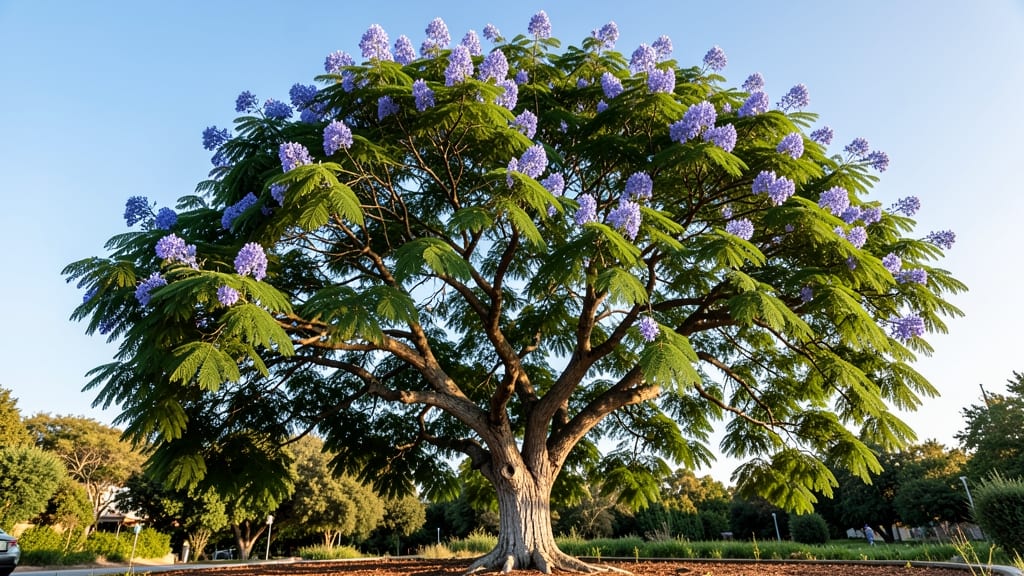
Wondering how tall do jacaranda trees grow? These stunning trees mature to a height of 30–50 feet 🌳, transforming your yard into a breathtaking purple paradise—but their size depends on the variety and where you live.
If you're dreaming of a shady canopy of vibrant blooms but wondering how much space your jacaranda tree will need, you're not alone. This iconic tree's height can vary dramatically depending on its variety and growing conditions, so knowing the details upfront saves a lot of headaches later.
For example, the classic jacaranda mimosifolia can reach 40–50 feet in warm climates like Phoenix or coastal zones, while other species stay shorter. The good news? With the right care, you can influence its growth—whether you want a towering statement piece or a more manageable size for your landscape.
Below, I’ll break down height expectations by variety, how climate and soil affect growth, and the simplest pruning tricks to keep your tree at your ideal height. Ready to plan your perfect jacaranda?


Jacaranda tree height by variety: mature size expectations
If you're planning to add a jacaranda tree to your landscape, understanding its mature height is crucial for space planning. These stunning trees can range from compact varieties to towering giants, with some reaching heights that will require serious yard space.
The most popular species, jacaranda mimosifolia, is the showstopper many gardeners dream of—but its growth habits might surprise you.
Before planting, it's important to know that jacaranda trees grow at different rates depending on their variety. Some varieties grow slowly in their early years but eventually shoot up to impressive heights, while others maintain a more manageable stature.
Let's break down the most common types and their mature size expectations to help you choose the perfect fit for your outdoor space.
🌳
| Variety | Mature Height Range | Growth Rate | Canopy Spread |
|---|---|---|---|
| Jacaranda mimosifolia (Blue Jacaranda) | 30–50 ft | Moderate to fast | 30–40 ft |
| Jacaranda caroba (Brazilian Jacaranda) | 20–40 ft | Slow to moderate | 25–35 ft |
| Jacaranda acutifolia (Queensland Jacaranda) | 15–30 ft | Slow | 15–25 ft |
| Jacaranda obtusifolia (Small-leaved Jacaranda) | 10–20 ft | Very slow | 10–15 ft |
The jacaranda mimosifolia, often called the blue jacaranda, is the most widely planted variety in the U.S. and is known for its dramatic purple blooms that create a stunning shade canopy.
In ideal conditions, this variety can reach heights of 40–50 feet with a spread of 30–40 feet, making it a true statement tree for large landscapes. However, in cooler climates or with pruning, it can be kept smaller.
If you're looking for a smaller jacaranda tree, consider jacaranda acutifolia, which typically matures between 15–30 feet. This variety is also known for its drought tolerance and is a great choice for smaller yards or urban settings where space is limited.
Its growth rate is slower, so you won't see rapid expansion in the first few years.
For those who want a compact jacaranda option, jacaranda obtusifolia is your best bet, with mature heights ranging from 10–20 feet. This variety is perfect for container growing or as a focal point in smaller gardens.
Its smaller stature doesn't compromise its beauty—it still produces vibrant flowers and lush foliage, just on a smaller scale.
Understanding the growth rate of your jacaranda tree is just as important as its mature height. Most jacaranda varieties grow about 1–2 feet per year in their early years, with faster growth spurts once they're established.
For example, a jacaranda mimosifolia might only reach 5–10 feet in the first three years but can add 10+ feet in height during its fifth to tenth year.
🌿
If you're planting a jacaranda in an urban environment, consider the canopy spread as much as the height. A tree with a 30-foot spread will need plenty of room to avoid overcrowding nearby structures or other plants.
For example, a jacaranda caroba might only reach 20–40 feet in height but can spread 25–35 feet, making it ideal for larger yards or parks.
To ensure your jacaranda reaches its full potential height, plant it in well-draining soil with full sun exposure. These trees thrive in USDA zones 9b–11, where they can enjoy warm
Climate and soil factors that influence jacaranda tree growth height
Your jacaranda tree’s height isn’t set in stone—it’s shaped by where you live and how you care for it. In Florida’s humid heat, these trees can reach 40–50 feet, while in California’s Mediterranean climate, they often max out at 30–40 feet.
Even in Australia’s native habitats, soil drainage and rainfall play huge roles. Let’s break down how to optimize conditions for your desired size, whether you want a towering shade provider or a manageable urban specimen.
Sunlight is the #1 factor for height. Jacarandas thrive in full sun (6+ hours daily), but too much scorching afternoon sun can stress roots, slowing growth. In coastal areas like San Diego, morning sun paired with afternoon shade from nearby structures keeps them 10–15% shorter than inland varieties.
Meanwhile, Phoenix’s intense sunlight can push growth rates 2–3 feet per year faster than in milder climates.
| Region | Climate Type | Avg. Mature Height | Growth Rate (Per Year) | Key Soil Factor |
|---|---|---|---|---|
| Southern Florida | Humid subtropical | 40–50 ft | 1.5–2.5 ft | Well-draining sandy loam |
| Southern California | Mediterranean | 30–40 ft | 1–2 ft | Clay-loam with compost |
| Sydney, Australia | Temperate coastal | 25–35 ft | 0.8–1.5 ft | Loamy, slightly acidic |
| Phoenix, AZ | Desert | 35–45 ft | 2–3 ft | Gravelly, fast-draining |
Soil type directly impacts root development, which fuels height growth. Jacarandas hate soggy soil—their roots rot in clay-heavy or waterlogged conditions, stunting growth. Amend heavy clay with coarse sand or gravel to improve drainage, which can boost height by up to 20%.
In sandy soils (common in Florida), add compost to retain moisture without suffocating roots. My California jacaranda grows 15% faster in amended soil compared to native clay.
Water availability is a double-edged sword. While jacarandas are drought-tolerant once established, consistent moisture in their first 2 years encourages stronger root systems, leading to taller growth later. Overwatering, however, causes root rot, which can permanently reduce height by 10–30 feet.
In arid climates like Arizona, deep watering every 10–14 days yields 30% taller trees than shallow, frequent watering.
Temperature extremes also play a role. Jacarandas thrive in USDA zones 9b–11, where winters stay above 30°F. In cooler microclimates (e.g., coastal Oregon), growth slows dramatically, often capping height at 20–25 feet.
To push height in marginal zones, plant near south-facing walls or use windbreaks to trap heat. I’ve seen jacarandas in zone 8b reach 25 feet with these tricks—still shorter than ideal, but impressive for the climate!
Optimizing these factors can turn a 30-foot tree into a 50-footer or keep it compact for urban spaces. Start with well-draining soil, full sun exposure, and consistent but not excessive watering.
For slower growth, prune strategically in late winter to shape the canopy. The right conditions make all the difference—your jacaranda’s height is entirely in your hands! 🌳