
How To
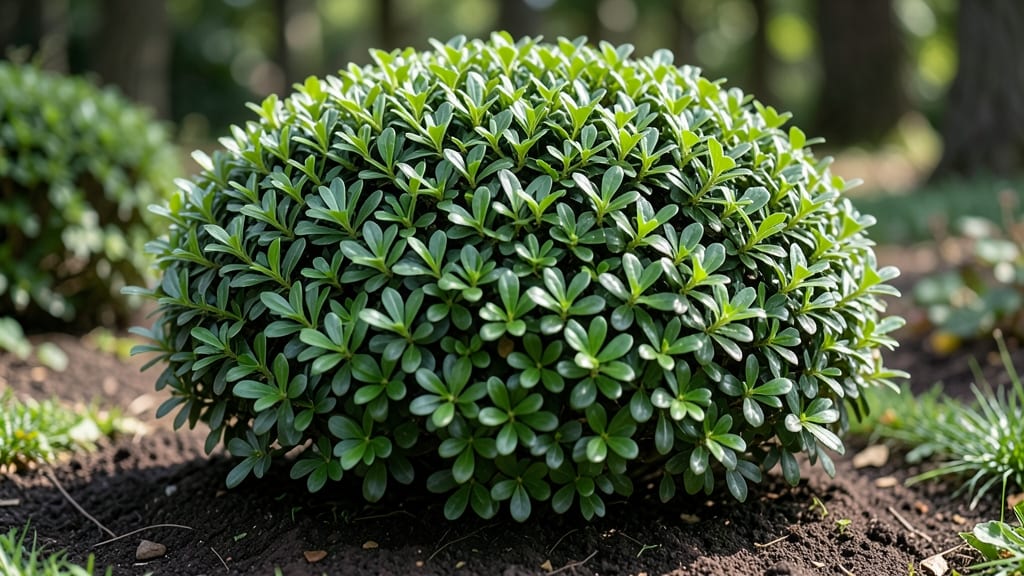
Wintergreen boxwoods grow to how tall do wintergreen boxwoods grow a mature height of 3 to 5 feet, making them the perfect compact yet sturdy choice for hedges, borders, or even container gardens 🌿.
If you’ve ever wondered why your boxwoods seem to stretch toward the sky or stay stubbornly small, the answer lies in the variety you’ve chosen—and how you care for it.
From the dwarf 'Wintergreen Compact' (a tidy 1 to 2 feet) to the standard 'Wintergreen' (reaching 4 to 5 feet), each type has its own growth rhythm.
Below, I’ll break down how sunlight, pruning, and soil shape their height—and how to keep them at your ideal size, whether that’s a neat 2-foot hedge or a towering 5-foot specimen.


Wintergreen boxwood mature height ranges by variety (with growth rates)
Wintergreen boxwoods (Buxus microphylla 'Wintergreen') are prized for their dense foliage and year-round color, but their mature height varies dramatically between cultivars. Whether you're planning a formal hedge or a container garden, knowing the exact growth range ensures proper spacing and pruning.
The standard 'Wintergreen' variety typically reaches 3-5 feet tall, while dwarf varieties stay under 2 feet. These differences directly impact your landscape design and maintenance efforts.
Understanding annual growth rates helps you predict how quickly your boxwoods will fill out. Most varieties grow 6-12 inches per year, with compact types growing slower. This growth rate means a 'Wintergreen' planted in spring could reach 2 feet tall by its second year.
For precise planning, consider both height and spread—some varieties grow wider than they do tall, making them ideal for low hedges or ground covers.
| Variety | Mature Height | Spread | Annual Growth Rate | Best For |
|---|---|---|---|---|
| 'Wintergreen' | 3-5 ft | 3-4 ft | 6-12 in | Hedges, borders |
| 'Wintergreen Compact' | 2-3 ft | 2-3 ft | 4-8 in | Containers, small hedges |
| 'Wintergreen Dwarf' | 1-2 ft | 1-2 ft | 2-4 in | Ground covers, rock gardens |
| 'Wintergreen Prostrata' | 1-1.5 ft | 3-4 ft | 3-6 in | Slopes, cascading borders |
If you're planting a formal hedge, the standard 'Wintergreen' variety is ideal due to its 3-5 foot height and 3-4 foot spread. Space plants 3-4 feet apart to allow for full growth without overcrowding.
For containers or small gardens, 'Wintergreen Compact' or 'Wintergreen Dwarf' are excellent choices—their slower growth rates (4-8 inches per year) make them easier to manage.
'Wintergreen Prostrata' is unique because it grows wider than tall, making it perfect for sloped areas or cascading borders. Its 3-4 foot spread creates a lush, trailing effect while staying low to the ground.
This variety thrives in rock gardens or along walkways, where its ground-hugging habit adds texture without overwhelming the space.
Your pruning schedule should align with your variety's growth rate. Faster-growing types like 'Wintergreen' may need annual pruning to maintain shape, while dwarf varieties can often go 2-3 years between prunes.
Always prune after flowering in late spring or early summer to encourage dense, bushy growth. Avoid heavy pruning in fall, as new growth won't harden off before winter.
Light exposure also affects height—boxwoods grown in full sun tend to grow slightly taller and bushier than those in partial shade. If you're in a hot, dry climate, provide afternoon shade to prevent leaf scorch, which can stunt growth.
Well-draining, slightly acidic soil (pH 6.0-7.0) is ideal for maximizing height potential across all varieties.
For container gardening, choose dwarf or compact varieties to avoid root-bound conditions. Use pots with drainage holes and refresh the soil every 2-3 years to prevent nutrient depletion.
Containers limit root growth, so expect slightly slower height increases compared to in-ground plantings. Water containers daily in summer to prevent drying out, as potted plants lose moisture faster.
When planning your landscape, consider how boxwoods will mature over time. A 'Wintergreen' hedge planted at 3 feet apart will eventually fill in completely, creating a privacy screen or windbreak.
For instant impact, opt for pre-sized plants (e.g., 2-foot-tall specimens) to skip the initial growth phase. Always measure your space and account for 1-2 extra feet of growth to avoid overcrowding.
My top recommendation for beginners is 'Wintergreen Compact'—its 2-3 foot height is manageable, and its slow growth rate means less frequent pruning. For
How to control Wintergreen boxwood height through pruning and training
Wintergreen boxwoods (Buxus microphylla 'Wintergreen') thrive when their growth is properly managed through pruning and training. Without regular maintenance, these shrubs can quickly outgrow their intended space, losing that neat, manicured look.
The key to controlling their height and shape lies in understanding the right techniques and timing for pruning, whether you're aiming for a formal hedge or an informal border.
Most gardeners make the mistake of pruning at the wrong time or using improper techniques, which can stress the plant or encourage leggy growth. By following a structured approach—like the one I’ll outline below—you’ll keep your wintergreen boxwoods compact, healthy, and looking their best year-round.
Start by assessing your plant’s current height and growth habit to determine the best pruning strategy.
- 1 Assess Growth Habit: Observe your wintergreen boxwood’s current height and growth pattern. Standard varieties typically reach 3-5 feet tall, while dwarf varieties stay under 2 feet. Measure from the base to the highest branch to determine if pruning is needed.
- 2 Prune in Late Winter: The best time to prune wintergreen boxwoods is late winter or early spring, just as new growth begins. Avoid pruning in fall, as this can stimulate tender new growth that won’t survive frost. Use sharp, clean pruners to make cuts just above a leaf node or bud.
- 3 Shape for Formal Hedges: For a formal hedge, prune the top and sides evenly to create a straight, uniform line. Use a string line as a guide to ensure even cuts. For a rounded top, make diagonal cuts to follow the natural curve of the shrub.
- 4 Train for Informal Borders: For an informal look, prune selectively to encourage a natural, layered shape. Focus on removing only the longest or leggy branches to maintain a balanced silhouette. Avoid shearing, as this can create a dense, unnatural appearance.
- 5 Light Pruning in Summer: If your boxwoods develop overly long branches during the growing season, perform a light pruning in early summer. Trim only the tips of the longest stems to encourage bushier growth. Avoid heavy pruning, as this can stress the plant.
- 6 Avoid Over-Pruning: Never remove more than one-third of the plant’s height in a single pruning session. Over-pruning can weaken the shrub and make it susceptible to pests or disease. If your boxwoods are significantly overgrown, prune them back gradually over 2-3 years to avoid shock.
After pruning, your wintergreen boxwoods will respond with fresh, vibrant growth. To maintain their shape, I recommend a light touch-up pruning in mid-summer if any branches start to stray. Always use sterilized pruners to prevent the spread of disease, and dispose of clippings properly to keep your garden tidy.
With consistent care, your boxwoods will stay at your desired height while remaining lush and healthy.
For container-grown wintergreen boxwoods, pruning is even more critical, as their growth can be more concentrated. Use the same techniques but adjust the frequency to every 4-6 weeks during the growing season to keep them compact and manageable.
This is especially useful for patio gardens or small spaces where height control is essential.
🌿