
How To
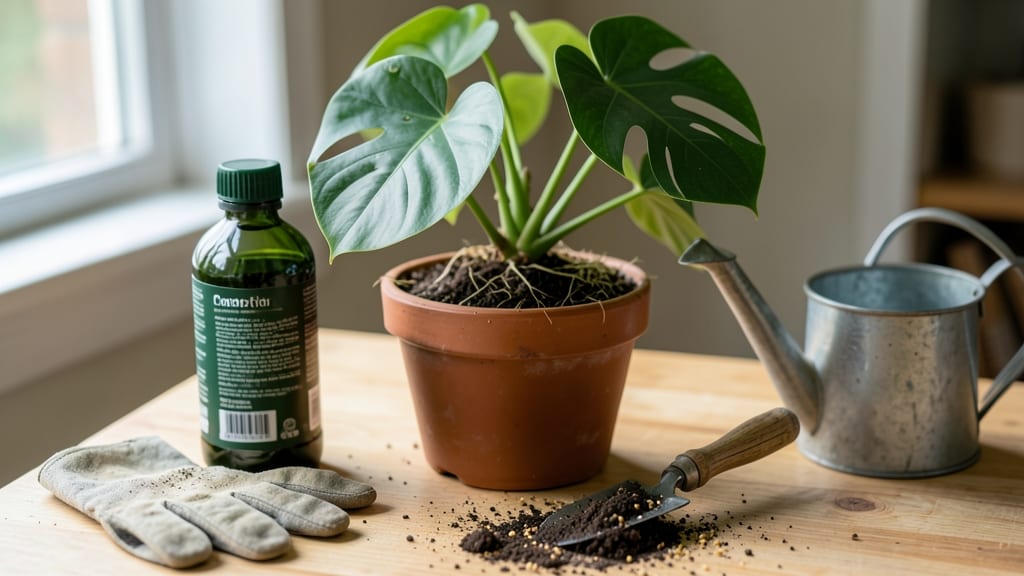
Fertilizing after repotting your General Repotted Plant 🌱 is all about timing—waiting too long or jumping in too soon can either starve or shock those fragile new roots.
You’ve just given your plant a fresh start, but its roots are still healing from the disturbance. Rushing to fertilize can burn tender roots before they’ve had a chance to spread into the new soil, leaving your plant stressed instead of thriving.
Most plants need a 4- to 6-week recovery period before their roots are ready to handle nutrients. Succulents and cacti can wait even longer, while heavy feeders like flowering plants might need a lighter touch sooner—but how do you know when they’re truly ready?
In this guide, I’ll break down the exact waiting periods for different plant types, the telltale signs your roots are ready for fertilizer, and how to avoid the most common mistakes that derail growth after repotting.

Root recovery timeline: when to wait before fertilizing after repotting
After repotting, your plants need time to recover—especially their roots—which can be stressed by the disturbance. Fertilizing too soon can burn delicate roots still adjusting to their new home. The key is patience: most plants need 4-6 weeks of recovery before their first feeding.
This timeline varies by plant type, soil conditions, and environmental factors like temperature and humidity.
Succulents and cacti, for example, have shallow roots and store water, so they can wait 6-8 weeks before fertilizing. Meanwhile, tropical plants like ferns or calatheas may only need 3-4 weeks because their roots recover faster in humid conditions. Understanding these differences ensures you don’t overfeed or underfeed your plants.
Here’s a quick reference to guide your post-repotting fertilization schedule:
| Plant Type | Wait Time | First Fertilizer | Notes |
|---|---|---|---|
| Succulents/Cacti | 6-8 weeks | Diluted liquid (50%) | Avoid high nitrogen; use low-phosphorus fertilizer. |
| Tropical Plants | 3-4 weeks | Balanced (10-10-10) | Monitor for salt buildup; flush soil monthly. |
| Flowering Plants | 4-6 weeks | Phosphorus-rich (5-10-5) | Encourage blooms; reduce after flowering season. |
| Vegetables/Herbs | 3-5 weeks | Nitrogen-heavy (10-5-5) | Use compost tea for gentle nutrient boost. |
| Bonsai Trees | 8-12 weeks | Slow-release granules | Minimal fertilizer; prioritize root health. |
Season also plays a role in your fertilization timeline. If you repot in spring or early summer, your plants will grow faster, and you can introduce fertilizer sooner. However, if repotting happens in fall or winter, extend the wait time to 6-8 weeks since growth slows down.
Cold temperatures and shorter daylight hours reduce root activity, making plants more sensitive to fertilizer burns.
Environmental factors like humidity and light exposure also influence recovery. Plants in bright, indirect light or high-humidity environments (like bathrooms or kitchens) may recover faster. Conversely, those in dry, low-light conditions might need extra time.
Always place repotted plants in their permanent growing spot to simulate real conditions and speed up recovery.
One common mistake is rushing to fertilize because you see new leaves. While new growth is a good sign, it doesn’t always mean roots are fully established. Always check for root growth at the soil surface or gently tug the plant—if it resists, roots are likely gripping the soil.
If it slides out easily, wait another week or two before fertilizing.
For outdoor plants, timing also depends on your climate. In warmer zones (USDA 9-11), you can fertilize as early as 3 weeks after repotting, while colder zones (USDA 3-6) may need to wait 6-8 weeks.
Pay attention to your local frost dates—if repotting in late summer, avoid fertilizing until after the first frost to prevent stress.
Once you reintroduce fertilizer, start with a half-strength solution to avoid shocking the roots. Gradually increase the concentration over 2-3 feedings to help plants adjust. Organic options like fish emulsion or compost tea are gentler than synthetic fertilizers and reduce the risk of overfeeding during this critical phase.
Remember, the goal isn’t just to feed your plants—it’s to support their root establishment. A well-timed fertilizer schedule ensures your plants thrive long after the repotting stress has passed. Patience now means stronger growth later.
Signs your plant is ready for fertilizer after repotting
After repotting, your plant needs time to recover before you reintroduce fertilizer. The first 4-6 weeks are critical for root establishment, but how do you know when it's safe to feed?
Look for these clear visual and tactile cues that show your plant has bounced back and is ready for nutrients.
One of the first signs is new growth emerging from the stem or leaves. This indicates the plant has stabilized and is actively photosynthesizing again. Check for smaller leaves at the tips of stems—this is a positive sign of recovery, not stress.
Your plant may also show improved soil absorption. When you water, the soil should soak up moisture evenly without pooling at the surface. If water runs straight through or sits on top, the roots aren't fully recovered yet.
Leaf color is another key indicator. Healthy leaves should return to their natural shade—no more yellowing or browning. For example, a snake plant should regain its deep green hue, while a monstera should show vibrant variegation.
- 🌱 New growth appears on stems or leaves
- 💧 Soil absorbs water evenly (no pooling)
- 🌿 Leaves return to natural color (no yellow/brown)
- 🪴 Roots visibly spread into fresh soil (if checking)
- ✂️ No wilting or drooping after watering
Wait until you see 3-4 of these signs before fertilizing to avoid shocking delicate roots.
For succulents and cacti, wait until you see new pads or pups forming at the base. These plants store water, so they need extra time to re-establish their root systems before handling additional nutrients.
Once you confirm these signs, use a balanced liquid fertilizer diluted to half-strength. Apply it to the soil surface and water thoroughly to help nutrients reach the roots safely.
Remember: Patience pays off. Rushing fertilization can lead to root burn or nutrient overload, setting your plant back further. Trust the process—your plant will thank you with stronger, healthier growth.