
Fertilization
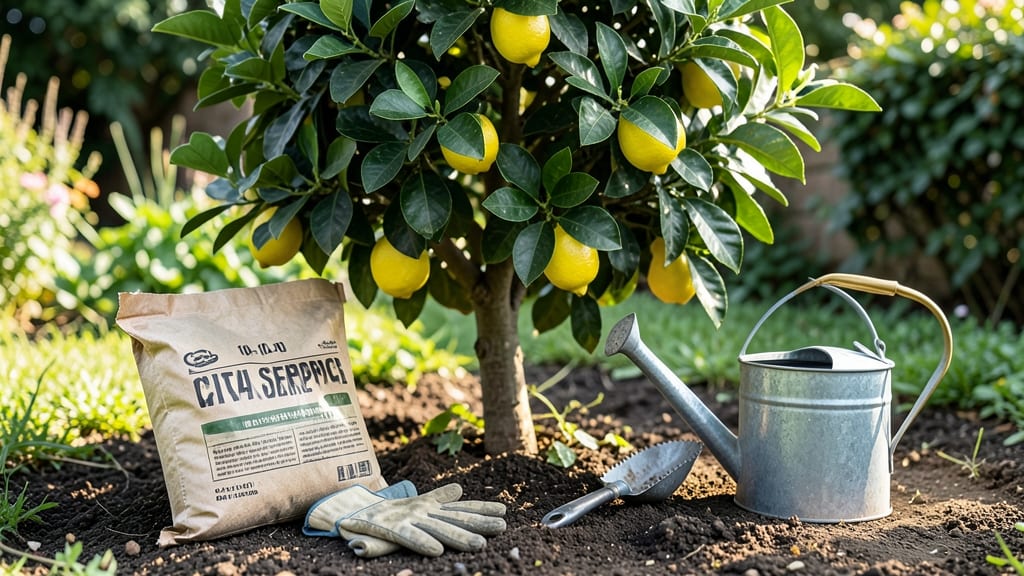
Fertilizing citrus trees in Arizona at the right time ensures your 🍊 trees produce more fruit and grow stronger—spring and fall are the key seasons, but the heat and soil play a big role.
Picture this: you’ve just planted your first lemon tree, and by summer, the leaves are yellowing instead of vibrant green. That’s often a sign you fertilized too late—or too early. Arizona’s desert climate means timing matters more than most gardeners realize.
In this guide, I’ll break down the exact months to fertilize your citrus, which fertilizers work best in alkaline soil, and how to avoid common mistakes that waste money and stress your trees.
You’ll learn how to adjust for Phoenix’s intense summers, Tucson’s monsoon risks, and even how much to feed a young tree versus a mature one—so you can enjoy homegrown oranges and lemons year after year.

Best fertilization schedule for Arizona citrus trees: spring vs. fall timing
Arizona’s unique climate—with its hot summers and mild winters—makes it ideal for citrus trees, but fertilization timing is critical. Unlike coastal regions, Arizona’s low humidity and alkaline soils demand precise scheduling to avoid stressing your trees.
The best times to fertilize are late winter (February–March) and early fall (September–October), aligning with natural growth cycles and soil temperature triggers.
Spring fertilization kickstarts new growth after winter dormancy, while fall applications prepare roots for winter. However, Arizona’s microclimates—like Phoenix’s heat islands, Tucson’s higher elevations, and Yuma’s extreme dryness—require adjustments.
For example, Phoenix trees may need earlier spring feeding due to earlier warming, while Tucson’s cooler nights might delay fall fertilization by a week or two.
Soil temperature is your best guide: fertilize when soil reaches 60°F (15°C) in spring and 70°F (21°C) in fall. Use a soil thermometer to monitor—this ensures nutrients are absorbed efficiently rather than burned by heat.
In drought-prone areas like Yuma, reduce watering for 2–3 days after fertilizing to prevent nutrient runoff.
Here’s how the optimal timing breaks down for Arizona’s three key regions:
Spring fertilization in February–March is your tree’s wake-up call. Apply a balanced fertilizer (like 6-6-6) when buds swell but before leaves emerge. This timing prevents leaf burn from heat stress. For young trees (under 3 years), use half the recommended dose to avoid overstimulating roots.
In Phoenix, where soil warms faster, start fertilizing by late February to match the tree’s accelerated growth cycle.
Fall fertilization in September–October is often overlooked, but it’s crucial for root development. Choose a low-nitrogen fertilizer (like 3-4-6) to encourage root growth without promoting late-season foliage that can’t harden off for winter.
In Tucson’s cooler microclimate, delay fall feeding until mid-October to avoid stimulating growth too close to winter. Always water deeply after fertilizing to help nutrients penetrate the alkaline soil common in Arizona.
Skip fertilizing during summer months (June–August)
How to choose the right citrus tree fertilizer for Arizona’s soil and climate
Arizona’s alkaline soil (pH 7.5–8.5) and intense heat demand special attention when fertilizing citrus trees. The wrong blend can burn roots or waste water in our drought-prone climate. I’ll break down the best nitrogen-rich options, micronutrient adjustments, and slow-release strategies tailored for your local growing conditions.
Citrus trees thrive on balanced NPK ratios (6-6-6 or 8-3-9), but Arizona’s soil often lacks key micronutrients like iron and zinc. Organic options like compost or synthetic slow-release granules both work—it’s about matching your tree’s stage and your watering habits.
Let’s dive into what’s best for your lemon, orange, or grapefruit.
Organic vs. Synthetic Fertilizers for Arizona Citrus
Organic Fertilizers
- ✅ Pros: Improves soil structure, slow release, drought-resistant
- ✅ Best for: Long-term soil health, alkaline soils
- ✅ Examples: Citrus-specific compost, fish emulsion, worm castings
- ❌ Cons: Requires more frequent applications, slower results
- ❌ Downside: Can attract pests if overused
Synthetic Fertilizers
- ✅ Pros: Fast-acting, precise nutrient control, water-efficient
- ✅ Best for: Quick growth boosts, container-grown trees
- ✅ Examples: Slow-release granules (Osmocote), liquid citrus blends
- ❌ Cons: Risk of over-fertilization, soil depletion over time
- ❌ Downside: Requires careful watering to avoid burn
For alkaline soils, I recommend adding chelated iron or Epsom salt (magnesium sulfate) to your fertilizer blend. These help prevent chlorosis (yellowing leaves) common in Arizona’s high-pH dirt. Start with 1 tablespoon of Epsom salt per gallon of water and apply every 4 weeks during growing season.
Slow-release fertilizers are a game-changer in Arizona’s heat. Brands like Osmocote or Espoma Citrus-Tone release nutrients gradually, reducing water waste. Apply these in February and September to align with your tree’s natural growth cycles.
For organic gardeners, compost tea is an excellent DIY alternative—simmer compost in water for 24 hours, strain, and apply to soil.
If you’re using container-grown citrus, switch to a water-soluble fertilizer like Miracle-Gro Citrus Food during peak summer months. These dissolve quickly and prevent nutrient buildup in limited soil. Always water thoroughly after applying to avoid root burn, especially in 100°F+ temperatures.
Remember: Less is more in Arizona. Over-fertilizing leads to leaf burn and wasted water. Stick to the package guidelines and adjust based on your tree’s response. For young trees, use half the recommended dose to avoid shocking their roots.