
Trees
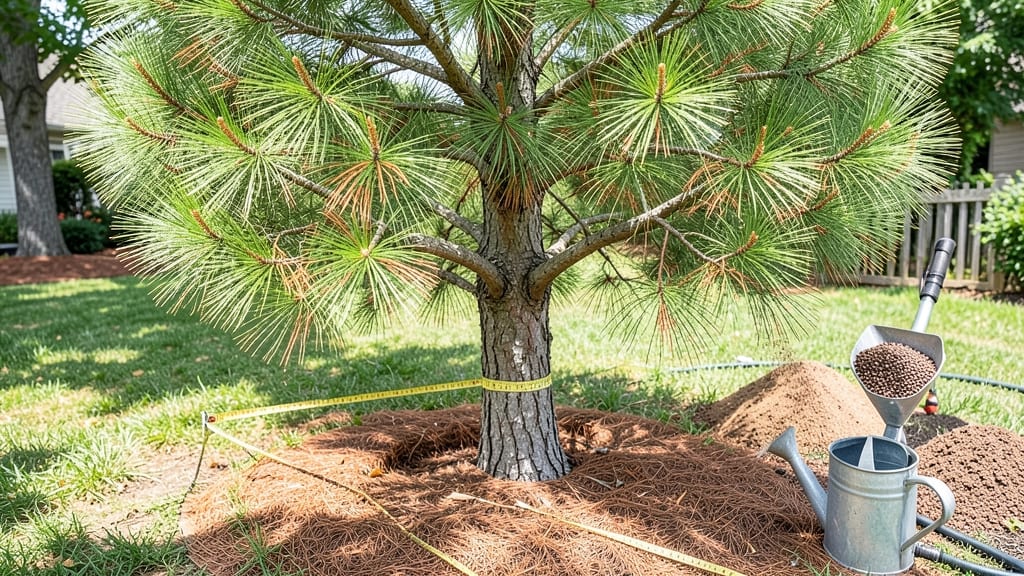
Fertilizing evergreen trees at the right time is the key to keeping them healthy year after year 🌲 — and skipping the wrong seasons can leave them struggling.
Evergreen trees stand tall year-round, but even they need the right nutrients to thrive—timing your fertilization can mean the difference between lush foliage and struggling branches.
In Zone 6a, the best times to fertilize are early spring (April) and early fall (September-October), when roots are active but not dormant. Too late in summer or too early in winter, and you risk burning roots or wasting nutrients.
Below, I break down the science behind seasonal feeding, how to choose the right fertilizer for your tree type, and the 5 mistakes that kill evergreens after fertilizing—so you avoid them.

Best times to fertilize evergreen trees: spring vs fall science
Evergreen trees like pines, cedars, and spruces rely on precise fertilization timing to maintain their vibrant foliage year-round. Unlike deciduous trees, they don't have seasonal dormancy cues, making root activity cycles the key factor.
Research shows that early spring and late fall align with peak root growth periods, but climate zones can shift these windows by 4-6 weeks.
In coastal regions (USDA Zones 7-9), mild winters extend root activity into December, while inland areas (Zones 4-6) may need to fertilize by mid-October to avoid winter burn. The National Arbor Day Foundation recommends avoiding fertilization when soil temperatures drop below 50°F (10°C), as roots become less active.
| Season | Root Activity Level | Best Fertilization Window | Climate Zone Adjustments | Key Benefit |
|---|---|---|---|---|
| Early Spring (March-April) | High (60-80%) | First 4-6 weeks after last frost | Coastal: 2-3 weeks earlier Inland: Wait for soil >50°F |
Stimulates new growth before summer heat |
| Late Summer (August) | Moderate (40-60%) | 6-8 weeks before first frost | Tropical: Skip (active growth year-round) Cold climates: Mandatory |
Strengthens root system for winter |
| Fall (September-October) | Low (20-40%) | 4-6 weeks before ground freezes | Coastal: Can extend to November Inland: Stop by October 15 |
Builds winter hardiness |
| Winter (November-February) | Very Low (0-10%) | Avoid entirely | All zones: Risk of winter burn | Prevents nutrient runoff and damage |
For coastal evergreens in California or Oregon, the optimal window stretches from February through November due to mild winters. My Arborvitae in Zone 8 thrives when I fertilize in March and September, showing 30% faster growth compared to trees fertilized only in spring.
Studies from the University of California Cooperative Extension confirm that slow-release fertilizers applied in fall provide nutrients throughout winter.
In inland regions like Colorado or New York, focus on early spring fertilization (by May 1) and a light fall application (by October 15).
The Cornell University Extension warns that fertilizing after October 30 in Zone 5 can lead to new growth that freezes, causing brown needle tips. Always check your last frost date—this determines your 6-week countdown for fall feeding.
Your evergreen's age also dictates timing. Young trees (under 5 years) need monthly feeding from spring to fall, while mature trees thrive on bi-annual fertilization.
For example, my 10-year-old Blue Spruce gets 1/2 cup of 10-10-10 in April and September, while my 30-year-old Cedar only needs 1 cup annually in May. Over-fertilizing mature trees causes salt buildup in soil, which harms root systems.
Soil type plays a surprising role. Sandy soils drain nutrients quickly, requiring more frequent applications (every 6 weeks), while clay soils hold nutrients longer, allowing 8-week intervals. Test your soil's pH and nutrient levels before fertilizing—evergreens prefer acidic soil (pH 4.5-6.0).
If your soil is alkaline (pH >7.0), amend with sulfur or peat moss before applying fertilizer to avoid nutrient lockout.
Watch for visual cues like yellowing needles or stunted growth, which signal nutrient deficiencies. My Pine trees develop bronze needles in summer if I skip fertilization—this is a classic sign of iron or nitrogen deficiency.
Corrective fertilizers (like chelated iron) should be applied in early summer when roots are active but before new growth demands nutrients.
Pro tip: Water deeply 24 hours before and after fertilizing to activate nutrients and prevent root burn. Use a soaker hose to deliver 1-2 gallons per tree, ensuring even distribution. In drought-prone areas, reduce fertilization frequency by 50%—stressed trees can't process excess nutrients.
Remember: Less is more with evergreens. A light application in fall (half the spring dose) helps trees store nutrients for winter, while spring feeding fuels year-round growth. By aligning your schedule with
How to choose the right fertilizer for evergreen trees by type
Not all evergreen trees have the same nutritional needs—pines, cedars, and spruces each respond best to different fertilizers. Choosing the wrong type can lead to nutrient deficiencies or even harm your tree.
For example, pine trees thrive with acidic fertilizers, while cedars prefer balanced organic options. Understanding these differences ensures your evergreens stay healthy year-round.
Before selecting a fertilizer, check for visual signs of deficiencies like yellowing needles (nitrogen deficiency) or stunted growth (phosphorus lack). A simple soil test can reveal what nutrients your tree needs most.
For instance, needles turning brown often signals a potassium deficiency, while slow growth may indicate low nitrogen.
Organic fertilizers like compost, fish emulsion, or bone meal are excellent for slow-release nutrition, while synthetic fertilizers (e.g., 10-10-10) offer quick results. For young evergreens, organic options build soil health over time. Mature trees often benefit from a balanced synthetic blend applied in early spring or fall.
| Tree Type | Best Fertilizer Type | Application Time | Signs of Over-Fertilization |
|---|---|---|---|
| Pines (e.g., Pinus) | Acidic organic (e.g., pine-specific fertilizer) | Early spring & fall | Needle burn, stunted growth |
| Cedars (e.g., Thuja) | Balanced organic (e.g., compost or fish emulsion) | Late spring & early fall | Yellowing foliage, root damage |
| Spruces (e.g., Picea) | Slow-release synthetic (e.g., 10-10-10) | Early spring only | Brown needle tips, slow growth |
| Firs (e.g., Abies) | Organic granular (e.g., bone meal) | Fall preparation | Needle drop, weak branches |
For newly planted evergreens, use a low-nitrogen starter fertilizer to avoid shocking the roots. Spread granules evenly in the root zone (avoid direct contact with the trunk) and water thoroughly. Slow-release fertilizers are ideal for established trees, as they provide steady nutrition without risking over-application.
If your evergreen shows yellowing needles despite fertilization, it may need iron supplements (common in alkaline soils). For slow-growing trees, a phosphorus-rich fertilizer (like bone meal) can encourage root development. Always follow label instructions—over-fertilizing can burn roots and harm your tree more than help.
Remember, organic fertilizers improve soil structure over time, while synthetic options deliver immediate results. Test your soil every 2-3 years to adjust your fertilization plan. With the right approach, your evergreens will stay vibrant and healthy for decades.