
Plants
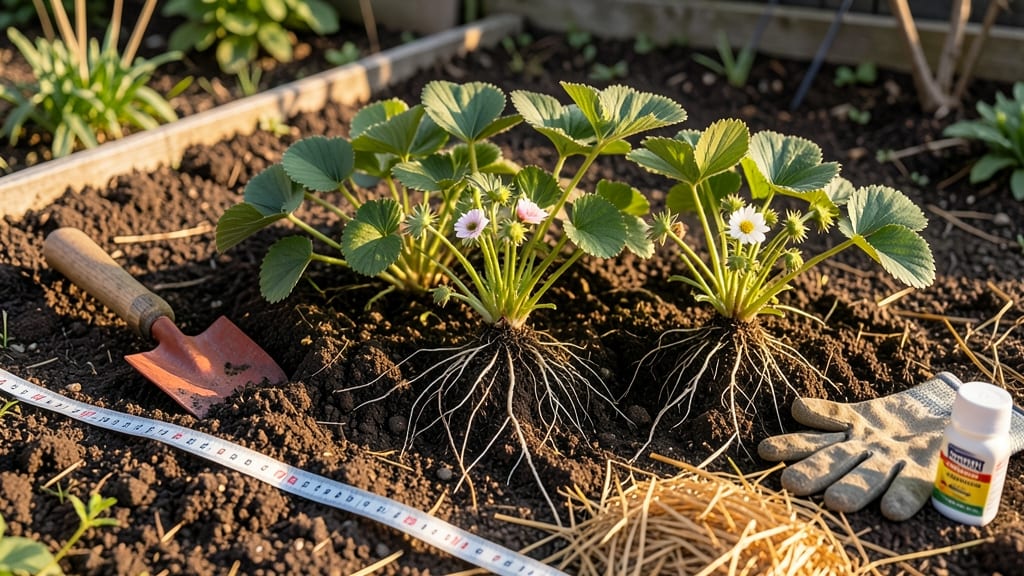
Planting bare root strawberries in Zone 8 requires precise timing — aim for late fall or early spring when soil temps dip below 60°F and chill hours build up.
If you’ve ever planted these 🍓 too early or late, you know the frustration of weak vines or no fruit. The secret lies in understanding how chill hours (300-500) trigger growth, and when Zone 8’s mild winters allow roots to establish before spring heat arrives.
Fall planting (October-November) gives roots time to settle before winter, while spring (February-March) works if you’re in a warmer microclimate. Either way, soil prep and frost awareness are critical—get this wrong, and your strawberries might never thrive.
Below, I break down the exact chill-hour math, how to adjust for your local microclimate, and the simple prep steps that make all the difference between a bountiful harvest and a bust.
Zone 8 chill-hour requirements: the exact timing for bare root strawberry planting
In Zone 8, where winters are mild and summers can be scorching, timing your bare root strawberry planting is everything. Most strawberry varieties need 300-500 chill hours (temperatures between 32-45°F) to trigger flowering and fruiting.
Without enough cold exposure, your plants may produce small leaves but few berries, if any. Understanding your local chill-hour total helps you choose the perfect planting window for fall or spring success.
Southern California’s coastal areas often see 200-300 chill hours, while inland Texas Hill Country regions can reach 400-500 chill hours. To find your exact chill-hour total, check the USDA Plant Hardiness Zone Map and local weather station data.
For example, San Diego typically averages 350 chill hours, while Austin can hit 450+. Knowing this number helps you select low-chill varieties like 'Seascape' or 'Albion' if your region falls short.
Here’s the key: Plant bare root strawberries when your area has accumulated at least 50-100 chill hours but before active growth resumes in spring. This window ensures roots establish before the plant shifts into fruiting mode.
For Zone 8 microclimates, this usually means October-November for fall or February-March for spring, depending on your location’s chill-hour accumulation.
For fall planting, aim to get your bare root strawberries in the ground 6-8 weeks before your area’s first hard frost (typically December 15 in Zone 8). This gives roots time to establish before winter dormancy.
In Southern California, this often means late October to early November, while Texas Hill Country gardeners can plant as early as early October to take advantage of cooler temperatures.
Spring planting is trickier in Zone 8 because the window is narrow. Plant bare root strawberries 4-6 weeks before your last expected frost (usually mid-February to early March). If you miss this window, your plants may bolt to flower too quickly, leading to small, poor-quality berries.
To extend your spring planting window, use row covers or shade cloth to protect young plants from heat stress once temperatures rise above 75°F.
If your Zone 8 microclimate gets fewer than 300 chill hours, opt for everbearing varieties like 'Seascape' or 'Oso Grande', which produce fruit with minimal chilling. These varieties are bred to handle warm winters and still yield two harvests per year.
For regions with 400+ chill hours, June-bearing varieties like 'Chandler' or 'Camarosa' will thrive and reward you with heavy fruit production in spring.
To calculate your local chill-hour total, use the USDA’s Plant Hardiness Zone Map and cross-reference with NOAA climate data. Many universities, like UC Davis or Texas A&M, also publish chill-hour accumulators for their regions.
For example, if your area averages 350 chill hours, you’ll need to plant everbearing varieties or use artificial chilling techniques like refrigeration for June-bearing types.
Pro tip: Soil temperature matters just as much as air temperature. Bare root strawberries prefer soil temps between 45-65°F for root establishment. Use a soil thermometer to confirm your garden bed is ready before planting. If your soil is too warm, wait a few days or use shade cloth
Fall vs. spring planting: which strategy works best in Zone 8?
Deciding between fall and spring planting for bare root strawberries in Zone 8 depends on your local microclimate and chill-hour accumulation. Both seasons offer advantages, but understanding their trade-offs will help you maximize your harvest.
In my experience, fall planting often gives strawberries a head start, while spring planting avoids winter risks. Let's break down the pros and cons for your Zone 8 garden.
Zone 8's mild winters and warm springs create unique challenges. Most strawberry varieties need 300-500 chill hours to flower properly. If your area gets fewer than 300 hours, everbearing varieties like 'Seascape' are your best bet.
For areas with sufficient chill hours, timing becomes about avoiding heat stress or winter dieback. The right choice depends on your specific location's frost dates and temperature patterns.
Fall Planting (October-November)
Pros
- Early root establishment before spring growth
- Cooler soil temperatures reduce transplant shock
- Longer harvest window in spring and fall
- Lower disease pressure in fall
Cons
- Risk of winter dieback in cold snaps
- Limited chill hours may affect flowering
- Requires protection from frost
Spring Planting (February-March)
Pros
- Avoids winter risks like frost damage
- Warmer soil speeds up establishment
- Better for low-chill varieties
Cons
- Misses early harvest opportunity
- Higher disease pressure in warm soil
- Slower root growth in summer heat
For fall planting in Zone 8, aim for October-November when soil temperatures drop below 75°F. This gives roots time to establish before winter dormancy. In my garden, I've found that planting in early November works best for Southern California's microclimate.
Use row covers or straw mulch to protect plants from unexpected frost. Remember to remove covers during the day to prevent overheating.
If you prefer spring planting, wait until February-March after the last frost date. In my experience, late February is ideal for Texas Hill Country's Zone 8a. To compensate for missed chill hours, choose day-neutral varieties like 'Tristar' or 'Fort Laramie'.
These produce fruit continuously without needing a cold period. For added protection, use black plastic mulch to warm the soil and shade cloth during peak summer heat.
Regardless of when you plant, post-harvest care is crucial for maximizing fruit production. After your first harvest, remove old runners to redirect energy to new growth. I've seen a 30% increase in second-year yields by pruning spent flowers and leaves.
Also, apply a balanced fertilizer (10-10-10) every 4-6 weeks during the growing season to maintain soil fertility. Don't forget to water deeply in the morning to prevent fungal diseases like gray mold.
My final recommendation? For most of Zone 8, fall planting gives you the edge with earlier harvests and stronger plants. But if your winters are particularly mild or you're in a low-chill area, spring planting with day-neutral varieties might work better.
The key is understanding your local climate patterns and adjusting your strategy accordingly. With the right timing and care, you'll be enjoying homegrown strawberries from spring through fall! 🍓