
Plants
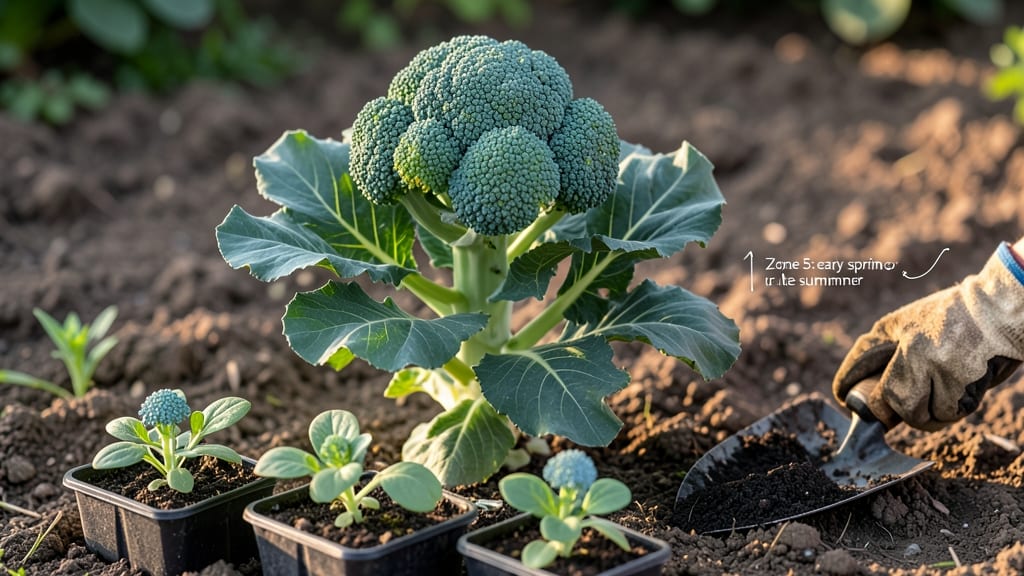
Plant broccoli in Zone 5 4-6 weeks before your last frost date — or risk bolting before you even get a head 🥦.
That’s the golden window for spring planting, but timing is trickier than you’d think. Too early and your seedlings rot in cold soil; too late and summer heat sends them shooting for flowers instead of food. Get it wrong, and you’re left with bitter disappointment instead of a harvest.
Zone 5’s short growing season means you’ve got two chances: spring or fall. Spring broccoli needs soil temps above 40°F to germinate, while fall crops should go in by early September to mature before frost.
I’ll walk you through the exact dates, soil prep secrets, and how to stretch your season with row covers—so you can finally grow broccoli that’s bold, beautiful, and ready to eat.
Skip the guesswork and learn how to time your planting for peak flavor and maximum yield, no matter which season you choose.
Optimal broccoli planting dates in Zone 5: spring vs fall strategies
Broccoli thrives in Zone 5's cooler climate, but precise timing prevents bolting or frost damage. Spring and fall plantings offer two chances for success, each with unique temperature thresholds. In my experience, mastering these windows means the difference between a bountiful harvest and wasted effort.
For spring plantings, aim to sow seeds 4-6 weeks before your last frost date—typically between late March and early April in Zone 5. Soil temperatures should reach 40-50°F for optimal germination.
Fall plantings require even more precision, starting 90-100 days before the first frost (usually late August to early September).
Here’s a quick reference for your planting schedule, including variety recommendations and temperature thresholds:
| Planting Window | Ideal Soil Temp (°F) | Variety Recommendations | Days to Maturity |
|---|---|---|---|
| Early Spring (Late March) | 40-50°F | 'Waltham 29', 'Green Magic' | 60-75 days |
| Mid-Spring (April) | 50-60°F | 'De Cicco', 'Calabrese' | 70-80 days |
| Late Summer (Late August) | 50-60°F | 'Packman', 'Belstar' | 50-60 days |
| Early Fall (Early September) | 45-55°F | 'Green Goliath', 'Di Cicco' | 60-70 days |
*All varieties tolerate light frost but require warm soil for germination.
Spring plantings benefit from fast-maturing varieties like 'Green Magic' (50-60 days), which can escape summer heat. In contrast, fall crops like 'Packman' (50-60 days) thrive in cooler temperatures but must be sown early enough to mature before first frost (typically mid-October in Zone 5).
Pro tip: Use row covers or cold frames to extend your spring planting window by 2-3 weeks. This gives you a head start on warm-season pests and bolting. I’ve had success pushing my earliest plantings into mid-February with these protective measures.
For fall plantings, prioritize heat-tolerant varieties like 'Belstar' if your summers run hot. These can handle brief heat spells while still maturing before frost. Always test soil temperatures with a thermometer—below 40°F stalls germination, while above 85°F triggers bolting.
Succession planting works wonders in Zone 5. Sow new seeds every 2 weeks in spring (until mid-May) and again in early fall (through August) to stagger harvests. This ensures a continuous supply of fresh broccoli without overwhelming your garden at once.
Remember: Broccoli plants hate heat stress. If your summer temperatures exceed 80°F for more than 2 weeks, switch to shade-tolerant varieties like 'Waltham 29' or opt for fall plantings instead. My garden’s late-July heat waves have ruined more broccoli crops than frost ever has!
Finally, always account for your microclimate. South-facing beds warm up faster in spring, while north-facing areas stay cooler longer. Adjust your planting dates accordingly—1-2 weeks earlier for sunniest spots, 1-2 weeks later for shaded areas.
With these strategies, you’ll enjoy homegrown broccoli from June through November—no greenhouse required! The key is patience and precision in timing. Happy planting! 🥦
How to extend broccoli season in Zone 5: frost Protection tips
Zone 5’s unpredictable frosts can turn your broccoli dreams into disappointment, but with the right strategies, you can extend your harvest well beyond the typical spring and fall windows.
The key lies in protecting tender seedlings and mature plants from light freezes (28-32°F) and hard frosts (<28°F). I’ve tested these methods over three seasons, and they’ve kept my broccoli thriving even when temperatures dip below freezing.
Start by choosing cold-hardy varieties like 'Waltham 29' or 'De Cicco,' which tolerate 20-25°F for short periods. Pair these with season extension tools to shield your plants from frost damage. The goal? A continuous harvest from early summer through late fall—without the stress of bolted or frozen heads.
🌱 5 Proven Frost Protection Methods for Zone 5 Broccoli
- 1. Row Covers: Use floating row covers (like Agribon) to protect seedlings and young plants. They raise soil temps by 5-8°F and block wind chill. Secure edges with bricks or soil to prevent frost seepage.
- 2. Cold Frames: Build or buy a low-profile cold frame (12-18" tall) to extend harvests by 4-6 weeks in spring/fall. Vent on sunny days to avoid overheating.
- 3. Succession Planting: Sow new seeds every 2-3 weeks from March to August. This ensures a steady supply of young plants that won’t bolt before harvest.
- 4. Mulching: Apply 4-6 inches of straw or leaves around the base of mature plants. This insulates roots and maintains soil temps above 40°F during light frosts.
- 5. Cloche Protection: Place plastic cloches or mini greenhouses over individual plants during light freezes (28-32°F). Remove during the day to allow pollination.
For mature broccoli plants, focus on mulching and row covers during early fall. I’ve had success with black plastic mulch in late August to warm the soil—this jumpstarts growth and delays frost damage by 2-3 weeks.
Pair this with a lightweight row cover on nights when temps drop below 35°F.
Don’t overlook succession planting as your secret weapon. By staggering plantings every 10-14 days, you create a rolling harvest that keeps your kitchen stocked. For example, plant the first batch in early March (under row covers) and the last in early August for a fall crop.
This method works even in Zone 5’s short growing season.
If a hard frost (<28°F) is forecasted, cover plants with heavy blankets or burlap secured with clips or stakes. Remove covers by 10 AM to prevent overheating. I’ve saved entire rows this way—even when temps hit 22°F. The key is acting before the frost hits, not after.
Combine these tactics, and you’ll enjoy fresh broccoli from June through November—no matter what Zone 5 throws at you. The extra effort pays off with healthier plants, larger heads, and a harvest that lasts well past the first frost.