
Plants
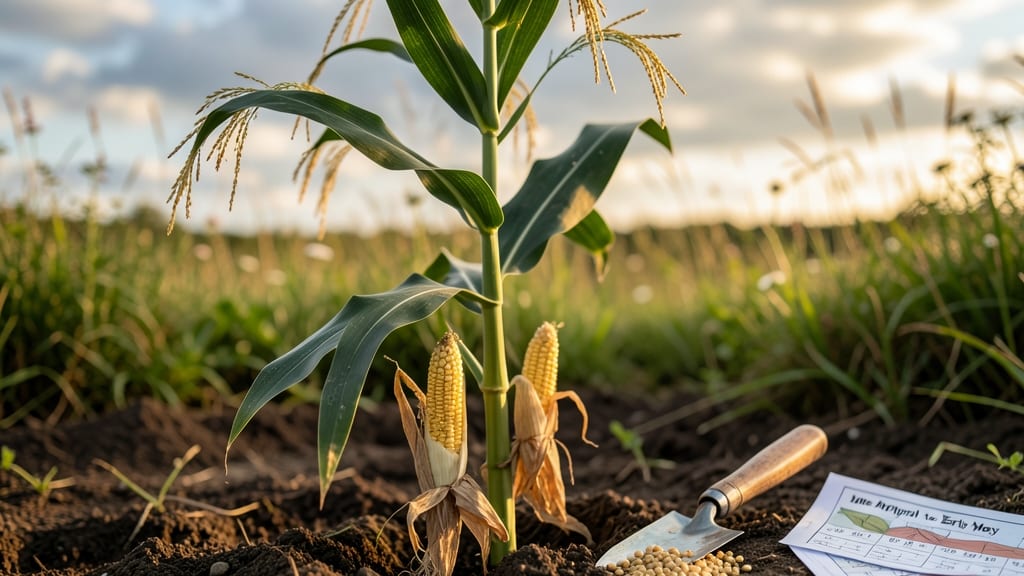
Field corn in North Carolina thrives when planted after the soil warms to 60°F and at least two weeks past your last frost date—timing that can mean the difference between a bumper crop and wasted effort.
Here’s the catch: planting too early in cold soils slows germination, leaving your 🌽 vulnerable to rot or pests. Meanwhile, waiting too long risks heat stress before the ears even form. I’ve seen both mistakes firsthand, and the results aren’t pretty.
This guide breaks down the exact soil temperature triggers for fast germination, adjusts for NC’s diverse climate zones (from the Coastal Plain to the Mountains), and shares which corn varieties perform best when planted at the right moment.
By the end, you’ll know not just when to plant, but how to read your soil’s signals—and avoid the common pitfalls that trip up even experienced growers.
North Carolina field corn planting dates based on soil temperature zones
North Carolina’s diverse climate—from the humid Coastal Plain to the cooler Mountains—means field corn planting dates vary dramatically. The key to success? Planting when soil temperatures consistently reach 50°F for 1-2 weeks, ensuring fast germination and strong seedlings.
In my experience, timing is everything—miss the window, and you risk frost damage or slow growth.
NC’s three main regions—Coastal Plain, Piedmont, and Mountains—have distinct frost patterns and soil warming rates. For example, the Coastal Plain warms earliest, while the Mountains lag behind by weeks.
Understanding these differences helps avoid common mistakes like planting too early in cold soils or too late for optimal yields.
Here’s a breakdown of ideal planting windows by region, based on soil temperature thresholds and last frost dates from NC State Extension data. Use this as your guide to maximize germination and harvest potential.
⚠️ CRITICAL NOTE: Always verify your local frost dates using the NC State Climate Office or Almanac’s Frost Calculator, as microclimates can shift planting windows by 1-2 weeks.
| Region | Soil Temp Threshold | Last Frost Date | Optimal Planting Window | Frost Risk After Planting |
|---|---|---|---|---|
| Coastal Plain | 50°F+ (early April) | Mid-March | Late March–early April | Low (warmest zone) |
| Piedmont | 50°F+ (mid-April) | Late March | Mid-April–early May | Moderate (check forecasts) |
| Mountains | 50°F+ (late April) | Early April | Late April–mid-May | High (delayed warming) |
The Coastal Plain offers the earliest planting window, often as early as late March, thanks to its milder winters and faster soil warming. Here, field corn can germinate within 7-10 days if soil stays above 50°F.
However, even in this region, a late frost in April can still damage young seedlings, so I always plant a backup batch 2 weeks later.
In the Piedmont, where temperatures fluctuate more, aim for mid-April to align with soil warming. This region’s 50°F threshold is typically met by early April, but waiting until mid-April reduces frost risk.
For example, in Raleigh, planting in early April might result in 30% seedling loss if a late frost hits, whereas mid-April plantings usually thrive.
The Mountains present the biggest challenge due to cooler soils and later frosts. Planting before late April is risky, even if soil temps seem ideal. I’ve seen Asheville gardeners lose entire crops by planting in early April—soil temps might read 50°F, but a 28°F night can still kill seedlings.
Always wait until soil is consistently 55°F+ for 5-7 days before planting.
Another critical factor is daylength. Field corn responds to longer daylight hours, which arrive by mid-April across NC. Planting too early (e.g., February) can lead to bolting or poor ear development, as the plant may mature too quickly.
Stick to the 30-45 day window after your region’s last frost date for best results.
For late-season varieties, you can push planting into early June in the Coastal Plain or mid-June in the Piedmont, but avoid this in the Mountains—ears may not mature before frost.
Always choose short-season hybrids (e.g., 60-90 day varieties) for June plantings to ensure harvest before first frost.
Pro tip: Use a soil thermometer to confirm temps before planting. I’ve seen surface temps (measured at 2 inches deep) read 60°F while root-zone temps (4-6 inches deep) stay below 50°F.
Planting at surface temps alone can delay germination by 10-14 days. Always check 6 inches deep for accuracy.
🌽
How to test soil temperature and adjust planting for fast germination
Field corn thrives when planted in warm soil—specifically, 50°F or higher for at least 1-2 weeks before germination. In North Carolina, this often means waiting until mid-April to late May, depending on your region.
Using a soil thermometer is the most accurate way to confirm readiness, but many gardeners overlook this critical step and risk slow or failed germination.
Cold soil delays germination because corn seeds need warmth to activate enzymes that break down stored nutrients. If planted too early, seeds may rot in the ground or sprout unevenly, leading to stunted plants or poor yields.
Even in NC’s warmer Piedmont region, early April can still leave soil too cold for optimal growth, so testing is non-negotiable.
⚠️ callout warning
Many NC gardeners rush to plant field corn after the last frost date, but soil temperature is more critical than air temperature. Planting in 45-49°F soil can delay germination by 3-5 days or worse—trigger fungal diseases like seed rot. Always wait until soil hits 50°F consistently for at least 7 days.
Pro Tip: Use a moisture probe alongside your thermometer—dry soil can give false "warmer" readings. Aim for 40-60% moisture at planting depth (1-2 inches).
To test soil temperature, insert a soil thermometer (digital or analog) 2-3 inches deep—this mimics the depth where corn seeds are typically planted. Check readings early morning and late afternoon for accuracy, as surface temps fluctuate widely.
For fast germination, target a 60°F soil temperature; this is the sweet spot for most NC varieties like Pioneer 39F53 or Golden Bantam.
Adjust your planting timeline based on weekly weather forecasts. If a cold snap is predicted after planting, delay until temps stabilize. In NC’s Coastal Plain, where soils warm faster, you might plant as early as late March, while the Mountains may require waiting until May.
Use the NC State Extension’s frost date maps as a baseline, then fine-tune with soil tests.
For container-grown corn, monitor soil temps closely—pots heat up faster but also cool down quicker. Place containers in south-facing locations and use black plastic mulch to raise soil temps by 2-4°F.
Avoid planting in shady spots or near large trees, as these areas stay cooler and slower to warm.
Once soil reaches the ideal range, plant seeds 1 inch deep and 12 inches apart in rows spaced 30-36 inches apart. Water gently to settle soil around seeds, then maintain 1-2 inches of moisture weekly until germination (typically 7-14 days at 60°F).
Watch for even emergence—if seedlings appear unevenly, it’s a sign of inconsistent soil temps or moisture.