
Trees
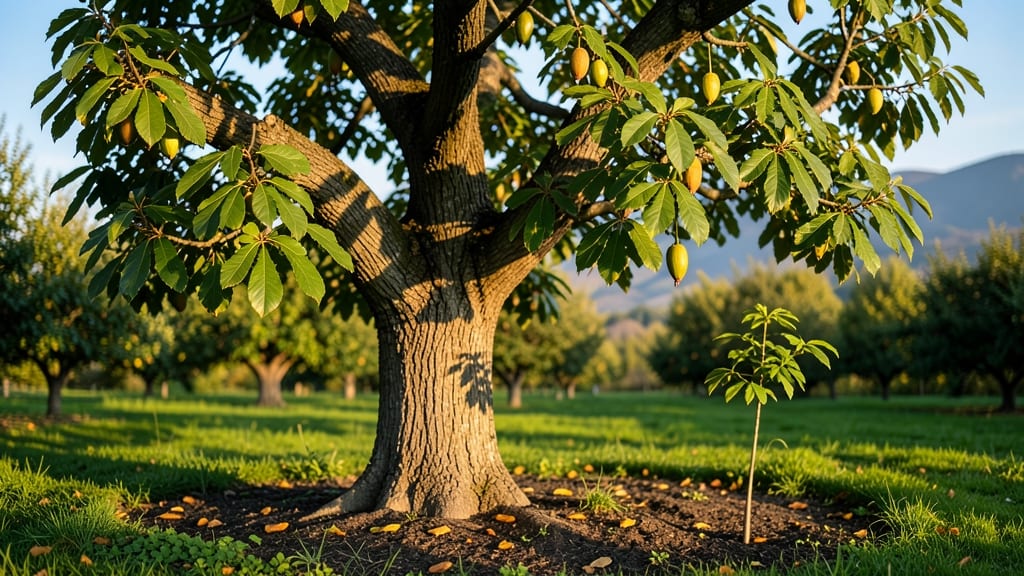
How tall do walnut trees grow? They reach heights between 30 and 130 feet at maturity, depending on the variety and growing conditions 🌳 — a fact that can completely reshape your landscape plans if you’re not prepared.
Imagine planting a tree that starts as a sapling but eventually towers over your house, casting shade for generations. That’s the reality with standard walnut varieties like the English and black walnut, which can reach heights comparable to a 10-story building.
But here’s the good news: not all walnut trees are giants. Dwarf and semi-dwarf varieties stay under 25 feet, making them perfect for smaller yards or urban spaces. The key is choosing the right type for your space and learning how to manage growth through pruning and spacing.
In this guide, I’ll break down the height expectations for different walnut varieties, how to control their size, and which types work best for your property—so you can plant with confidence and enjoy the benefits without the surprises.


Walnut tree height by variety: from dwarf to giant species
Choosing a walnut tree means committing to a long-term landscape investment—some varieties reach 130 feet or more! Whether you're planting for shade, timber, or nuts, understanding each variety's mature height and growth rate ensures you pick the right tree for your space.
I’ve grown both English walnuts and black walnuts, and the size differences are staggering.
Dwarf cultivars like Paradox or Serr stay under 25 feet, making them ideal for small yards, while standard black walnuts can dwarf skyscrapers. Below, I’ve broken down the height ranges, growth speeds, and spacing needs for the most popular varieties—so you can plan with confidence.
| Variety | Mature Height | Growth Rate (ft/year) | Spacing Needs | Best For |
|---|---|---|---|---|
| English Walnut ('Serr') | 40–60 ft | 1.5–2.5 ft | 30–40 ft from structures | Large yards, orchards |
| Black Walnut ('Thomas') | 60–100 ft | 2–3 ft | 50–70 ft from buildings | Timber, wildlife habitats |
| Heartnut ('Heartnut') | 30–50 ft | 1–2 ft | 25–35 ft spacing | Small farms, urban edges |
| Dwarf ('Paradox') | 15–25 ft | 0.5–1 ft | 15–20 ft from fences | Backyards, containers |
| Black Walnut ('Juglans nigra') | 100–130 ft | 3–4 ft | 80–100 ft clearance | Wildlife corridors, forests |
Standard black walnuts like Juglans nigra are the giants of the group, capable of reaching 130 feet with a 3–4 foot annual growth spurt in ideal conditions. These trees need 80–100 feet of clearance from structures, making them better suited for rural properties or wildlife preserves than suburban yards.
On the opposite end, dwarf varieties like Paradox are perfect for urban gardeners. They top out at 15–25 feet and grow just 0.5–1 foot per year, fitting neatly into backyards or even large containers.
I planted one in my 5-gallon pot last year, and it’s thriving with minimal pruning—proof that walnuts aren’t just for sprawling estates.
How to control walnut tree height through pruning & spacing
Managing a walnut tree's height is essential for both aesthetics and practicality, especially in smaller yards. While some varieties can reach 130 feet tall, strategic pruning techniques and proper planting spacing can significantly reduce their mature size.
The key lies in understanding when and how to prune, combined with thoughtful landscape planning.
Young walnut trees grow rapidly, often adding 2-3 feet per year in ideal conditions. Without intervention, even dwarf varieties can outgrow their intended space within a decade. My approach focuses on structural pruning during dormancy and root restriction methods to control vertical growth while maintaining tree health.
⚠️ WARNING: Aggressive pruning can stress walnut trees – these trees are sensitive to heavy pruning, especially when young. Over-pruning reduces nut production and weakens the tree's natural defenses. Always remove no more than 25% of the canopy in a single session, and prioritize dead or diseased branches first.
For height control, I recommend crown thinning every 2-3 years during late winter or early spring. Remove suckers and water sprouts immediately—they compete with the main trunk for nutrients and encourage upward growth. Use sharp, sterilized pruners to make clean cuts just above outward-facing buds to promote horizontal branching.
Another effective method is root restriction. Plant your walnut tree in a wide, shallow trench (about 12-18 inches deep) filled with gravel before backfilling with soil. This limits root expansion, which in turn restricts vertical growth.
For container-grown walnut trees, choose large pots (30+ gallons) with drainage holes and repot every 2-3 years to prevent root-bound stress.
Proper planting spacing is just as critical as pruning. Standard walnut trees need 60-80 feet between specimens, while dwarf varieties require only 15-25 feet. Planting too close forces trees to compete for sunlight and nutrients, leading to stunted growth or disease.
Always check your variety's mature size before planting—some heartnut hybrids can still reach 40 feet tall even when classified as semi-dwarf.
Finally, avoid topping walnut trees—this extreme pruning method stunts growth but creates weak, brittle branches prone to storm damage. Instead, focus on selective pruning to shape the tree naturally.
Combine these techniques with regular mulching (3-4 inches) and deep watering (1-2 inches per week) to maintain a healthy, manageable walnut tree that fits your landscape goals. 🌳