
Trees
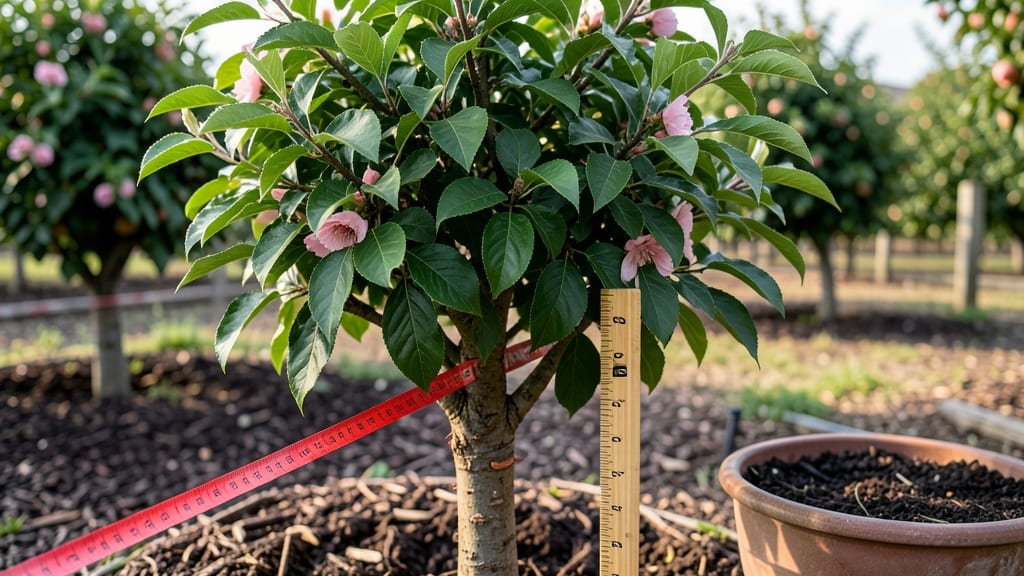
How tall do semi-dwarf trees grow? They typically reach between 12 and 25 feet at maturity, making them the perfect fit for smaller yards or even large containers.
If you love the beauty of fruit trees but have limited space, semi-dwarf varieties offer the perfect compromise—delivering bountiful harvests without overwhelming your yard.
Compared to their full-size counterparts, which can reach 30 to 60 feet, these trees stay manageable while still producing plenty of fruit or striking foliage.
Below, I’ll break down the height ranges for popular varieties, how to choose the right one for your space, and tips to keep them thriving without overgrowth.


Semi-dwarf tree height ranges by popular fruit varieties
Choosing a semi-dwarf fruit tree means you get the benefits of a full-sized tree—like delicious fruit and beautiful blooms—without the space requirements. These trees typically reach half the height of their standard counterparts, making them perfect for small yards, urban gardens, or even large containers.
But not all semi-dwarf varieties grow to the same height, so knowing the mature size of your chosen tree is key to planning your garden layout.
For example, a semi-dwarf apple tree might stay between 12 to 16 feet tall, while a semi-dwarf peach tree could max out around 10 to 14 feet. Citrus trees, like semi-dwarf Meyer lemons, often stay even shorter, around 8 to 12 feet.
Understanding these differences helps you pick the right tree for your space while ensuring proper spacing for airflow and sunlight.
Below is a quick reference guide to help you compare mature heights and spacing needs for some of the most popular semi-dwarf fruit trees.
This table also includes tips on how to maintain their size through pruning and care, so you can enjoy a manageable tree that still produces a bountiful harvest.
| Tree Variety | Mature Height Range | Spacing Needs | Pruning Tips |
|---|---|---|---|
| Apple (e.g., Gala, Fuji) | 12–16 ft | 12–15 ft apart | Prune in late winter to open canopy |
| Peach (e.g., Elberta, Redhaven) | 10–14 ft | 10–12 ft apart | Remove suckers at base annually |
| Citrus (e.g., Meyer Lemon, Calamondin) | 8–12 ft | 8–10 ft apart | Shape as espalier or standard |
| Cherry (e.g., Stella, Lapins) | 10–15 ft | 12–15 ft apart | Thin fruit clusters for size |
| Pear (e.g., Bartlett, Anjou) | 12–16 ft | 12–15 ft apart | Prune for central leader shape |
| Fig (e.g., Brown Turkey, Chicago Hardy) | 8–12 ft | 8–10 ft apart | Minimal pruning; remove dead wood |
When planning your garden, remember that proper spacing is crucial for airflow and sunlight penetration. For instance, apple and pear trees need at least 12 feet between them to prevent disease and encourage fruit production.
On the other hand, citrus trees can handle slightly closer spacing, around 8 to 10 feet, because they’re more compact and often grown in containers.
If you’re growing semi-dwarf trees in containers or small spaces, consider espalier training to keep them even smaller. This technique involves pruning and shaping the tree to grow flat against a wall or trellis, making it ideal for patios or balconies.
Just ensure your container has adequate drainage and is large enough to support the tree’s root system as it grows.
Another factor that influences height is the rootstock used to graft the tree. Semi-dwarf trees are typically grafted onto semi-dwarf rootstocks like M.9 (for apples) or Lovell (for peaches), which naturally limit their growth.
However, if you notice your tree growing taller than expected, it might be due to vigorous rootstock or poor pruning habits. Regular pruning in late winter or early spring helps maintain the desired height and shape.
For those with limited space, consider planting dwarf varieties instead, which typically stay under 8 feet tall. While they produce smaller fruit, they’re easier to manage and often more productive in containers.
Just be sure to check the specific variety’s mature height before purchasing, as even dwarf trees can vary.
Finally, don’t forget that soil quality and sunlight play a huge role in how well your semi-dwarf tree grows. Plant in well-draining soil with plenty of organic matter, and ensure it gets at least 6 to 8 hours of sunlight daily.
With the right care, your semi-dwarf tree will stay within its expected height range while rewarding you with years of delicious fruit.
Now that you know how tall these trees can grow, you’re ready to choose the perfect variety for your garden and enjoy a harvest without the space commitment of a full-sized tree! 🌳
How to choose the right semi-dwarf tree for your space
Selecting the perfect semi-dwarf tree for your garden starts with understanding how rootstock type impacts height. Semi-dwarf trees typically grow between 12-25 feet, but their final size depends on the dwarfing rootstock used.
For example, M.9 rootstock keeps apple trees around 10-15 feet, while B.9 rootstock allows 15-20 feet of growth. Always check the rootstock details when shopping to avoid surprises.
Another critical factor is whether you're planting in ground soil or containers. Semi-dwarf trees thrive in containers up to 15-20 gallon pots, but their growth slows compared to in-ground planting.
If space is tight, choose M.9 or MM.106 rootstock—these stay compact even in pots. Just remember to upgrade container size every 2-3 years as roots expand.
Climate adaptation also plays a role in height control. Trees in warmer climates (Zones 8-10) may grow slightly taller due to longer growing seasons, while those in cooler zones (Zones 4-6) might stay shorter. For example, a peach semi-dwarf on Lovell rootstock in Florida could reach 20 feet, but the same tree in Michigan might max out at 16 feet.
Semi-Dwarf Tree Height Comparison
Pros
- Space-efficient: Fits in small yards or urban gardens
- Easier harvest: Fruit is within reach without ladders
- Faster maturity: Bears fruit 2-3 years after planting
- Versatile rootstock: Options for containers or ground planting
Cons
- Still needs space: 12-25 ft requires 8-12 ft spacing
- Rootstock limits: Some varieties outgrow semi-dwarf expectations
- Container constraints: Pots slow growth and limit root expansion
- Pruning required: Needs annual pruning to maintain size
When choosing between fruit-bearing and ornamental semi-dwarf trees, prioritize your goals. Apple or peach semi-dwarfs need full sun and well-draining soil to stay compact, while ornamental varieties like dwarf cherry blossoms tolerate partial shade better.
Always verify the mature height label—some "semi-dwarf" trees marketed as 12-15 feet can stretch to 20 feet with ideal conditions.
For urban gardeners, consider columnar semi-dwarf trees like Apple 'Columnar' varieties, which grow 8-12 feet tall but only 3-4 feet wide. These are perfect for narrow spaces or vertical gardens.
Pair them with drip irrigation to keep roots healthy without spreading. Just ensure your container has drainage holes to prevent root rot.
Finally, don’t overlook soil preparation—amend clay soil with compost or sand to encourage healthy root growth. Semi-dwarf trees respond well to balanced fertilizer (10-10-10) applied in early spring, but avoid over-fertilizing, which can spur excessive top growth at the expense of root development.
With the right care, your semi-dwarf tree will stay manageable in size while yielding abundant fruit or stunning blooms.