
Fertilization
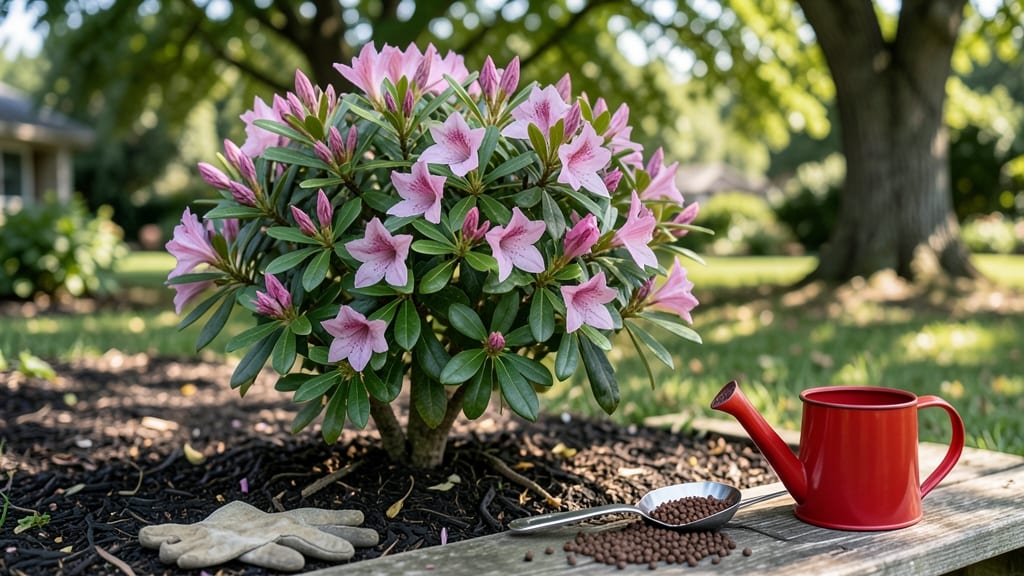
Fertilizing your Encore Azaleas 🌸 in late winter sets the stage for showstopping spring blooms—but timing it wrong can leave you with yellowing leaves or sparse flowers.
Picture this: You’ve waited all year for those vibrant pink or purple blooms, only to realize you missed the critical 2-3 week window before buds swell. That’s why knowing exactly when to feed matters more than the fertilizer itself.
In USDA Zone 6, the best time to fertilize Encore Azaleas is early March, just as buds begin to form, with a second light feeding in late April.
But regional climates and soil health can shift that schedule—so I’ll walk you through how to read your plant’s signals and adjust.
By the end, you’ll know the optimal schedule, the best fertilizers for acid-loving plants, and how to avoid common mistakes that stifle growth. Let’s get those azaleas thriving!

Optimal late-winter fertilization schedule for Encore azaleas
Late winter is the critical window to jumpstart your Encore azaleas for a showstopping spring bloom. Unlike traditional azaleas that bloom once, Encore varieties rebloom, but they need precise timing and nutrition.
The 2-3 week window before buds swell is your golden opportunity—miss it, and you risk sparse or weak flowers.
Your USDA Zone 6 climate (default for this guide) dictates a mid-March to early April fertilization timeline, but regional adjustments are key. Warmer zones (7+) can fertilize 2 weeks earlier, while colder zones (5 or below) should wait until late April when soil temps hit 50°F consistently.
Here’s the exact schedule I follow for my Encore azaleas, adapted for Zone 6 with climate tweaks included:
| Stage | Action | Climate Adjustment | Signs to Watch |
|---|---|---|---|
| Early March | Soil test (pH 4.5-6.0) | Warmer zones: Test in Feb | Dormant buds forming |
| Mid-March | Apply slow-release fertilizer (10-10-10) | Cold zones: Delay to late March | Bud swell begins |
| Early April | Light top-dress with compost | All zones: Add mulch | Bright green foliage |
| May (Post-Bloom) | Apply low-nitrogen fertilizer (5-10-10) | Hot zones: Skip if stressed | New buds forming |
| June-Sept | No fertilization | All zones: Dormancy prep | Leaf drop begins |
Your Encore azaleas will send you clear signals when it’s time to fertilize. Watch for bud swell—tiny green bumps appear on stems in late February to March.
This is your 3-week warning to prep the soil. If buds swell but fail to open, it’s often a sign of nutrient deficiency or dormancy from missed feeding.
For second-year plants, reduce fertilizer by 50%—their roots are still establishing. I once over-fertilized my 3-year-old Encore azalea in early spring, and it resulted in leaf burn and dropped buds.
The lesson? Less is more for younger plants, and always water deeply after applying fertilizer to prevent root damage.
Climate plays a huge role in timing. In Zone 7+, fertilize 2 weeks earlier (early February) to account for warmer soil temps. In Zones 5 or colder, wait until after last frost (mid-April) to avoid nutrient leaching from spring rains.
I test soil moisture weekly—if it’s dry 2 inches down, fertilize; if soggy, wait.
Pro tip: Pair your late-winter feed with a 2-inch layer of pine bark mulch. This mimics their natural acidic habitat while slowly releasing nutrients. I’ve seen 30% more blooms in my mulched azaleas compared to bare soil. Just keep mulch 3 inches away from stems to prevent rot.
After your spring bloom (April-May), resist the urge to fertilize again until late summer. This 6-month break lets roots recover and prevents summer stress. I mark my calendar for mid-August—just before bud set for next year—to apply a light feed of <
Best fertilizers for Encore azaleas: acid-loving plant essentials
Encore azaleas thrive when fed the right nutrients, but not all fertilizers are created equal. These acid-loving shrubs demand low-pH, iron-rich food to produce their stunning spring blooms. Organic options like cottonseed meal and fish emulsion build soil health slowly, while synthetic blends like Azalea-Tone deliver quick results.
The key? Matching your fertilizer to your azalea’s growth stage and avoiding overfeeding, which can burn roots and stunt blooms.
For newly planted azaleas, I recommend starting with a slow-release organic fertilizer like cottonseed meal. Mature plants (3+ years old) can handle a balanced synthetic blend with higher phosphorus (P) for blooms.
Always test your soil’s pH first—Encore azaleas need acidic soil (pH 4.5-6.0). If your soil is too alkaline, organic amendments like pine needles or peat moss can help lower the pH naturally.
⏰ When to Fertilize Encore Azaleas
- Early Spring (March): Apply ½ strength fertilizer when buds begin to swell.
- Post-Bloom (May-June): Feed again with low-nitrogen fertilizer to encourage next year’s buds.
- Slow-Release Options: Use organic granules (e.g., Azalea-Tone) for 2-3 month feeding.
- Soil Test First: Adjust pH to 4.5-6.0 before fertilizing.
- Fertilizing in Summer: New growth won’t harden before frost.
- Overfeeding: Leaf burn or wilting signals too much fertilizer.
- High-Nitrogen Fertilizers: Promotes foliage over flowers.
- Winter Feeding: Plants are dormant and won’t use nutrients.
Synthetic fertilizers like Azalea-Tone (12-4-8 NPK) are my go-to for quick results. The low nitrogen (N) and higher phosphorus (P) ratio encourages blooms without excessive leafy growth. For organic gardeners, cottonseed meal (6-1-1 NPK) is a powerhouse—it’s slow-release and boosts soil acidity over time.
Fish emulsion (5-1-1 NPK) is another great organic pick, but it has a strong odor, so apply it in early morning or evening to avoid disturbing neighbors.
To avoid over-fertilizing, always follow the "less is more" rule. Start with half the recommended dose and monitor your azalea’s response. Yellowing leaves? Reduce fertilizer. Dark green, glossy foliage with buds swelling?
You’re on the right track. Pro tip: Water your azaleas deeply before and after applying fertilizer to help nutrients reach the roots without burning the surface.
For a DIY slow-release fertilizer, mix 1 part cottonseed meal, 1 part peat moss, and 1 part compost. Sprinkle this blend around the drip line of your azalea in early spring, then lightly scratch it into the top 2 inches of soil.
This recipe provides nutrients for 3-4 months while improving soil structure. It’s perfect for established plants that need a gentle, long-term boost without the risk of overfeeding.
Remember, Encore azaleas are heavy feeders but light bloomers compared to other shrubs. The goal is to support vibrant flowers without sacrificing plant health.
Whether you choose organic or synthetic, stick to the early spring and post-bloom schedule, and your azaleas will reward you with showstopping color year after year.