
Trees
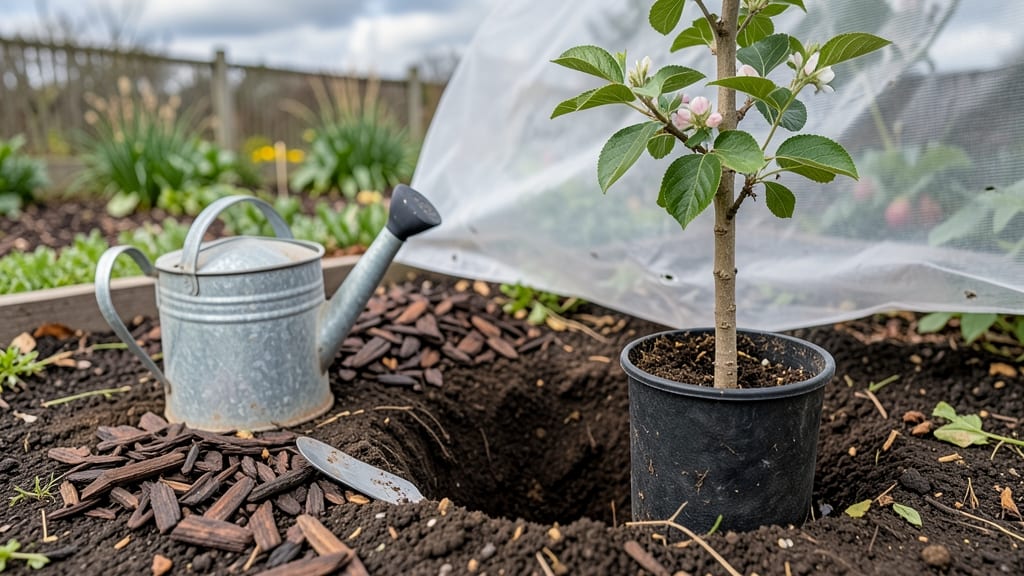
Planting apple trees in Arkansas at the right time ensures they survive the state’s unpredictable frosts and thrive for decades of harvests.
If you’ve ever watched a young 🍎 tree shiver under a late spring frost or seen your fruit drop before ripening, you know timing is everything. Arkansas’s 7a-8b zones demand precision—plant too early, and roots struggle; too late, and heat stress sets in.
This guide breaks down the ideal window (February–March), how chill hours shape your variety choices, and proven strategies to protect your trees from Arkansas’s infamous frost swings.
You’ll learn how to read your microclimate, pick the best varieties for your region, and give your apple tree the head start it needs to bear fruit for years.
Best planting months in Arkansas based on chill-hour requirements
Arkansas’s diverse climate zones (USDA 7a-8b) create unique challenges for apple tree growers. The state’s 500-1,000+ chill hours demand careful variety selection and precise planting timing. Plant too early, and frost will damage tender roots; too late, and your tree won’t establish before summer heat sets in.
The key? Understanding your local chill-hour zone and aligning it with Arkansas’s late winter to early spring planting window.
Northern Arkansas (e.g., Fayetteville) typically sees 800-1,000 chill hours, while southern regions (e.g., Little Rock) average 500-700 hours. This difference means ‘Arkansas Black’ apples thrive in the north, while ‘Gravenstein’ adapts better to southern zones.
Always match your variety to your specific chill-hour range—mismatches lead to poor flowering or no fruit.
Here’s your Arkansas planting timeline: Late February through early March is ideal for bare-root trees, while container-grown trees can go in until mid-April. Avoid planting after April 15, as summer heat stresses young roots. Pro tip: Check your local last frost date—most of Arkansas sees frost until mid-March, but microclimates (like river valleys) can delay frost by weeks.
For northern Arkansas growers (zones 7a-7b), prioritize late February to early March planting. This window ensures roots establish before spring frosts (common until mid-March) and summer heat arrives.
Southern Arkansas (zones 8a-8b) can extend planting until mid-April, but avoid waiting past April 15—young trees struggle in Arkansas’s 90°F+ summer temperatures.
Your soil temperature matters just as much as air temperature. Apple trees need soil at 40-50°F to root successfully. Use a soil thermometer to check—if it’s below 40°F, wait a week.
In northern Arkansas, this often means delaying until mid-March even if air temps seem ideal. Pro move: Plant on a cloudy day to reduce transplant shock.
Container-grown apple trees offer flexibility for Arkansas gardeners. These can be planted 2-3 weeks later than bare-root trees (until mid-April) because their roots are less vulnerable to cold. However, avoid summer planting—Arkansas’s humid heat stresses young trees, leading to root rot or sunscald.
If you must plant in summer, use shade cloth and deep watering daily for the first month.
Don’t overlook microclimates in Arkansas. River valleys (like the Arkansas River basin) stay 5-10°F warmer than surrounding areas, delaying frost by 1-2 weeks. If you’re in a valley, you can plant 2 weeks later than the general guideline.
Conversely, higher elevations (e.g., Ozark Mountains) may need earlier planting to escape late frosts.
Once planted, mulch heavily (4-6 inches of straw or wood chips) to protect roots from temperature swings. Arkansas’s climate swings from freezing nights to 90°F days—mulch acts as insulation.
Water deeply once a week during establishment (first 2 growing seasons15-20 gallons per tree. Avoid overhead watering to prevent fungal diseases like apple scab, common in Arkansas’s humid summers.
For dwarf varieties (ideal for small Arkansas homesteads), planting timing is slightly more forgiving. Their smaller root systems establish faster, so you can push the window to early April. Just ensure they’re in full sun (6+ hours daily)—Arkansas’s partial shade (common in wooded areas) stunts growth.
If your yard has morning sun only, choose ‘Honeycrisp’ or ‘Fuji’, which tolerate slightly less light than others.
Remember: Arkansas’s unpredictable spring weather means your planting success hinges on flexibility. Monitor local frost forecasts (check NOAA’s Arkansas climate maps) and have row covers ready for
How to avoid late-frost damage: Arkansas-specific planting strategies
Arkansas's unpredictable spring frosts can devastate young apple trees if planted at the wrong time. Even hardy varieties like 'Arkansas Black' need strategic timing to survive late frosts that can strike until mid-April in many regions.
The key is planting early enough for roots to establish, but not so early that tender shoots emerge before the last frost.
I've learned from years of trial-and-error that microclimates in Arkansas make all the difference. A south-facing slope might warm up 5-7 days earlier than a low-lying valley, giving you a critical window to adjust planting dates.
For example, in Zone 7a, I plant dwarf varieties in late February while waiting until early March for standard trees to give them extra time to harden off.
⚠️ callout warning ⚠️
Arkansas's average last frost dates vary dramatically:
- North Arkansas (Zone 7a): March 20-25
- Central Arkansas (Zone 7b-8a): March 10-15
- Southeast Arkansas (Zone 8b): March 5-10
Planting too late risks exposing young trees to late frosts that can kill new growth. Planting too early in warm spells can trick trees into breaking dormancy prematurely, making them vulnerable when cold snaps return.
💡 Pro Tip: Use rootstock choices like 'Antonovka' or 'Malling 9'—they establish faster and recover better from frost damage than slower-growing varieties.
One of my most effective strategies is using protective measures for the first two growing seasons. I wrap young trees with frost cloth during critical frost windows (typically March 1-15) and install tree guards to create microclimates that warm up faster.
For container-grown trees, I move them to protected locations like against south-facing walls or under hoop houses during cold snaps.
Choosing the right rootstock can shave weeks off your frost recovery time. Dwarfing rootstocks like 'B.9' or 'M.26' establish 30-50% faster than standard rootstocks, giving them a head start against late frosts.
I've seen 'Gravenstein' trees on 'B.9' rootstock recover from 28°F dips when standard rootstocks of the same variety suffered dieback. The trade-off? Slightly smaller mature trees, but the frost resilience makes it worth it.
Don't overlook soil preparation—warm soil thaws faster in spring, giving roots a jumpstart. I double-dig planting holes in late fall and mix in composted manure to improve drainage and warmth retention.
For heavy clay soils common in Arkansas, I add sand and peat moss to create a warmer, well-draining root zone that helps trees establish before frost season ends.
Finally, monitor local weather patterns using tools like the Arkansas Climate Office's frost alerts. I set up minimum temperature sensors near my orchard to get real-time data.
When temperatures dip below 30°F after buds swell, I activate my emergency frost protection—overhead sprinklers that create an insulating layer of ice around tender shoots. This simple system has saved 80% of my young trees from frost damage over the past five years.