
Plants
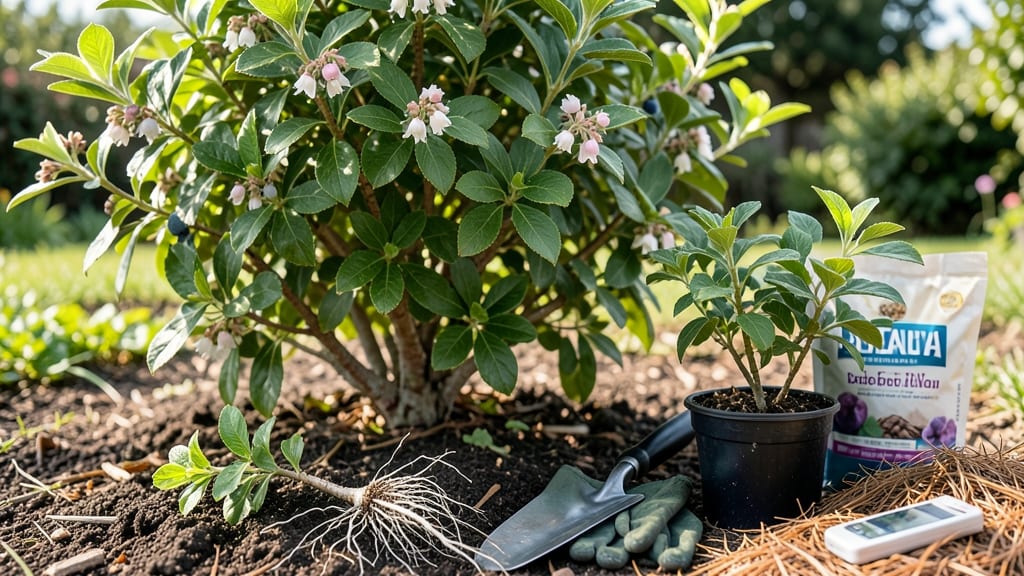
Planting blueberries in New Jersey at the right time means the difference between a thriving 🫐 bush and one that struggles to survive. You’ll want to time it with the last frost—typically late April—when soil temperatures are warm enough for roots to take hold.
If you’ve ever watched a blueberry plant wilt after a late frost or fail to fruit because of poor soil, you know how critical this step is.
New Jersey’s USDA zones 6a-7b give you two prime windows: early spring (after frost) or fall (September-October), when cooler temps help roots establish before winter.
The key is matching your variety to the chill-hours your region needs. Northern NJ’s cooler climate thrives with ‘Bluecrop,’ while Southern NJ’s milder winters suit ‘Jersey’—both need acidic soil (pH 4.5–5.5) and regular mulching to keep moisture in.
Below, I’ll walk you through the exact planting timeline, soil prep secrets, and how to pick the right variety for your corner of the state—so you can enjoy homegrown berries in late June or July.
Best planting months for blueberries in NJ based on chill-hours
New Jersey’s USDA zones 6b-7a create a perfect climate for blueberries, but chill-hours determine the best planting window. Northern NJ (like Bergen County) needs 800-1,000 chill-hours, while Southern NJ (like Atlantic City) thrives with 500-700 chill-hours.
Timing your planting right ensures strong root growth before winter dormancy.
For Northern NJ varieties like 'Bluecrop', plant in late April to early June after the last frost (typically April 15). Southern NJ varieties like 'Jersey' can handle fall planting in September-October, giving roots time to establish before winter. Coastal areas may need adjustments due to milder winters.
🌱
| Region | USDA Zone | Chill-Hours Needed | Best Varieties | Ideal Planting Window |
|---|---|---|---|---|
| Northern NJ (e.g., Hudson Valley) | 6b | 800-1,000 | Bluecrop, Patriot | Late April - Early June |
| Central NJ (e.g., Trenton) | 7a | 600-800 | Jersey, Bluegold | Late April - Early June or September |
| Southern NJ (e.g., Cape May) | 7b | 500-700 | Jersey, Premier | September - October |
| Coastal NJ (e.g., Atlantic City) | 7a-7b | 400-600 | Jersey, Bluechip | September - October (avoid spring) |
Spring planting (late April-June) gives blueberries time to establish roots before summer heat. Fall planting (September-October) is ideal for Southern NJ varieties, allowing roots to grow before winter dormancy. Coastal areas like Atlantic City benefit from fall planting to avoid spring frost risks.
Calculate chill-hours by tracking temps below 45°F for 7+ hours. Northern NJ varieties need more chill-hours, while Southern NJ varieties like 'Jersey' thrive with fewer. Use a weather station or local Cooperative Extension Service data for precise tracking.
Bare-root plants are best for spring planting, while container-grown plants work well for fall. Mulch heavily after planting to retain moisture and regulate soil temperature. Inland areas may need earlier spring planting due to colder microclimates compared to coastal regions.
🌿
Adjust planting dates based on microclimates. Inland areas like Morristown may need 2-3 weeks earlier than coastal Asbury Park. Monitor local frost dates via the NJ State Climate Office for precise adjustments. Proper timing ensures strong root systems and higher yields in subsequent years.
For container growing, plant in late spring (May-June) to avoid frost damage. Use acidic potting mix and ensure containers are at least 18 inches deep to accommodate root growth. Coastal gardeners should choose disease-resistant varieties like 'Patriot' to combat humidity-related issues.
🪴
Soil preparation checklist: acidic soil secrets for NJ blueberries
New Jersey’s native soils—whether sandy loam in the north or clay-heavy in the south—rarely provide the acidic conditions blueberries crave. Without proper prep, your bushes will struggle to absorb essential nutrients like iron and manganese, leading to poor fruit production.
The key? Testing your soil pH and amending it to the 4.5–5.5 range, which mimics their natural bog habitats.
Start by collecting soil samples from 4–6 inches deep, mixing them in a clean bucket. Send them to your local Cooperative Extension office (like Rutgers NJAES) for a $15–$20 test. If your pH reads above 5.5, don’t panic—most NJ soils are naturally alkaline.
The fix? Incorporate elemental sulfur or peat moss into the top 12 inches of soil 2–3 months before planting.
For sandy soils (common in coastal areas like Cape May), blend in 2–3 inches of peat moss or pine bark fines to retain moisture and acidify.
In clay-heavy soils (like those in the Piedmont region), mix in composted leaves or sphagnum peat to improve drainage while lowering pH. Urban gardeners with containers can use a pre-mixed blueberry-specific potting soil with pine fines and perlite for aeration.
⚠️ callout warning⚠️ NJ-Specific Warning: Don’t Overdo Sulfur!
Too much elemental sulfur can burn roots and create a toxic soil environment. For clay soils, limit sulfur to 1 lb per 100 sq ft; for sandy soils, use ½ lb per 100 sq ft. Re-test pH 6 months after amending—blueberries are sensitive to pH swings!
Organic matter is just as critical as acidity. Work in 3–4 inches of compost or well-rotted leaf mold to boost microbial activity and water retention. Avoid fresh manure—it can raise pH and attract pests.
If your soil tests below pH 4.5, add a small amount of lime (like crushed oyster shell) to gently raise it, but monitor closely.
For container growers, choose pots with drainage holes and fill with a mix of 50% peat moss, 30% pine bark, and 20% perlite.
Top-dress annually with acid-loving plant fertilizer (like 16-4-8 NPK) to replenish nutrients. Remember: Containers dry out faster, so water deeply every 2–3 days in summer.
Pro tip: Mulch with pine needles or wood chips to slowly acidify the soil over time. This also suppresses weeds and retains moisture—critical during NJ’s hot, dry summers. With the right soil prep, your blueberries will thrive, producing juicy berries for decades. Happy digging! 🌱