
Plants
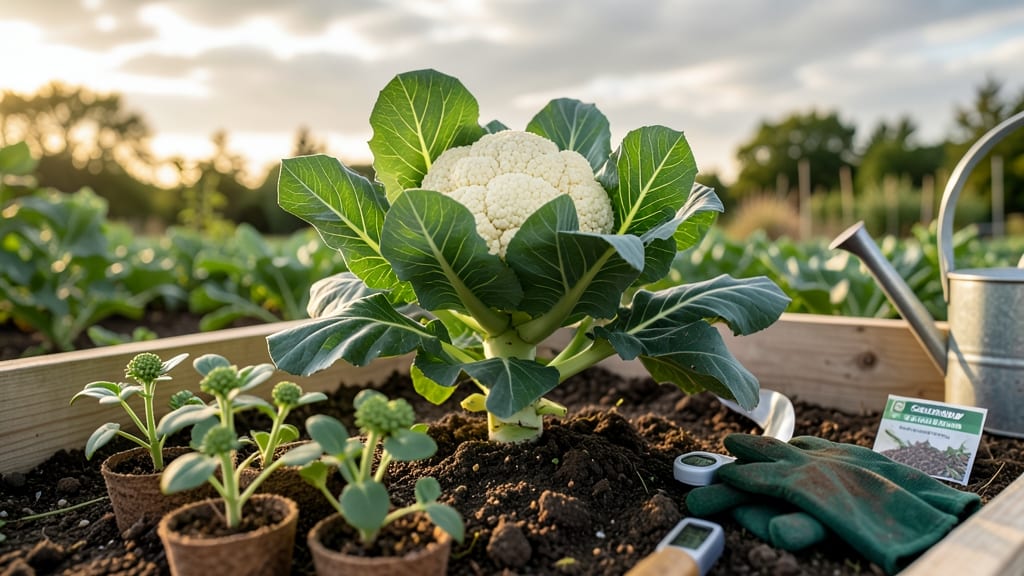
Planting cauliflower in North Carolina at the right time ensures a 90-day harvest before summer heat or frost ruins your crop.
North Carolina’s unpredictable frost dates can make or break your cauliflower harvest—plant too early, and you’ll lose crops to cold; too late, and summer heat ruins your heads. But with the right frost-date math, you can time your 🥬 harvests like a pro.
In USDA zones 7a-8b, your best windows are early spring (February–March) for a May–June harvest or late summer (July–August) for a fall crop. The key is planting 4–6 weeks before your last frost in spring or 10–12 weeks before the first frost in fall.
Below, I’ll break down the exact frost-date math for your region—whether you’re in the Mountains, Piedmont, or Coastal Plain—plus 5 pro tips to stretch your growing season and avoid common mistakes.
NC frost dates and cauliflower planting windows by region
North Carolina’s three distinct regions—Mountains, Piedmont, and Coastal—each have unique frost patterns that dictate when to plant cauliflower for success. The Mountains (USDA Zones 6-7) experience later springs and earlier falls, while the Coastal Plain (Zones 7b-8a) enjoys milder winters.
Understanding these differences helps you avoid frost damage in spring or heat stress in summer.
Cauliflower thrives with 90-day growing seasons, so timing is everything. Plant too early, and your heads will bolt in the cold; too late, and summer’s heat will turn them yellow and bitter.
The key is working backward from your average first frost date (typically mid-November) and adding 10-12 weeks for fall crops. For spring, subtract 4-6 weeks from your last frost date (usually mid-March).
Here’s how to match your region’s frost dates to cauliflower planting windows for two harvests per year:
| Region | USDA Zone | Last Frost Date | First Frost Date | Spring Planting Window | Fall Planting Window |
|---|---|---|---|---|---|
| Mountains (Asheville, Boone) | 6a-7a | March 20-April 5 | October 20-November 5 | February 20-March 15 | July 15-August 10 |
| Piedmont (Raleigh, Greensboro) | 7a-7b | March 10-20 | November 1-15 | February 15-March 10 | July 1-August 5 |
| Coastal Plain (Wilmington, Fayetteville) | 7b-8a | February 28-March 10 | November 10-20 | January 20-February 15 | June 20-July 10 |
In the Mountains, where frosts linger longer, start seeds indoors by February 1 for transplanting in late March. The Piedmont’s milder climate allows for earlier spring starts—direct-sow seeds by March 1 for a May harvest.
Meanwhile, Coastal gardeners can push the envelope with January sowings thanks to their extended growing season.
For fall harvests, the Mountains need to plant by mid-July to beat the frost, while the Coastal Plain can wait until early July. Use heat-tolerant varieties like ‘Cheddar’ or ‘Purple of Sicily’ to handle summer’s intensity. Always choose 90-day varieties to ensure maturity before frost.
Pro tip: Check your local Cooperative Extension Service for microclimate adjustments. Urban areas like Charlotte often run 2-3°F warmer than rural spots, delaying frost by a week or more. Adjust your planting dates accordingly to maximize your cauliflower yield.
Remember, soil temperature matters just as much as air temperature. Cauliflower won’t germinate well in cold soil—aim for 45°F or warmer before direct-sowing. Use black plastic mulch or a cold frame in early spring to warm the soil faster and jumpstart your season.
By aligning your planting windows with your region’s frost dates, you’ll avoid the two biggest cauliflower killers: late frosts and summer bolting. With this regional breakdown, you’re ready to plan for two bountiful harvests—one in spring and one in fall—no matter where you garden in North Carolina.
How to calculate your exact planting dates using frost probabilities
Determining the perfect time to plant cauliflower in NC isn't just about guessing—it's about doing the math with frost probabilities. The USDA Plant Hardiness Zone Map gives you a starting point, but local frost data and your plant's heat tolerance are the real game-changers.
For 90-day cauliflower, timing is critical: plant too early, and frost zaps your seedlings; too late, and summer heat stunts growth.
Start by finding your local frost dates—not just the averages, but the 10-year probabilities from sources like the NC State Climate Office. For example, in Zone 7b (common in Piedmont NC), the last frost date has a 50% chance of occurring after March 25.
This means if you're aiming for a May harvest, you'll need to plant 60-70 days before that date.
Step-by-Step Frost-Date Math for Cauliflower
-
Step 1: Locate Your Frost Zone
Use the USDA Zone Map to identify your NC region (e.g., Zone 7a-8b). Check the NC State Climate Office for 10-year frost probabilities. -
Step 2: Calculate Spring Planting Window
Subtract 90 days from your average last frost date. For Zone 7b, March 25 - 90 days = December 26 (but plant after soil warms, typically late February-early March). -
Step 3: Adjust for Heat Tolerance
Heat-tolerant varieties (e.g., 'Cheddar') can handle 80°F+ better. If your region hits 90°F+ early, plant fall crops instead (e.g., July-August for October harvests). -
Step 4: Use Fall Frost Probabilities
For fall planting, subtract 60-70 days from your first frost date (e.g., November 15 - 70 days = September 5). Plant transplants by mid-August for a safe buffer. -
Step 5: Verify with Local Data
Cross-check with Almanac frost dates or your local Cooperative Extension. NC’s coastal regions (e.g., Zone 8a) have later frosts than the Mountains (Zone 6b).
Don’t forget to account for microclimates—valleys and low-lying areas frost earlier than hillsides. If you're in Western NC (Zone 6b), your last frost might be April 15, pushing your spring planting to mid-March. For Eastern NC (Zone 8a), you’ve got until April 1.
Pro tip: Use row covers to extend your spring planting window by 2-3 weeks. This lets you plant earlier in Zone 7a without frost risk. Just remove covers when heads form to avoid overheating.
For fall crops, aim to plant transplants by mid-August in most of NC. This gives your cauliflower enough time to mature before first frost (typically mid-November). If you’re in Zone 8b, you might even squeeze in a second fall crop by planting late July.
Remember: Cauliflower hates heat. If your summer temps exceed 85°F for more than a week, switch to fall planting or choose heat-tolerant varieties like 'Graffiti' or 'Purple of Sicily'. With these adjustments, you’ll nail your 90-day harvests every time. 🥬