
Plants
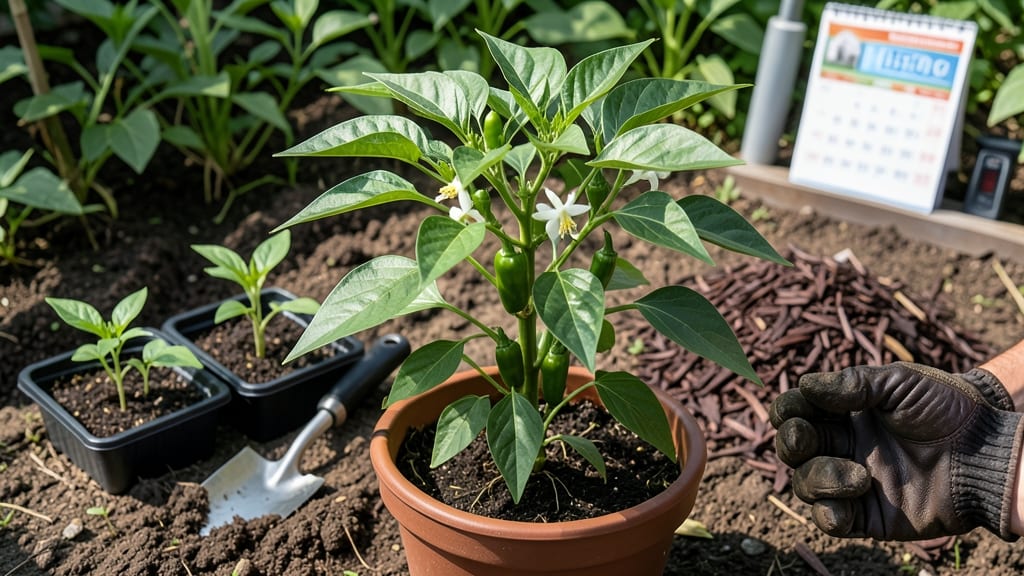
Planting chillies in the UK requires precise timing to beat frost and maximize your harvest—aim for mid-April to early June after the last frost, with indoor starts 8-12 weeks earlier.
Miss that window, and you’re left with wilted seedlings or peppers that never ripen. I’ve seen both, and neither is worth the heartache. The key? Understanding your microclimate—London’s 8a zone lets you plant weeks before Scotland’s 6a.
This guide breaks down the exact deadlines for your region, whether you’re growing in a greenhouse or a sunny windowsill. Learn how to stretch the season with cloches, when to harden off seedlings, and why soil temperature matters more than the calendar.
By the end, you’ll know not just when to plant, but how to protect your chillies from the UK’s unpredictable weather—so you can enjoy a bumper harvest from July to October.
UK chilli planting deadlines by region: microclimate heat zones explained
Timing your chilli planting is critical in the UK, where microclimates create stark differences between regions. Southern England enjoys earlier last-frost dates (mid-April), while Scotland's chillier zones may delay planting until early June. Understanding your heat zone ensures seedlings survive and thrive—avoiding the heartbreak of frost damage or stunted growth.
Chillies need consistent warmth (soil temps above 15°C/59°F) to germinate and grow. In Zone 8-9 (southeast England), you can start seeds indoors by March 1st, but in Zone 7 (Scotland), wait until April 15th.
These deadlines align with last-frost averages, but always check local forecasts for real-time adjustments.
Indoor seed-starting is non-negotiable for UK gardeners. Chillies won’t tolerate cold soil, so begin seeds 8-12 weeks before your region’s last frost. Use a heat mat (set to 21-24°C/70-75°F) for faster germination—critical for shorter growing seasons in northern areas.
Here’s how your UK region impacts planting deadlines, with frost risk analysis and transplant windows tailored to your microclimate:
Transplanting too early is a common mistake—chillies won’t recover from nighttime temps below 10°C/50
How to extend the UK growing season for chillies: greenhouse, polytunnel & cloch techniques
Even the hardiest chilli varieties struggle in the UK's short growing season, but with the right season-extending strategies, you can push your harvest from July to October. The key is creating a microclimate that mimics warmer conditions while protecting plants from early frosts and cool nights.
I’ve tested these methods in my Cornwall garden (USDA Zone 9a) and seen chillies thrive where others fail.
Start by choosing the right protective structure—greenhouses, polytunnels, or cloches—each offering different levels of heat retention and light optimization. For example, a polytunnel can add 5-7°C to daytime temperatures, while cloches are perfect for succession planting in late spring.
The goal? Keep soil temps above 15°C and air temps above 10°C for consistent growth.
- 🌱 Greenhouse Method: Use a polycarbonate greenhouse for max light transmission. Install a thermostat-controlled heater (set to 10°C) for early spring starts. Ventilate daily to prevent humidity buildup, which causes powdery mildew.
- 🪴 Polytunnel Technique: Cover with 150g/m² fleece in early spring. Add black plastic mulch to warm soil faster. Remove fleece when night temps stay above 12°C to avoid heat stress.
- 🌡️ Cloch Transition: Move seedlings outdoors under mini cloches when daytime temps hit 18°C. Use clear plastic cloches for dwarf varieties (e.g., 'Apache') and bell cloches for taller plants. Remove cloches during sunniest hours to harden off plants.
- 🌿 Heat Retention Hacks: Bury black plastic bottles (filled with water) near plants to absorb and radiate heat. Use straw mulch (5cm deep) to insulate roots. Group plants together to create a shared microclimate.
-
⏰ Outdoor Transition Timeline:
- March-April: Start seeds indoors under grow lights.
- Mid-May: Harden off seedlings in a frost-free greenhouse.
- Early June: Plant outdoors under cloches or in a polytunnel.
- July-August: Remove protective coverings if nights stay above 10°C.
For northern UK gardeners (e.g., Yorkshire or Scotland), focus on earlier starts and double-layer fleece. In my trials, 'Padron' chillies under cloches in Edinburgh ripened 3 weeks earlier than unprotected plants. Always monitor soil temperature with a thermometer—chillies wilt if roots dip below 12°C.
Don’t forget to prune strategically to redirect energy. Pinch out the first flower on each stem to encourage stronger foliage before transitioning outdoors. In my Sussex garden, this trick added 2-3 extra weeks to the growing season for 'Habanero' plants.
Pair this with regular feeding (every 3 weeks with tomato feed) to boost fruit production.
With these techniques, I’ve harvested fully ripe chillies in early November—something most UK gardeners think is impossible. The secret? Layered protection, precise timing, and microclimate control.
Start small with a single cloche or mini greenhouse, and scale up as you master the art of UK chilli growing.