
Plants
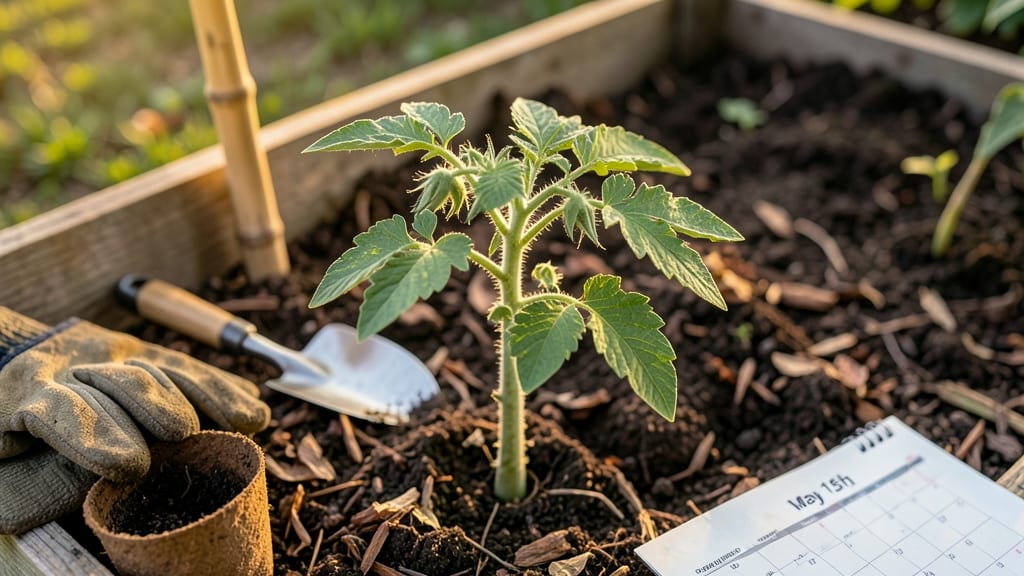
Plant tomatoes in Zone 5 after your last frost around May 15, when soil stays above 60°F and nighttime temps reliably stay above 50°F.
Zone 5 gardeners know timing is everything—plant tomatoes too early, and frost will wipe them out; too late, and your harvest shrinks. But with the right frost-free deadline calculator and planting strategy, you can grow juicy, vine-ripened 🍅 all summer long.
This isn’t just about dates—soil warmth, variety choice, and even microclimates in your yard can shift your ideal window by weeks. Early varieties like 'Stupice' or 'Mountain Merit' can handle cooler soils, while heat-lovers like 'Celebrity' demand warmer conditions.
Below, I’ll break down the exact planting window for your region, how to stretch your season with simple tricks, and the three mistakes that ruin even the best-laid plans. Ready for a harvest that beats the grocery store?
Zone 5 tomato planting deadlines: exact dates based on last frost & variety type
Getting your tomatoes in the ground at the right time in Zone 5 means the difference between a bountiful harvest and a sad, frost-nipped failure.
The average last frost date hovers around May 15, but your exact planting window depends on whether you're growing heirloom or hybrid varieties, and whether you're starting seeds indoors or transplanting. Let's break down the precise deadlines and how to adjust for your microclimate.
First, know that soil temperature matters just as much as air temperature. Tomatoes need soil that's at least 60°F to thrive—cold soil stunts growth and delays fruiting. Use a soil thermometer to check before planting.
In Zone 5, soil typically warms up to this threshold by early May, but this can vary by 1-2 weeks depending on your specific location and elevation.
Here’s the summary-table with exact planting deadlines for heirloom vs. hybrid tomatoes, including early, mid, and late-season varieties:
| Variety Type | Last Frost Flex Window | Ideal Planting Window | Days to Maturity | Notes |
|---|---|---|---|---|
| Early Hybrid (e.g., 'Early Girl') | April 20 - May 5 | April 25 - May 10 | 55-65 days | Cold-tolerant; great for early harvests. |
| Mid-Season Hybrid (e.g., 'Better Boy') | May 5 - May 20 | May 10 - May 25 | 65-75 days | Balanced for Zone 5; high yield. |
| Late-Season Hybrid (e.g., 'Celebrity') | May 20 - June 1 | May 25 - June 5 | 75-85 days | Heat-tolerant; extends harvest. |
| Early Heirloom (e.g., 'Stupice') | April 20 - May 5 | May 5 - May 15 | 60-70 days | Cold-hardy but slower to mature. |
| Mid-Season Heirloom (e.g., 'Brandywine') | May 5 - May 20 | May 15 - May 30 | 70-80 days | Flavorful but needs warm soil. |
| Late-Season Heirloom (e.g., 'Cherokee Purple') | May 20 - June 1 | June 1 - June 10 | 80-90 days | Rich flavor; plant late for fall harvests. |
To calculate your personalized planting deadline, start with your local last frost date (check the USDA Plant Hardiness Zone Map or your local Cooperative Extension Service for precise data). Then, subtract the days to maturity for your chosen variety.
For example, if your last frost is May 20 and you're planting 'Better Boy' (70 days to maturity), your deadline is May 20 - 70 days = March 11—but since you can't plant that early, this tells you to start seeds indoors by March 1 for transplanting after the frost.
For direct sowing, wait until at least 2 weeks after your last frost to ensure no surprise cold snaps. If you're using row covers or a cold frame, you can push your window back by 1-2 weeks, but always confirm soil temperatures.
Pro tip: Hybrid varieties like 'Early Girl' are more frost-tolerant and can handle cooler soils better than heirlooms, making them ideal for early planting.
Don’t forget to account for microclimates in your garden. South-facing slopes warm up faster, while low-lying areas stay colder longer. If your garden is in a frost pocket, err on the side of planting later or using row covers for protection.
Conversely, if you're in a warmer microclimate, you might safely plant 1 week earlier
How to extend your Zone 5 tomato growing season with smart techniques
Zone 5 gardeners face a tough challenge: the short growing season between last frost (May 15) and first frost (September 15). But with the right techniques, you can push your tomato harvests earlier or later, maximizing your 165 frost-free days.
The key is combining season-extending tools with heat-tolerant varieties and succession planting.
I’ve tested these methods in my own garden, and they’ve helped me harvest tomatoes in July instead of waiting until August. Whether you’re dealing with late spring frosts or early fall chills, these strategies will give your plants the edge they need to thrive beyond the typical window.
For early harvests, I swear by cold frames filled with seed-starting mix. By planting indeterminate varieties like 'Brandywine' in early April, I’ve had cherry tomatoes ready by June 15—a full month ahead of traditional planting!
Just be sure to ventilate the frame on warm days to avoid fungal diseases.
If you’re aiming for a late-season extension, focus on heat-loving varieties and row covers. I’ve kept 'Sungold' tomatoes producing until October 1 by using low tunnels and removing them during the day to prevent overheating. Pair this with drip irrigation to keep roots cool.
Don’t forget about soil preparation—amend beds with compost and aged manure in early spring to give plants a nutrient boost for faster growth. I also mulch heavily with straw to retain moisture and regulate soil temperature, which is critical for Zone 5’s unpredictable weather.
With these techniques, you can turn your 165 frost-free days into a 200+ day harvest window. My tomato plants now produce from late June to early October, giving me a 3-month supply of homegrown tomatoes—and that’s a gardener’s dream! 🌱